
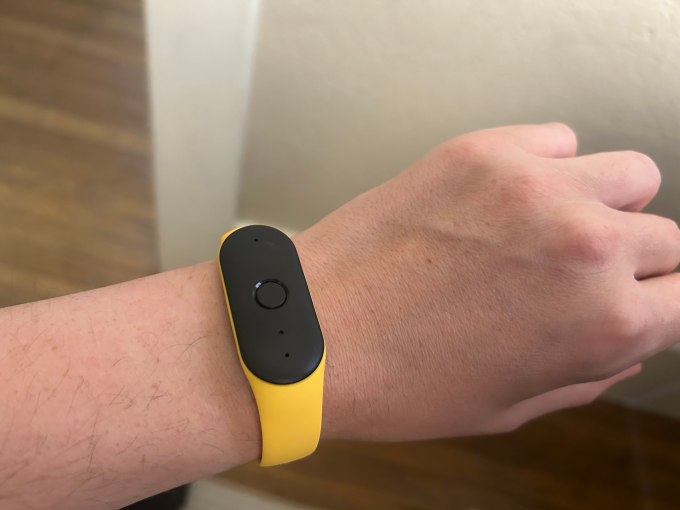
The Evolution of Ambient Intelligence: Testing the Amazon-Backed Bee Wearable
The landscape of AI-driven hardware has shifted toward ambient computing, where devices are designed to disappear into the background of our daily routines. Bee, the AI-focused wearable acquired by Amazon, represents the latest iteration of this trend. While it functions as a personal assistant by transcribing and summarizing interactions in real-time, its integration into the consumer market raises critical questions about the balance between operational efficiency and individual privacy.
Professional Utility Versus Privacy Concerns
In a professional setting, the utility of a persistent recording device is undeniable. For individuals managing back-to-back meetings, Bee acts as a high-fidelity memory buffer. During testing, the device successfully parsed complex business discussions into actionable summaries, effectively reducing the administrative burden of manual note-taking.
However, this performance does not exist in a vacuum. Current market incumbents such as Otter.ai and Granola have already established standard benchmarks for transcription accuracy. Bee’s primary advantage—and its greatest liability—is the physical hardware form factor. While it offers a seamless workflow for project managers or consultants, the always-on nature of the device introduces significant social and privacy-related friction.
The Technical Hurdles: Accuracy and Contextual Awareness
Technological maturity remains a challenge for Bee. Real-world testing reveals gaps in speaker diarization, often requiring manual intervention to identify participants. More concerning is the inconsistency in transcript density; some sessions result in fragmented documentation rather than a comprehensive record.
Interestingly, the hardware demonstrates impressive contextual awareness. During tests involving loud, dialogue-heavy media, the AI correctly identified the input as cinematic analysis rather than human conversation. While this shows a sophisticated level of algorithmic ambient differentiation, it underscores that the device is constantly decoding the user’s environment to categorize behavior.
The Data Privacy Paradox
The most significant barrier to mass adoption is the company’s aggressive data footprint. To function, Bee requires deep-level access to calendars, contact lists, geolocation, and even biometric health data. For a privacy-conscious user, this constitutes a massive central point of failure. Because this information is stored and processed in the cloud, users are essentially tethered to Amazon’s security infrastructure.
While the company asserts that it utilizes robust encryption and undergoes third-party audits, the historical precedent for security in large-scale cloud environments suggests that risk is never zero. The industry standard for these types of tools is shifting toward Edge AI—running models locally on the hardware—which would eliminate the need for sensitive data transmission. Amazon has signaled an interest in local processing models, but until this becomes the default architecture rather than a theoretical demo, the device remains a non-starter for those wary of corporate data harvesting.
Strategic Outlook
Bee is currently a solution in search of a sustainable identity. As an enterprise peripheral, it offers tangible time-saving benefits for knowledge workers. As a personal consumer gadget, however, it asks the user to trade an uncomfortable amount of autonomy for marginal organizational gains.
For the wearable category to move beyond early-adopter skepticism, manufacturers must prioritize local-first processing. Unless these devices can guarantee that personal data never leaves the chassis, they will continue to face resistance from a consumer base increasingly aware of the costs of total digital integration. Moving forward, the success of Bee will depend less on its AI’s ability to summarize meetings and more on the company’s ability to prove that its assistant is truly private.