
The Rise of Autonomous Culinary Systems
The culinary technology landscape is undergoing a paradigm shift, moving away from simple motorized convenience toward sophisticated, AI-integrated culinary assistants. This transition mirrors broader trends in smart home integration, where the objective is no longer merely to digitize a task, but to delegate the operational burden of cooking entirely to automated systems. For the average consumer, these devices signal a move toward frictionless consumption, where the barriers to entry for home cooking are intentionally dismantled through sensors, algorithmic recipe management, and automated hardware.
Advanced Robotics in the Home Kitchen
The Nosh Chef Robot represents the vanguard of this movement, shifting the paradigm from static appliance usage to dynamic, autonomous cooking. Unlike conventional slow cookers, the Nosh system utilizes NoshOS—an AI-driven architecture—to handle the granular aspects of meal preparation, such as moisture regulation and heat adjustment, in real time. The industry implication here is profound: a transition toward ingredient-in, meal-out workflows. By standardizing the cooking process through reusable cartridges and proprietary sensing, Nosh is positioning the home kitchen to function similarly to a small-scale, automated industrial kitchen. With broad availability expected by 2026, the success of such devices will depend on whether consumers accept the limited menu scope in exchange for complete labor relief.
Specialized Automation and Accessibility
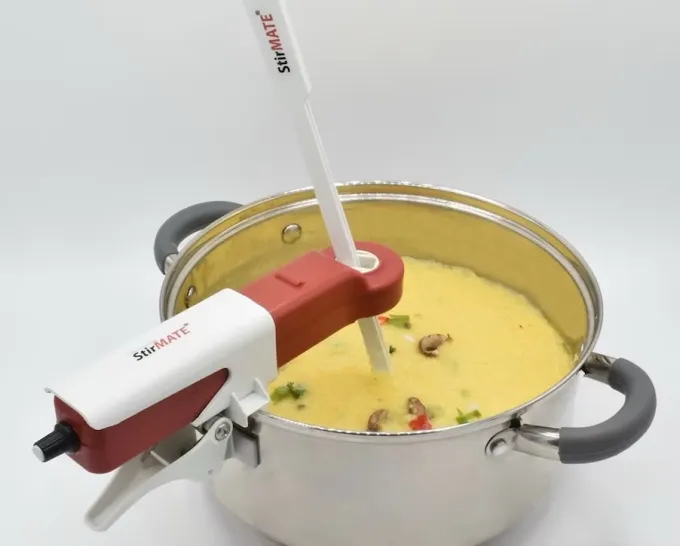
While robotics look toward the future, manufacturers are also iterating on single-task automation to improve efficiency and inclusivity. The latest StirMate iterations demonstrate that even simple kitchen tools are benefiting from industrial-grade upgrades, such as high-torque motors and extended battery life. Beyond mere convenience, these devices provide a critical bridge for users with physical impairments or chronic pain, enabling them to maintain culinary independence. This highlights a significant market opportunity in accessible tech that prioritizes ergonomic support alongside productivity.
The Refinement of Automated Home Production
Kitchen automation has largely solved the problem of consistency—a historical weakness in home cooking. Modern smart bread makers, such as the latest KitchenArm models, move beyond basic functionality by offering granular control over chemical processes. By automating the delicate cycles of proofing and kneading, these machines bring professional-grade sourdough or artisanal baking within the purview of the novice. Similarly, the trend of home plant-based milk production, driven by the Nama M1, underscores a consumer desire to bypass industrial supply chains in favor of high-quality, on-demand ingredients, effectively turning the kitchen into an automated production lab.
Personalization as the New Gold Standard
In the high-end appliance segment, the focus has shifted entirely to predictive personalization. Machines like the De’Longhi Rivelia treat coffee consumption not as a utility, but as a data-driven experience. By leveraging user profiles and time-of-day behavioral tracking, these devices foster a deeper level of engagement between the user and their hardware. From an industry perspective, the value proposition is no longer the machine itself, but the ecosystem of preferences tethered to the user’s account. Manufacturers are banking on this stickiness to keep users within their brand ecosystem long after the initial point of sale.
Tactical Simplicity vs. Complexity
Not every innovative culinary advancement requires a cloud connection or artificial intelligence. Tools like the KitchenArt Auto-Measure Spice Carousel prove that mechanical engineering—when applied to common pain points like measuring errors—can be just as competitive as software-based solutions. These specialized tools address the analog failures that occur in the kitchen, offering high utility without the technical complexity or maintenance requirements associated with smart devices. As the market becomes saturated with high-tech solutions, there is an enduring and likely permanent space for smart-mechanical designs that prioritize physical usability above all else.