
The Persistence of the Visionary Form Factor
For over a decade, the promise of heads-up computing has served as a siren song for Silicon Valley. The conceptual ambition is simple yet profoundly difficult to execute: liberate users from the gravitational pull of smartphone screens by migrating mobile processing power to wearable eyewear. While the industry has been plagued by skepticism fueled by high-profile failures and immense capital burn, the underlying conviction of technologists remains unshaken.
Historically, the smart glasses sector has acted as a financial vacuum. Despite massive R&D injections, companies have struggled to move beyond the proof of concept phase, leaving investors wary of the sector’s profitability. Chi Xu, CEO and founder of Xreal, acknowledges the bleak financial landscape that has defined the industry, noting that the sheer technical complexity of miniaturizing high-performance hardware into a fashion-forward chassis remains the primary barrier to entry.
The Meta Catalyst and Industry Maturation
The mood in the sector is shifting from perpetual experimentation to strategic execution. A significant catalyst for this renewed optimism is Meta’s collaboration with Ray-Ban. By successfully balancing traditional aesthetics with functional smart features, Meta demonstrated that consumer appetite exists, provided the social awkwardness of bulky, cyborg-like hardware is mitigated.
This success provided a blueprint: minimize the friction, prioritize design, and integrate the technology into existing user habits. While Reality Labs remains a significant loss-leader for Meta, it has successfully validated the market, forcing competitors like Xreal to refine their own roadmaps.
The Technical Divide: Tethering vs. Autonomy
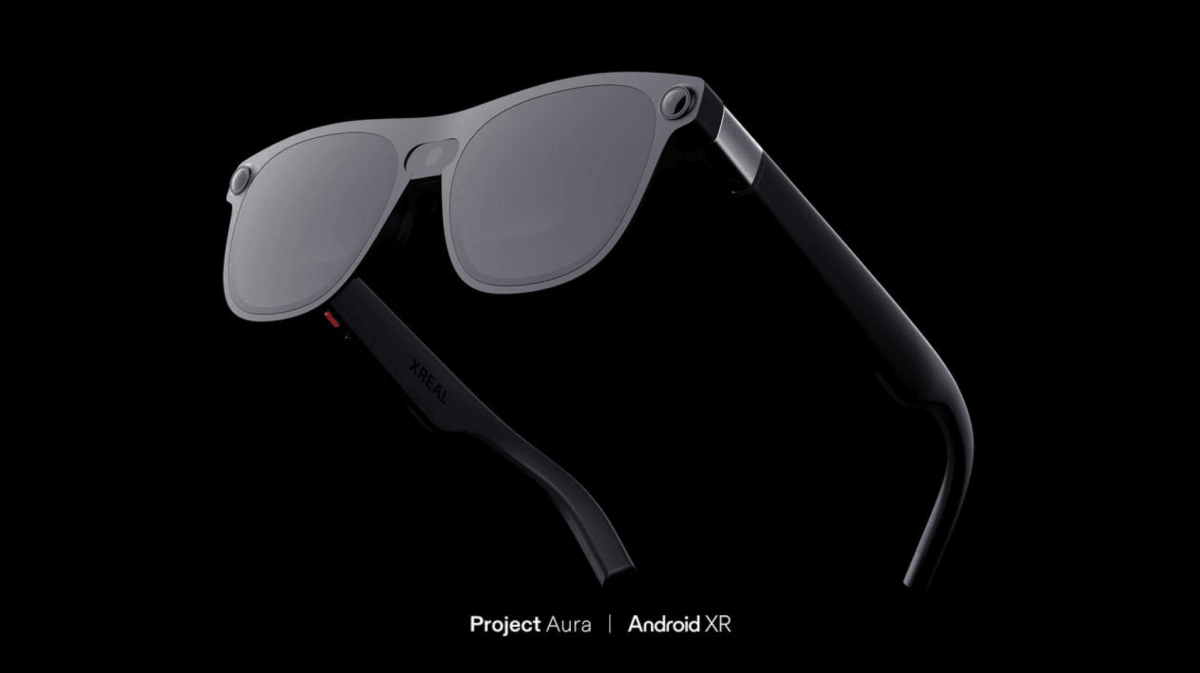
Xreal’s latest project, Project Aura, represents the company’s aggressive bid for industry leadership. Leveraging OLED display technology embedded directly into the frames, the device offers high-fidelity visual output. However, the design choice to utilize a puck—a tethered external computing hub—highlights the persistent thermal and battery constraints currently limiting standalone smart glasses.
While the convenience of a pocket-based processor allows for a lighter head-mounted display, it creates a trade-off in user experience. Whether the general public will tolerate a wired connection in exchange for features like holographic hand-tracking, virtual workspaces, and immersive streaming remains the central question for the device’s commercial viability.
The Shift Toward Professional Utility
Xreal is explicitly positioning its upcoming hardware beyond its origins as a consumer peripheral. By showcasing practical use cases such as private, multi-monitor workspace extensions for mobile professionals and augmented navigation during daily tasks, the company is attempting to pivot the narrative from gimmickry to productivity enablement.
Industry analysts are watching these developments closely. If Xreal—or any competitor—can successfully transition from niche developer hardware to a multi-purpose tool that offers tangible work benefits, the smart glasses market could finally transition from a speculative bubble into a legitimate enterprise utility sector.
Financial Longevity and Path to Break-Even
Following the developer-focused rollout of the Aura, a commercial release is slated for later this year. This launch sits at the center of Xreal’s broader financial strategy, which includes plans for an IPO by 2026.
To achieve this, the company is moving toward a leaner operational model, focusing on expanding gross margins through localized cost-cutting and a shift away from aggressive, loss-making marketing spends. For Xreal, 2025 serves as a critical inflection point; the company must prove that its hardware-software synergy can generate sustainable returns in a market weary of over-promised, under-delivered wearable technology.