
The Normalization of Pegasus-Style Surveillance: Why Hardened Security is No Longer Optional
The landscape of digital surveillance has shifted from a niche concern for intelligence agencies to a persistent threat against journalists, political dissidents, and human rights advocates globally. The 2025 revelations concerning Paragon Solutions—where zero-click exploits bypassed traditional user warnings to compromise devices—underscored a brutal reality: modern spyware is designed not just to track, but to achieve total device dominance.
For the industry, these events signal a collapse of the security-by-default illusion. When sophisticated nation-state actors utilize zero-click infrastructure, the burden of protection shifts from the service providers back onto the user. This dynamic has forced Apple, Google, and Meta to move beyond standard encryption, introducing Hardened or Advanced security modes that deliberately degrade functionality to preserve user integrity.
The Proliferation of Zero-Day Ecosystems
The primary challenge today is the commercialization of cyber-espionage. Spyware developers do not need to trick a user into clicking a link; they utilize silent exploits that reside in the OS architecture. Once a device is compromised, the attacker exercises near-total authority: accessing end-to-end encrypted messages, activating hardware sensors like cameras and microphones, and performing real-time location exfiltration.
The industry consensus is that these tools are becoming more, not less, accessible to mid-tier autocracies and private entities. As a result, the standard smartphone is essentially a high-value perimeter that is constantly undergoing siege.
Apple’s Lockdown Mode: A Necessary Functional Tradeoff
Apple’s Lockdown Mode represents the most aggressive approach to hardware protection. By effectively shrinking the device’s attack surface, it renders standard vectors—such as malicious iMessage attachments or WebKit-based browser exploits—significantly less effective.
Communication Restrictions: Disabling incoming invitations and blocking non-contact FaceTime calls limits the vectors for social engineering.
Protocol Hardening: By blocking 2G/3G cellular connections, which are notoriously vulnerable to rogue base stations or SS7 interception, Apple forces the device to utilize more robust, encrypted protocols.
* Data Integrity: The suspension of Shared Albums and the restriction of accessory connectivity via USB prevent physical and cloud-based side-loading of malicious payloads.
While users may perceive these changes as wonky or inconvenient, they represent an essential security posture for high-risk individuals. The lack of documented breaches for devices in Lockdown Mode is a testament to its effectiveness.
Google and Android’s Tactical Response
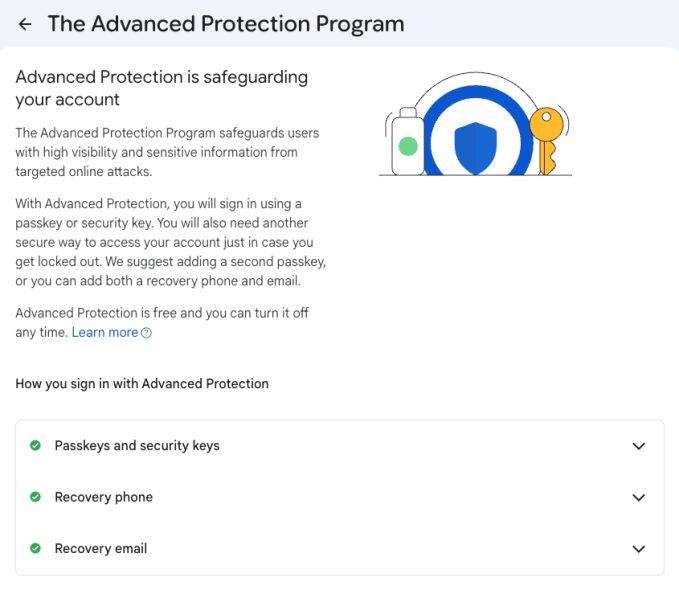
Google has bifurcated its defense strategy into account-level protection (Advanced Protection Program) and device-level hardening (Android Advanced Protection Mode). The latter is particularly noteworthy for its focus on physical anti-theft and forensic resistance.
Beyond its browser-based safeguards—like mandatory HTTPS and JavaScript limitations—Android now incorporates hardware-enforced memory protections like the Memory Tagging Extension (MTE). More importantly, the inclusion of automated reboots after 72 hours of inactivity serves as a direct counter-measure to forensic extraction tools, which rely on persistence in volatile memory to bypass encryption.
WhatsApp: Securing the World’s Most Popular Targets
Because WhatsApp serves as the primary communications hub for critical infrastructures and global activist networks, it has become the Holy Grail for intercept tools. The introduction of Strict Account Settings is an admission that standard privacy is insufficient.
By forcing IP-address masking during calls and defaulting to restricted profile visibility, WhatsApp is reducing the amount of metadata available for targeting. The requirement of two-step verification and security notifications for contact changes addresses the growing risk of account takeovers—a precursor to mass monitoring campaigns.
Strategic Recommendations for High-Risk Users
Industry analysts and security researchers, such as Runa Sandvik, emphasize that these tools are not intended for the casual user but are critical for the at-risk community. The decision to enable these features must be seen as a strategic risk assessment:
1. Accessibility Over Perfection: These features are free and reversible. Users should adopt a conditional activation strategy, where hardened modes are enabled during travel or when engaging in sensitive professional activities.
2. Defense-in-Depth: Hardware hardening (Lockdown/Advanced Mode) should always be paired with operational security practices—such as using physical security keys (YubiKeys) for account access and maintaining a secondary, untraceable device for critical communications.
3. The Persistence Factor: Security is a cycle. As OS developers patch gaps, spyware vendors find new, more expensive ways to bypass them. Adopting these features is not a one-time fix, but a commitment to an iterative security lifecycle.
Ultimately, the normalization of these spyware attacks indicates that the industry is moving away from the era of universal convenience. For those in the crosshairs, the cost of being connected now includes the proactive, manual hardening of every digital device currently in their pocket.