
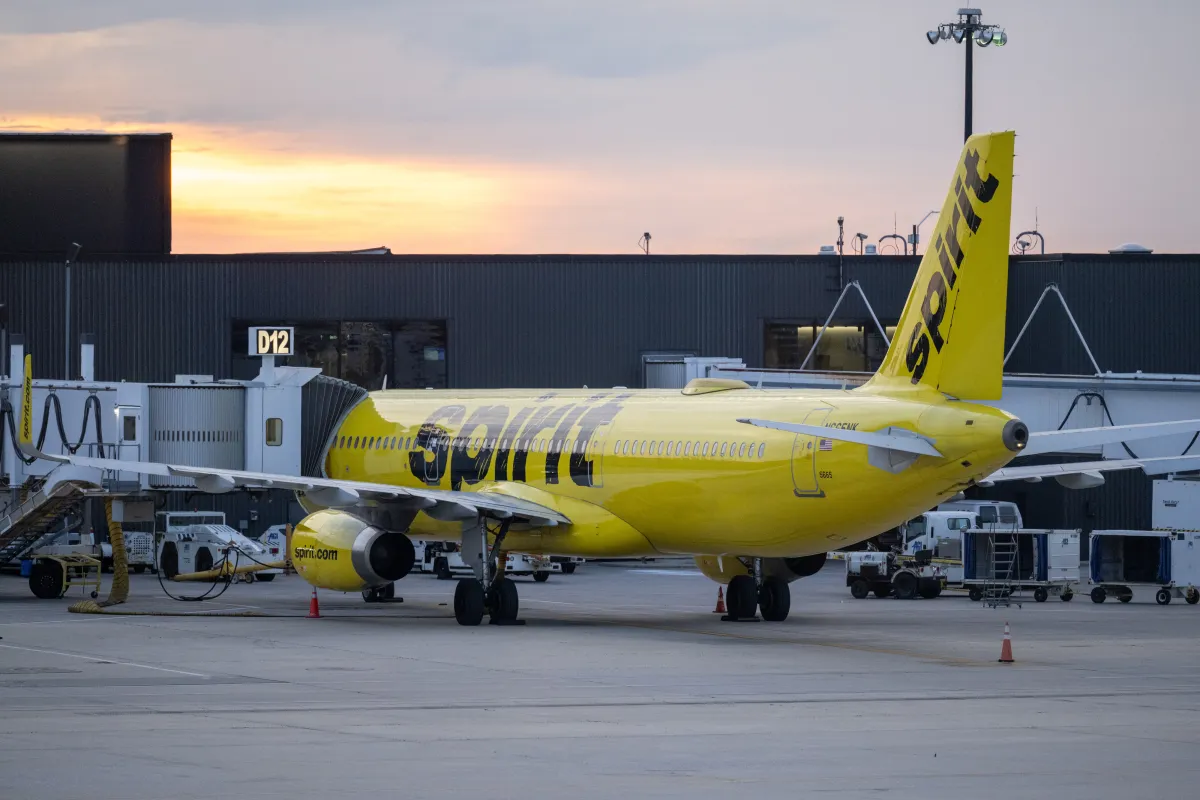
The Structural Collapse of Spirit Airlines and the Rise of Populist Aviation
The sudden cessation of operations at Spirit Airlines—resulting in the immediate termination of 17,000 employees and the total abandonment of thousands of passengers—serves as a grim indicator of the volatility within the ultra-low-cost carrier (ULCC) business model. When Spirit shuttered its doors this past Saturday, it didn’t just cancel flights; it created a vacuum in the budget travel sector that prioritized aggressive cost-cutting over operational stability. This systemic failure has left a void not just in the skies, but in the collective psyche of the American consumer who relied on hyper-discounted fares.
Crowdsourced Airline Ownership: The “Spirit 2.0” Phenomenon
In an unconventional response to the collapse, voice actor Hunter Peterson leveraged social media to propose a radical solution: Spirit 2.0: Owned by the People. By calling on the American public to pool their resources, Peterson aimed to democratize the airline industry via a crowdsourced acquisition model. Within 24 hours, the project claimed over 36,000 founding patrons and $23 million in non-binding pledges.
While the movement is effectively a digital protest, it highlights a profound frustration with current aviation consolidation and the fragility of low-cost travel. By attempting to bypass traditional venture capital and private equity models, this grassroots initiative reflects a shift toward populist ownership, even if the logistics remain entirely theoretical.
The Economic Reality Gap
From an industry analyst’s perspective, the Spirit 2.0 initiative collapses under the weight of basic aviation economics. Acquiring an airline is not merely a matter of capital; it involves navigating complex FAA certification, securing dormant slots at major hub airports, inheriting massive debt liabilities, and operationalizing a fleet—tasks that require billions in liquidity rather than millions in soft pledges.
Peterson’s venture currently lacks the infrastructure, regulatory compliance, and fleet maintenance contracts required to function as an entity, let alone a carrier. Even if the $23 million were categorized as hard cash, it would barely cover the initial deposit for a single narrow-body aircraft, let alone the colossal overhead of labor, fuel, and insurance.
The Performative Nature of Modern Digital Activism
The rapid server crashes and viral engagement surrounding Spirit 2.0 represent the gamification of economic crisis. By soliciting aviation lawyers and industry professionals via TikTok, Peterson is testing the limits of how far a bit—or a satirical internet campaign—can be pushed when coupled with genuine customer resentment.
For the airline industry, this event serves as a warning: the flying public is increasingly aware of the business models that govern their mobility. While Spirit 2.0 is certainly not a viable commercial replacement for a defunct carrier, it underscores a growing demand for a travel ecosystem that is less susceptible to sudden, overnight market exits. The legacy carriers and existing ULCC competitors should take note; the passengers left stranded by the Spirit collapse are no longer satisfied with being passive consumers, even if their attempt at ownership remains firmly in the realm of satire.