
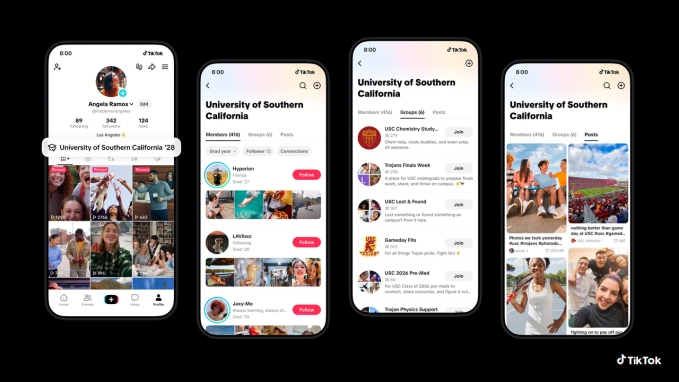
TikTok’s Strategic Pivot: Turning Campus Connections into Retention Engines
TikTok is doubling down on its Campus initiative, evolving its existing verification framework into a comprehensive digital ecosystem for university students. By integrating a dedicated campus hub into the app, the platform is moving beyond passive content consumption and into the realm of community utility. This expansion, powered by a sustained partnership with the student-verification platform UNiDAYS, allows verified users across 6,000 institutions to move their social interactions into private, school-specific silos.
Bridging the Gap Between Discovery and Utility
The introduction of group chats—capable of hosting up to 300 verified classmates—is a calculated move to capture daily utility rather than just engagement. Historically, TikTok has dominated the discovery phase of social media, capturing users through algorithmic entertainment. However, by enabling private group communication, TikTok is directly challenging competitors like Discord, Facebook Messenger, and Instagram, which currently serve as the primary hubs for student clubs, class projects, and social organization.
If TikTok successfully migrates these everyday conversations onto its platform, it effectively raises its retention rates by becoming an essential communication tool rather than just a destination for short-form video. This keeps students within the TikTok ecosystem even when they are not actively watching content, significantly increasing the platform’s daily active usage (DAU) metrics.
Personalized Feeds and the Return of Campus-Centric Social Networks
The rollout of personalized campus feeds represents an attempt to curate a localized internet experience. By aggregating content from verified peers alongside university-specific updates, TikTok is recreating the hyper-local community feel that originally propelled Facebook to prominence in the mid-2000s.
During its infancy, Facebook’s gatekeeping via .edu email addresses created an aura of exclusivity and genuine connection. TikTok’s current iteration leverages a similar social psychology: the desire to identify within a shared professional or academic cohort. This localized approach mitigates the noise of a global algorithm, providing students with content that feels relevant to their specific physical environment, thereby deepening the user’s emotional investment in the app.
The Competitive Landscape: A War for Gen Z Loyalty
TikTok’s campus-centric strategy is not happening in a vacuum. Meta, recognizing the threat posed by TikTok to its grip on the younger demographic, introduced near-identical campus verification tools to Instagram last year. This ongoing arms race underscores a critical industry truth: social media giants are no longer competing solely on feature sets; they are competing for the digital campus square.
By prioritizing student connectivity, both TikTok and Meta are attempting to anchor their platforms in the daily habits of Gen Z. For TikTok, the success of this feature depends on its ability to convince students to abandon legacy messaging platforms in favor of a hub where social life and video discovery coexist. If the strategy gains traction, it will provide TikTok with a formidable defensive moat, insulating it from competitors while solidifying its role as the central nervous system of university life.