
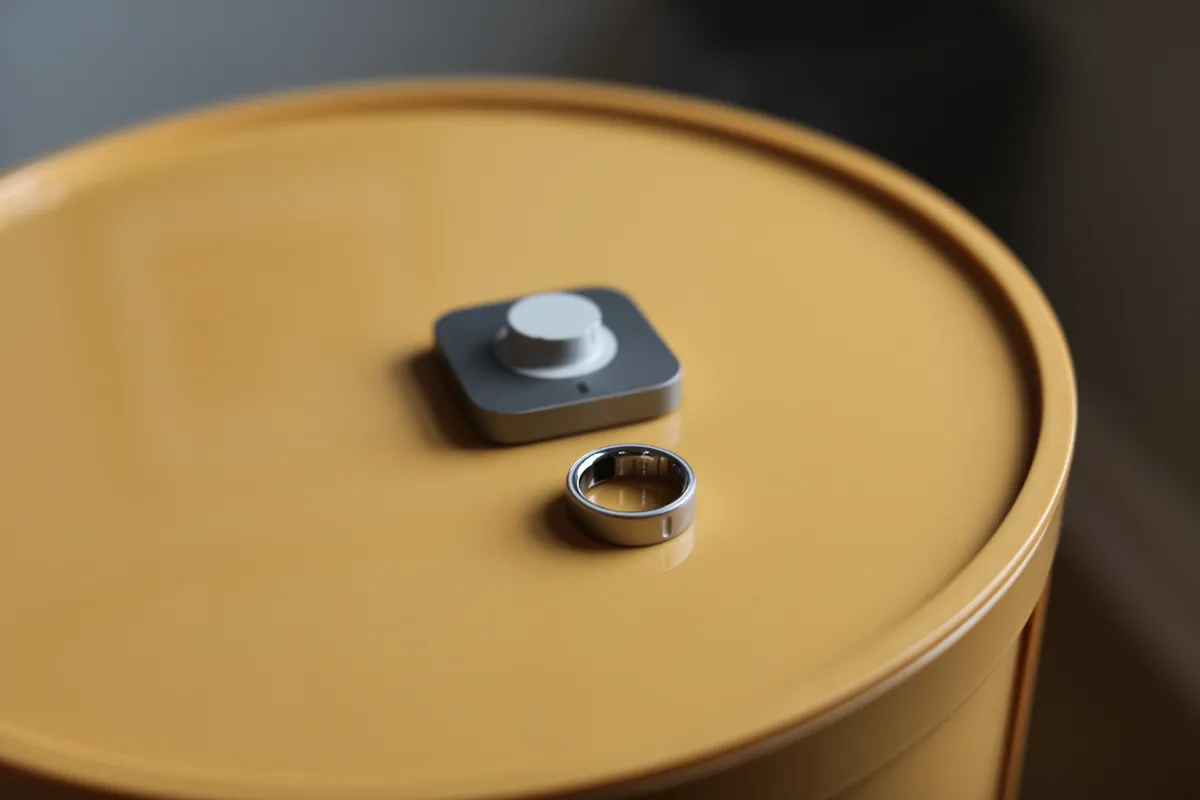
Oura’s Public Market Ambition: Beyond the Smart Ring Hype
The wearable technology landscape is witnessing a significant shift as Oura, the Finnish pioneer behind the ubiquitous health-tracking ring, moves toward an initial public offering. By filing a confidential Form S-1 with the U.S. Securities and Exchange Commission, Oura is signaling its intention to move from a private tech darling to a publicly traded consumer electronics powerhouse. This move follows a period of aggressive scaling, with the company demonstrating remarkable velocity in both user adoption and valuation.
Market Differentiation in a Saturated Ecosystem
For years, the wearable sector was dominated by wrist-worn hardware like the Apple Watch, Fitbit, and Garmin. Oura’s entry broke this uniformity by prioritizing form factor and data passivity. By shrinking complex biometric sensors into a minimalist piece of jewelry, Oura tapped into a demographic that values health insights without the intrusive nature of screen-heavy devices.
From an industry perspective, Oura’s success is a triumph of design-led product strategy. Unlike competitors that emphasize constant connectivity and notifications, Oura positions itself as a wellness utility. Its focus on readiness scores and sleep optimization has carved out a distinct niche that bridges the gap between casual fitness tracking and medical-grade diagnostics.
Scaling and Economic Trajectory
The financial trajectory underpinning Oura’s IPO is compelling, particularly when contextualized by its recent funding rounds. During its Series E financing, the company hit a valuation of $11 billion—a figure that effectively doubled its valuation from earlier in the same year. This accelerated growth is supported by a massive spike in hardware sales; moving from 2.5 million units to 5.5 million units in just twelve months indicates not just market penetration, but high brand stickiness and international scalability.
However, moving to the public markets introduces a higher level of scrutiny. Investors will be looking closely at how Oura maintains such valuation growth while facing tightening competition from Big Tech. As Samsung enters the form-factor ring market, Oura’s ability to defend its intellectual property and its market share will be the primary litmus test for institutional longevity.
The AI Frontier: Refining the Value Proposition
Oura is clearly looking to differentiate itself further through proprietary software rather than just hardware iterations. The recent rollout of AI-driven models specifically optimized for women’s health is a calculated strategic move. By tailoring analytics to menstrual health and hormonal cycles, Oura is moving beyond generic activity tracking to provide actionable, personalized data.
For the company, this is essential to building an economic moat. Pure hardware businesses often struggle with margin compression, but a company that functions as an AI-powered health repository can sustain recurring revenue streams. If Oura successfully integrates deep-tech AI into its user experience, it will transition from being a gadget manufacturer to a health-intelligence platform, a pivot that justifies much higher valuation multiples in the public equity markets.