
Quantum Art Secures $140 Million to Solve the Scalability Paradox
Quantum Art Ltd. has successfully upsized its Series A funding round to $140 million, signaling strong investor confidence in the startup’s strategy to overcome the scaling wall that has long throttled the quantum computing sector. While the company initially secured $100 million in December led by Bedford Ridge Capital, the recent addition of heavyweights like Hudson Bay Capital, Poalim Equity, and LIP Ventures underscores a pivot in venture capital sentiment toward hardware providers that prioritize architectural efficiency over raw, noisy qubit counts.
The industry currently faces a critical bottleneck: increasing the number of qubits inherently introduces disruptive noise, error, and physical wiring complexity. While trapped-ion systems—which utilize individual atoms suspended in electromagnetic fields—are lauded for superior coherence times and fidelity compared to superconducting alternatives, they hit a hard physical limit. Traditionally, packing more than a thousand ions into a single trap results in a chaotic, unmanageable web of laser controls that cripples the system’s performance.
The Perspective Architecture: Rethinking Qubit Connectivity
Quantum Art is addressing this through Perspective, a proprietary multicore architecture designed to move beyond the limitations of fixed-layout trapped-ion systems. In standard architectures, qubits are constrained to interactions with immediate neighbors, a design that inevitably leads to performance degradation as scale increases.
The Perspective system utilizes a dynamic, reconfigurable approach, using laser technology to partition ion chains into independent, modular cores. By shifting these ions in microseconds, the company enables all-to-all connectivity. This reconfiguration capability allows individual qubits to execute distinct parts of an algorithm or run parallel processes without the risk of cross-talk induced decoherence. By decoupling connectivity from physical proximity, Quantum Art aims to unlock the path toward systems with over 1,000 qubits while maintaining high operational fidelity.
Advancing Photonics and Commercial Integration
Beyond architectural breakthroughs, Quantum Art is investing heavily in the refinement of the infrastructure that manages these atoms. By developing integrated photonics and automated optical delivery systems, the company is tackling the physical footprint of quantum hardware. Precision is non-negotiable in quantum environments; reducing the scale of the control hardware not only improves throughput but also enhances the stability of the entire platform.
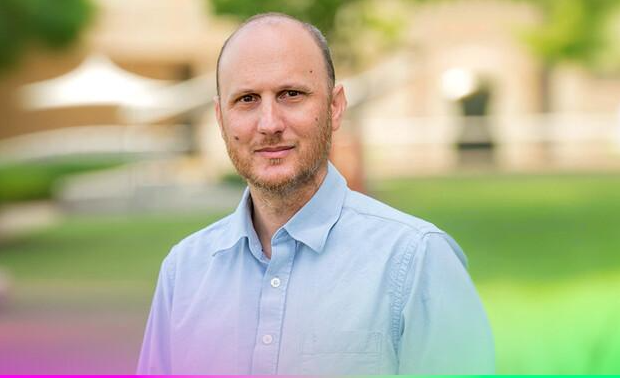
CEO Tal David has emphasized that this capital injection will be used to accelerate the development of the 1,000-qubit Perspective system. The company is simultaneously pushing toward commercial viability through its Quantum-as-a-Service (QaaS) cloud offering. This strategy reflects a growing trend among quantum startups to lower the barrier to entry for enterprise clients. By providing a staged transition path—where users begin with software-based simulators before migrating workflows to physical trapped-ion hardware—Quantum Art is effectively cultivating an ecosystem of developers and researchers before their hardware fully matures.
Strategic Implications for the Hardware Landscape
The successful funding of Quantum Art highlights a maturation within the quantum industry. Investors are shifting their attention away from players focusing purely on high qubit-count metrics toward companies demonstrating verifiable error mitigation and scalable system design.
By avoiding the more qubits at any cost gamble, Quantum Art is positioning itself as a pragmatic player within the global computing landscape. If the multi-core, reconfigurable approach proves successful, it could force a paradigm shift in how trapped-ion systems are designed, essentially turning quantum computers into modular, software-defined machines rather than monolithic, difficult-to-control physical experiments. For the enterprise sector, this progress brings the promise of commercial quantum advantage from the realm of hypothetical research into the tangible planning phase.