
Google TV Pivots to Generative AI and Short-Form Content
Google is fundamentally rearchitecting the living room experience by integrating its Gemini AI models directly into the Google TV ecosystem. By moving beyond simple content recommendation algorithms, the company is positioning the television set as an interactive creative hub, effectively blurring the lines between a passive viewing device and a generative AI workstation.
Generative AI as a Living Room Experience
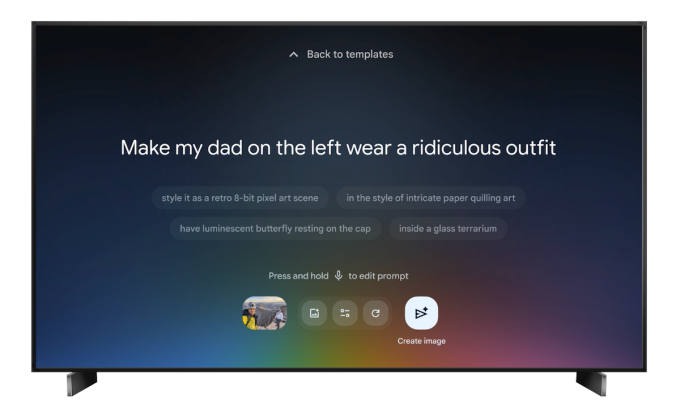
The deployment of Nano Banana and Veo represents a significant shift in how users engage with visual media. By embedding Gemini-powered creative tools—specifically models capable of image manipulation and high-fidelity video generation—Google is attempting to gamify the living room.
The “Create” tab serves as the interface for these capabilities. Nano Banana functions as an accessibility-focused image processor; by utilizing natural language voice prompts, users can perform complex photo edits that previously required professional-grade software. Whether it is altering wardrobe choices or shifting environmental contexts, the utility lies in simplifying sophisticated AI workflows for the average consumer.
Veo takes this further by enabling cinematic creation via text-to-video capabilities. The ability to animate still images or generate original sequences bridges the gap between passive consumption and active content production. This signals Google’s broader strategy to keep users locked within their ecosystem by turning the television into a canvas for family-oriented social interaction.
Optimizing Personal Media Management
Search functionality on large-display formats has historically been limited and cumbersome. Google’s integration of Gemini into the Google Photos experience on Google TV addresses the friction of sorting through massive personal digital libraries.
Instead of manual scrolling, the AI-driven search allows for semantic queries, enabling users to locate specific memories through complex descriptive searches. When paired with the new “Remix” and “Dynamic Slideshows” features—which provide artistic stylistic filters and animated layouts—Google is recontextualizing old media. This provides a clear value proposition: elevating static archives into polished, high-fidelity gallery experiences that feel native to a premium television display.
The Strategic Push Toward Short-Form Integration
The introduction of a “Short videos for you” row on the Google TV home screen marks a definitive pivot toward the dominance of short-form vertical content. While data suggests consumer fatigue regarding Shorts on mobile platforms, Google appears convinced that this content format has staying power in the home environment.
By placing YouTube Shorts at the center of the UI, Google is testing a new content discovery paradigm. This move is not merely about YouTube; the architecture suggests a future-proof roadmap where third-party platforms—potentially including competitors like Instagram—can aggregate their short-form feeds within the Google TV interface.
Industry Implications
This update highlights a crucial transformation in the smart TV market. Hardware alone is no longer the differentiator; it is the layer of software and generative AI that defines the user experience. By deploying these features first to U.S.-based Gemini-enabled TVs, Google is establishing a tiered rollout strategy that prioritizes high-end hardware performance.
The industry should view this as a competitive signal to both hardware manufacturers and platform rivals. Google is betting that the future of television lies not just in streaming movies, but in providing a sandbox where AI tools and viral content feeds compete for the user’s attention. If successful, this creates a stickier ecosystem that keeps users within the Google framework for longer periods, ultimately providing more granular data and higher engagement levels than traditional linear or streaming paradigms allow.