
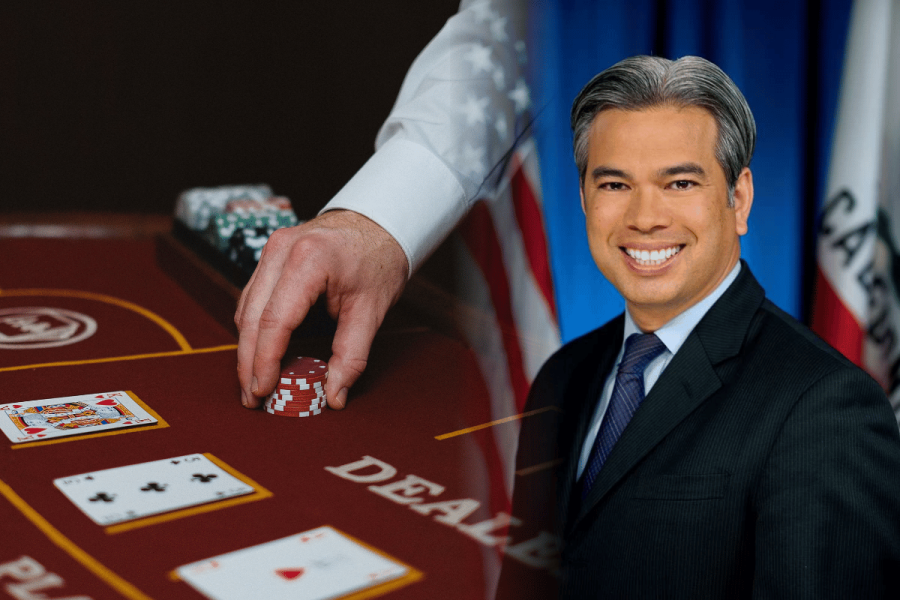
Judicial Setback for California’s New Cardroom Framework
A San Francisco Superior Court ruling has effectively halted the implementation of new, restrictive regulations proposed by California Attorney General Rob Bonta. Judge Richard Darwin granted a preliminary injunction, citing that the Bureau of Gambling Control likely overstepped its regulatory boundaries by creating rules that could dismantle established gaming offerings.
This decision marks a significant milestone in California’s protracted battle over the legality of house-banked style games, specifically blackjack alternatives that have fueled the cardroom industry for decades. The injunction ensures that the status quo remains in effect while the California Gaming Association (CGA) proceeds with its underlying lawsuit.
The Economic Implications of Regulatory Overreach
The core issue highlighted by the court is the potential for irreversible damage to the state economy. Industry analysis suggests that the proposed regulations—which sought to severely limit how blackjack-style games are structured—would have triggered a catastrophic decline in revenue. Projections indicate that such a move could wipe out over 50% of the statewide cardroom industry’s income.
For many California municipalities, cardrooms are not merely entertainment venues but essential fiscal engines. Gaming tax revenue is frequently earmarked for critical infrastructure, including police services, fire departments, and local youth programs. The judge noted that the state’s own economic impact analysis acknowledged the heavy toll these regulations would take on employment and public funding, raising questions about why these policies were pushed forward despite widespread opposition.
Shifting Sands in the Tribal-Commercial Conflict
This regulatory dispute is the latest iteration of a decades-long power struggle between California’s lucrative tribal casino industry and private cardroom operators. Tribal gaming interests have long lobbied for stricter interpretations of state law, arguing that cardrooms—which do not have the same federal-tribal gaming compacts—are essentially operating illegal, casino-style banked games.
Recent legal developments have seen tribal groups attempt to leverage their influence through both the legislature and the courts. While some efforts to initiate direct litigation against cardrooms have been stymied by recent dismissals, the involvement of the Attorney General’s office suggests that the battle has shifted into the arena of administrative rulemaking. By leaning on the Bureau of Gambling Control to redefine game mechanics, proponents of the restrictions hoped to achieve via regulation what they could not easily secure through traditional legislation.
Setting a Precedent for Administrative Law
From an industry perspective, Judge Darwin’s ruling serves as a check on administrative power. Kyle Kirkland, president of the California Gaming Association, emphasized that the bureau attempted to bypass the legislative process to rewrite gaming law. The victory suggests that the judiciary is skeptical of agency attempts to retroactively criminalize or neuter business models that have operated openly under state oversight for years.
Industry experts note that this case sets an important precedent for how the state handles contested gaming markets. If the Bureau of Gambling Control is barred from unilaterally changing the technical definitions of legal games, it forces the state to engage in a more transparent, legislative dialogue rather than utilizing regulatory fiat to suppress competition.
Looking Ahead
The industry now enters a waiting period as the litigation unfolds. For the thousands of employees whose livelihoods depend on the continued operation of these classic table games, the injunction offers temporary stability. However, the underlying friction between tribal casinos and cardrooms remains high. Until the legislature provides a definitive framework that clarifies the boundaries of these games, the California gaming sector will likely remain characterized by high-stakes legal maneuvering and deep political polarization.