
California Leads a Regulatory Pivot on AI Labor Displacement
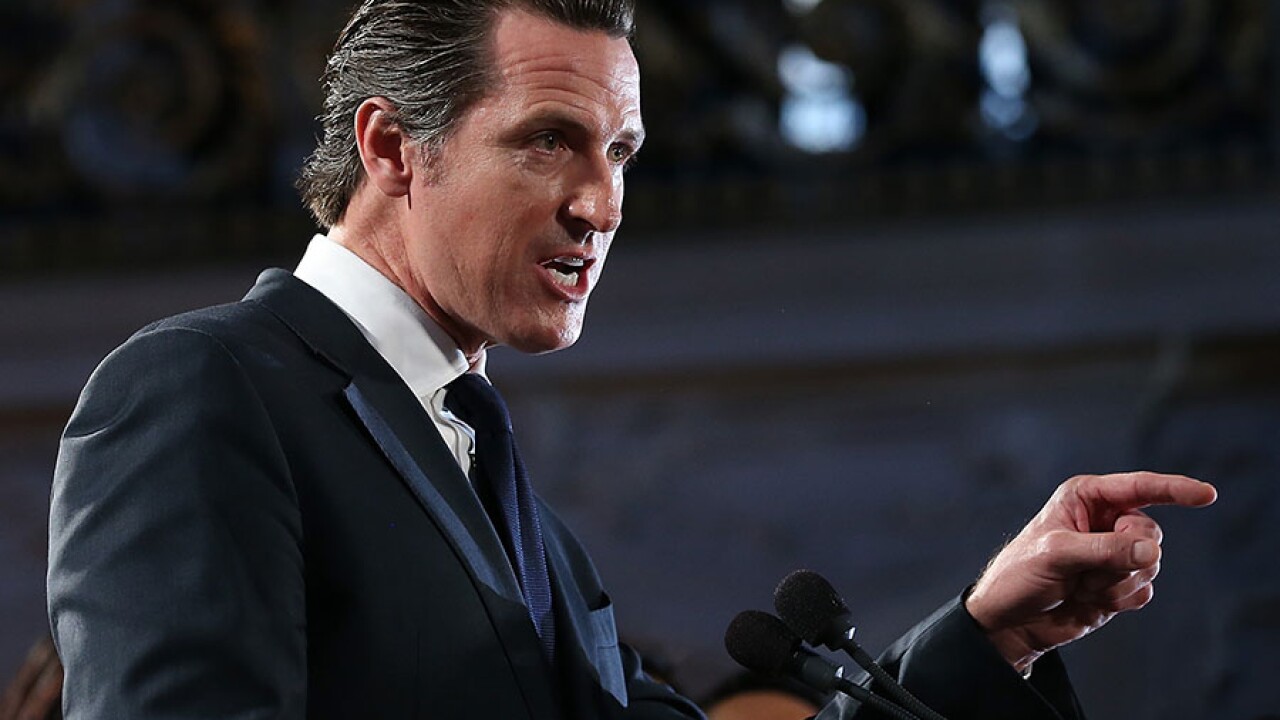
California Governor Gavin Newsom has initiated a historic policy shift, issuing an executive order that mandates a comprehensive re-evaluation of the state’s labor framework in response to the rapid rise of artificial intelligence. This move represents the first formal attempt by a U.S. government official to preemptively buffer the workforce against structural unemployment caused by automation.
The directive commands state agencies to engage in deep collaboration with academic institutions, labor unions, and private industry stakeholders. The objective is to formulate a new industrial policy that goes beyond traditional unemployment insurance, exploring measures such as subsidies for companies that prioritize human retention over full machine substitution. Furthermore, the order mandates an investigation into radical economic models, specifically Universal Basic Income (UBI) and wealth-sharing initiatives that could grant citizens stakes in the capital gains generated by AI productivity.
The Mounting Pressure: Silicon Valley’s Efficiency Mandate
Governor Newsom’s mandate emerges from a context of acute labor instability in the technology sector. Silicon Valley firms, including Meta, Intel, and Amazon, have initiated aggressive workforce reductions, explicitly citing AI-driven efficiency gains as the justification for cutting thousands of roles. These layoffs signal a transition where C-suite executives are prioritizing headcount optimization to achieve leaner operations, with administrative, marketing, and software-development roles taking the brunt of the impact.
This corporate trend is further complicated by dire forecasts from industry leaders. Anthropic CEO Dario Amodei has publicly speculated that a majority of white-collar positions could be rendered obsolete within five years. Such warnings have prompted global governments—including those in the United Kingdom, Japan, and South Korea—to expedite research into social safety nets like UBI, mirroring arguments voiced by high-profile tech figures like Elon Musk, who view AI as a potential driver for state-funded income distribution.
Augmentation vs. Replacement: The Debate Over Policy Goals
While the state pushes for protective measures, some analysts advise caution regarding a policy focused purely on preservation. Holger Mueller of Constellation Research notes that the primary opportunity for the state lies in augmentation—the process of integrating AI to handle repetitive tasks, thereby elevating the human worker to high-value, creative, and strategic functions.
According to this perspective, the government’s role should not be to stall technological progress to save specific job titles, but to overhaul educational curriculums to prepare the next generation for an AI-augmented economy. By focusing solely on preventing job loss, critics argue that California risks stifling the very innovation that drives its economy. Instead, the consensus among certain analysts is that policy should focus on right-skilling—shifting the workforce into roles that leverage human judgement, which AI currently struggles to replicate.
Strategic Divergence: State Regulation vs. Federal Hesitation
California’s proactive stance highlights a deepening rift between state-level regulatory ambition and the federal government’s cautious, often paralyzed approach. While Sacramento has consistently positioned itself as the nation’s de facto AI regulator—evidenced by earlier mandates on AI model safety and contract vetting—the federal government remains caught between wanting to secure global AI dominance against international competitors like China and the internal push for safety oversight.
The recent discovery of sophisticated models capable of automating complex software vulnerability detection has forced a nervous reconsideration of federal policy. However, the temporary suspension of federal executive actions on safety testing reinforces the idea that the U.S. is still struggling to reconcile the dual urgencies of national security and economic stability. By initiating this labor-focused review, California is signaling that if the federal government will not address the societal consequences of the AI revolution, the state will set its own agenda for worker protections in the digital age.