
X Shifts to Content Archiving: The Strategic Pivot to a Retrieval-First Ecosystem
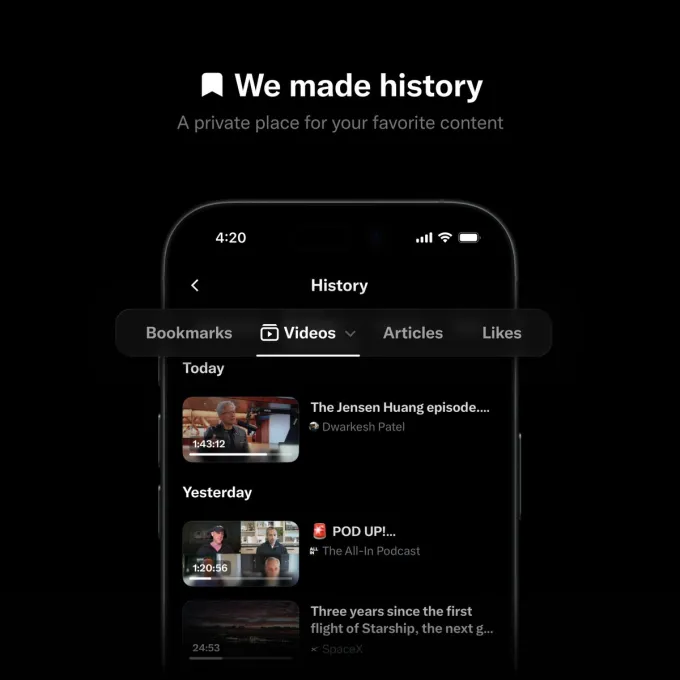
X is fundamentally altering its architecture by rebranding its Bookmarks function into a comprehensive History tab. By consolidating Bookmarks, Likes, Videos, and Articles into a centralized interface, the platform is transitioning from a transient, real-time news feed into a persistent content repository. This update—initially rolling out to iOS users—marks a significant departure from the classic social media model, which typically prioritizes the freshness of content over its long-term utility.
Breaking Down the Architecture of the History Tab
The new History feature serves as a private dashboard that categorizes user engagement into distinct buckets. By segmenting data into Bookmarks, Likes, Videos, and Articles, X is attempting to reduce the friction of finding that has historically plagued the platform.
Previously, users had to navigate disparate UI elements—browsing a profile tab for Likes or accessing the main menu for Bookmarks—to retrieve previously consumed media. By unifying these under one tab, the platform is effectively turning itself into a browser-like experience, where users can retrace their digital footprint without leaving the ecosystem.
Strategic Implications for Long-Form Content
From a business perspective, the introduction of this feature is an aggressive play to bolster X’s long-form publishing tools. As X pushes creators to bypass external hosting and publish articles natively, the lack of an efficient read-it-later mechanism had been a significant barrier to engagement.
By automating the indexing of articles and videos, the platform is turning every account into a personalized digital archive. This reduces the pressure on users to digest content in a single session, thereby potentially increasing session depth and time-on-app metrics. For publishers, this creates a clearer value proposition: X is no longer just a funnel to external websites, but a destination for sustained reading and viewing.
The Broader Industry Shift: Closing the Loop
The timing of this update is far from coincidental. Major social platforms have increasingly moved toward walled garden strategies, seeking to retain traffic within their own interfaces. With referral traffic from legacy platforms like Facebook and Google declining due to algorithm shifts and the rise of AI-augmented search, X is positioning itself to capture the vacuum left behind.
By facilitating a save-it-for-later workflow, X is essentially building a proprietary news reader. For the industry, this signals a hardening of the trend where the open web is being deprioritized in favor of centralized content ecosystems. If X can successfully convince users to utilize the platform as their primary repository for articles and videos, it secures a greater share of attention economy, making the platform more resilient to external search traffic fluctuations.
This consolidation strategy reflects a broader trend among major tech players to increase switching costs. As users populate their History tab with their favorite creators and preferred long-form content, the platform becomes deeply personalized, making the user less likely to migrate elsewhere. X is evolving into a comprehensive information hub, betting that the utility of an integrated archive will drive higher retention among power users and premium creators alike.