
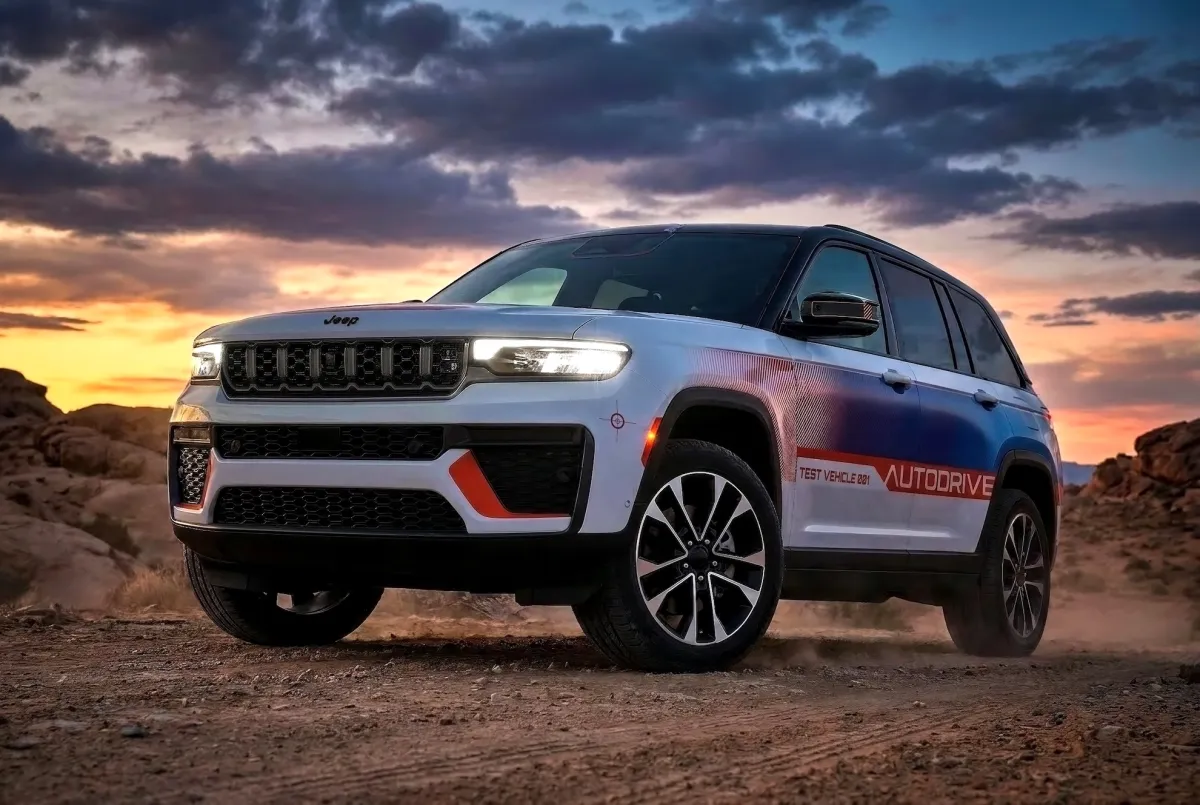
Stellantis Bets on Wayve: A Pivot Toward Software-Defined Flexibility
Stellantis has signaled a major shift in its autonomous vehicle roadmap by securing a commercial agreement with London-based AI startup Wayve. Scheduled for a 2028 deployment, this partnership aims to integrate advanced driver-assistance systems (ADAS) across the automaker’s expansive North American fleet. By aligning with Wayve, Stellantis is deliberately stepping away from the capital-intensive, hardware-locked strategies that have dominated the industry for the past decade.
The Shift from Map-Centric to Neural-Centric Navigation
For years, the development of self-driving technology was shackled to high-definition (HD) mapping and expensive, proprietary sensor arrays. This approach proved to be a scalability nightmare, limiting autonomous capabilities to pre-mapped geofenced zones. Wayve offers an alternative paradigm: an end-to-end deep learning model that functions using standard automotive sensors and flexible compute stacks.
For a legacy manufacturer like Stellantis, which manages 14 disparate brands, this is a distinct operational advantage. Rather than re-engineering vehicle architectures to meet the rigid requirements of a specific self-driving hardware suite, Stellantis can deploy AI brains that adapt to existing sensor configurations. This reduces the logistical burden of manufacturing and allows for faster integration across diverse vehicle platforms, from heavy-duty Ram trucks to compact urban commuters.
Strategic Scaling and the Mass-Market Opportunity
The deal arrives on the heels of Wayve’s massive $1.2 billion Series D round, which saw participation from tech titans Microsoft and Nvidia, as well as automotive incumbents like Nissan. For Stellantis, this partnership is a critical pillar of its broader North American growth strategy, which includes launching 11 new vehicles by 2030, with a heavy emphasis on sub-$40,000 price points.
The core promise of Wayve’s technology is its efficiency. By eliminating the need for bespoke, hyper-expensive sensor suites, Wayve creates a pathway for automakers to offer Full Self-Driving (FSD) style capabilities in mass-market vehicles rather than restricting them to premium trims. If Stellantis successfully integrates this software into its budget-conscious portfolio, it could effectively democratize hands-off driving across segments that have historically been excluded from advanced autonomy.
Implications for the Competitive Landscape
Industry analysts have long debated whether Tesla’s vision-only approach would remain an outlier or become the standard. With Wayve securing deals with both Nissan and Stellantis, the industry is increasingly favoring an AI for everything model over the sensor integration model.
Wayve’s ability to prototype a functional system for Stellantis in just two months highlights the agility of its software-first approach. By emphasizing that its neural networks are hardware-agnostic—capable of running on various chipsets and vehicle form factors—Wayve is positioning itself as the Android for Autonomy.
The 2028 Horizon
While the 2028 timeline may seem distant, it allows Stellantis time to refine its integration while industry regulations continue to evolve around AI-driven vehicles. However, the true test will be the performance of the system in the complex, variable environments of North American cities. If the platform can prove its capability to generalize across varying road conditions and traffic patterns without the crutch of HD maps, Stellantis may have effectively bypassed the most expensive roadblocks in autonomous development.
For the automotive sector, this partnership marks the end of the era where hardware determined where a car could drive. The future, as Stellantis and Wayve are betting, belongs to manufacturers who can best leverage flexible intelligence, regardless of the chassis underneath.