
The Convergence of Hardware Minimalization and Behavioral Economics
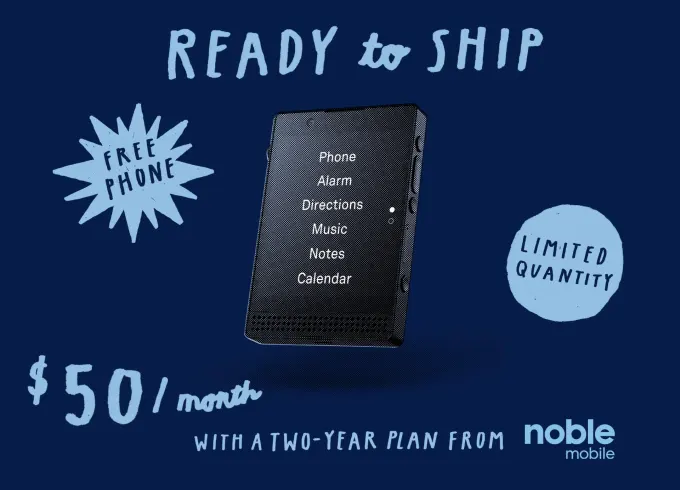
The partnership between Light Phone and Noble Mobile—an MVNO spearheaded by Andrew Yang—marks a significant pivot in the digital wellbeing market. By bundling the Light Phone III with a data-rebate contract, the companies are not merely selling hardware; they are codifying a business model centered on intentional consumption. In an industry dominated by Attention Economy metrics, this move suggests a nascent shift toward monetizing the absence of data usage rather than the maximization of it.
For Light Phone, this collaboration addresses a primary logistical hurdle: the democratization of access. Previously, the brand suffered from a high barrier to entry, characterized by significant upfront costs and lengthy pre-order wait times. By offloading the device cost into a $50 monthly service bundle, they are effectively lowering the price of admission, allowing the device to penetrate a broader demographic beyond the early-adopter niche.
Reshaping the MVNO Landscape
Noble Mobile’s integration is the critical variable here. By offering financial incentives—up to $5 back per unused gigabyte—the carrier is essentially applying behavioral economics to smartphone usage. Since the Light Phone environment is inherently restrictive, data consumption is naturally throttled.
This creates a self-reinforcing ecosystem: the user saves money by using their phone less, which aligns perfectly with the device’s philosophical mission. It is a rare instance of industrial alignment where the incentives of the consumer, the service provider, and the hardware manufacturer are all pulling in the same direction: decreased digital dependency.
The Camera Dilemma: Finding the Middle Ground
The inclusion of an OLED screen and a camera in the Light Phone III highlights the firm’s struggle to balance ideological purity with practical utility. Founders Joe Hollier and Kaiwei Tang have consciously avoided the smarter features that lead to compulsive scrolling. By stripping away social sharing capabilities and algorithmic post-processing, they are positioning the device’s camera as a tool for personal record-keeping rather than social validation.
This design strategy—emphasizing local storage over cloud-syncing and raw, un-AI-enhanced image quality—is a direct rebuttal to the current industry trend of computational photography. It forces the user to prioritize the experience of capturing the moment over the immediate desire to broadcast it.
Structural Limitations and Market Reality
Despite its allure, the Light Phone III remains a device for a specific type of user who can tolerate significant trade-offs. The reliance on SMS, which lacks the end-to-end encryption and media fidelity of modern RCS or iMessage protocols, highlights the tension between radical minimalism and functional utility in a social landscape still heavily tied to smartphone ecosystems.
For many, the two-phone strategy—retaining a smartphone for essential apps while using the Light Phone for daily communication—remains the most viable path. This highlights a persistent reality in the current tech cycle: while there is a growing, palpable fatigue regarding always-on connectivity, the infrastructure of modern life still expects a level of sophistication that a truly dumb device cannot provide.
The Light/Noble initiative is a fascinating test case. It proves that the desire to reclaim attention has market value, but it also underscores that true digital minimalism is rarely a binary choice. Instead, it is becoming a complex, tiered selection of tools designed to curate—rather than eliminate—our digital footprints.