
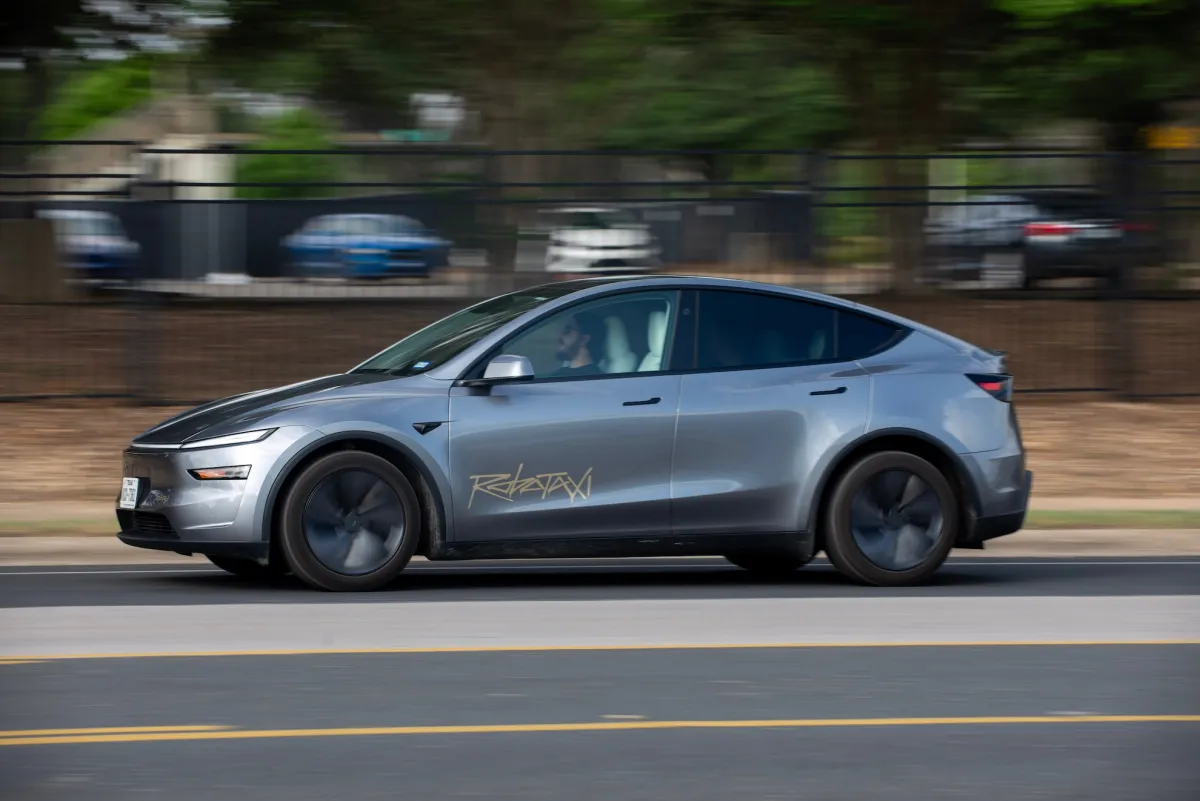
Transparency Shift: Tesla’s Robotaxi Data Reveals Operational Friction
Recent filings submitted to the National Highway Traffic Safety Administration (NHTSA) have shed light on the operational realities of Tesla’s Robotaxi network, confirming at least two incidents where teleoperators—remote human drivers—were involved in low-speed collisions. These disclosures replace previously redacted data, offering a rare, granular look at the technical challenges Tesla faces as it attempts to scale its autonomous ride-hailing services in Austin, Texas.
The incidents highlight a critical nuance in the autonomous vehicle (AV) industry: the transition between pure automation and remote human intervention is proving to be a potential point of failure.
The Role of Remote Teleoperation
Tesla’s stated philosophy regarding remote intervention is one of pragmatism. The company has previously informed lawmakers that teleoperators are authorized to assume control of vehicles under specific conditions, primarily to extricate cars from compromising positions. The stated goal is to avoid the logistical delay of dispatching field representatives, thereby maintaining traffic flow and vehicle uptime.
However, the recent incident reports underscore that remote operation is not a fail-safe. In one instance occurring in July 2025, a teleoperator attempting to navigate an automated driving system (ADS) that had stalled on a street inadvertently drove the vehicle onto a curb and into a metal fence. A subsequent incident in January 2026 saw a remote operator strike a construction barricade at 9 MPH while attempting to assist with navigation.
Implications for Scaling and Safety
Industry observers have long questioned the pace of Tesla’s Robotaxi expansion. While competitors like Waymo and Zoox maintain larger fleets with higher raw incident counts, Tesla’s slower rollout is now increasingly viewed through the lens of these technical dependencies. Elon Musk’s recent remarks regarding a cautious approach to expansion seem to reflect these internal struggles with system reliability and human-in-the-loop performance.
The revelation that these crashes occurred while a teleoperator—and a safety monitor—were providing oversight suggests that the hand-off between AI and human control remains a high-risk maneuver. The system’s inability to navigate simple obstacles, such as temporary construction barricades or gated lot barriers, mirrors common challenges seen across the industry, though Tesla’s specific history with static object avoidance continues to draw regulatory scrutiny.
Regulatory and Competitive Landscape
Tesla’s decision to unredact these narratives marks a significant pivot in its regulatory strategy. Previously, the company maintained that such details constituted confidential business information, shielding them from public view. By providing this transparency, Tesla is now subjecting its performance to the same level of public analysis as the rest of the AV sector.
This data dump does more than showcase minor fender-benders; it reveals a fundamental truth about autonomous software. Achieving Level 4 or Level 5 autonomy requires more than just high-speed highway proficiency. It demands the ability to handle the edge cases—such as navigating around temporary barricades or negotiating tight, gated parking structures—that currently necessitate human intervention.
As the industry moves toward wider commercialization, the pressure on Tesla to enhance its sensor-to-action pipeline will only mount. If teleoperation is intended to be a permanent bridge rather than a temporary crutch, the margin for human error—and the risk of system confusion during the transition—must be aggressively mitigated. For now, the data confirms that even as Tesla pushes toward a future of ride-hail autonomy, the path is obstructed by the same logistical hurdles that have defined the evolution of self-driving technology for the last decade.