
The Evolution of Generative Audio Architecture
Stability AI’s introduction of the Stable Audio 3.0 model suite marks a pivotal shift in the generative media landscape. By expanding the output threshold to over six minutes, the company is moving past the novelty phase of short-form audio snippets and into the realm of structured, full-length musical composition.
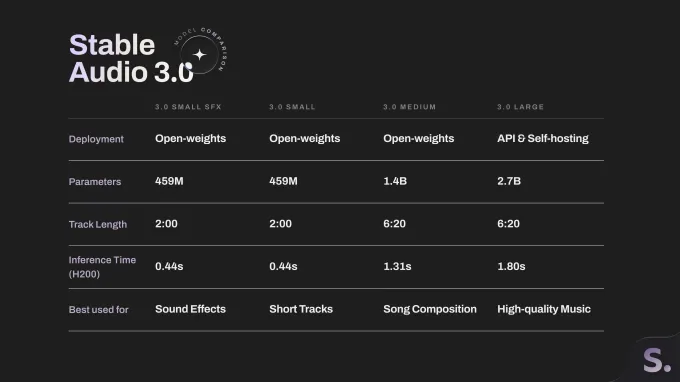
The technical architecture is segmented across four tiers: small SFX (459M parameters), small (459M parameters), medium (1.4B parameters), and large (2.7B parameters). This tiered deployment is a calculated strategic move. By offering the smaller and medium models with open weights, Stability AI is effectively incentivizing developers to integrate their technology into mobile applications and edge computing environments, where on-device generation up to two minutes remains a competitive advantage.
Bridging the Gap Between Length and Coherence
The primary engineering challenge in generative audio has historically been the memory of the model—maintaining melodic consistency and rhythmic structure over extended durations. Stable Audio 3.0 claims to solve this by more than doubling the capacity of its predecessor, Stable Audio 2.0.
For professional creators, the ability to generate six-minute tracks with temporal coherence is a game changer. It transforms the AI from a simple sound-effect generator into a viable tool for songwriting, underscore composition, and long-form sound design. The 2.7B parameter large model, restricted to API and enterprise-grade hosting, serves as the company’s flagship commercial product, reserved for use-cases requiring the highest fidelity and structural integrity.
The Licensed Data Imperative
The broader generative AI industry is currently marred by legal uncertainty. The ongoing copyright litigation facing players like Suno and Udio highlights the critical vulnerability of models trained on scraped, unlicensed datasets. Stability AI is preemptively distancing itself from this volatility by emphasizing that Stable Audio 3.0 is built exclusively upon fully licensed data.
This shift toward copyright-compliant AI is not merely an ethical stance; it is a business necessity. By securing partnerships with major industry players like Warner Music Group and Universal Music Group, Stability AI is attempting to build a sustainable moat. Companies relying on ambiguous data sources risk massive court-ordered model destruction; Stability AI’s curated data strategy aims to make its output enterprise-safe for commercial release.
Strategic Talent Acquisition and Industry Integration
Stability AI is further signaling its intent to dominate the professional audio space by bringing in veteran leadership. The appointment of Ethan Kaplan—formerly of Universal Audio and Fender—is a clear play to bridge the culture gap between Silicon Valley software developers and traditional music industry incumbents.
This trend of industry-to-AI executive hiring is becoming an industry standard. As competitors like ElevenLabs and Suno similarly recruit high-level music royalty from firms like Kobalt and Merlin, it is evident that the next phase of the AI Music War will be won by those who can best weave existing professional workflows into their platforms.
Implications for the Future of Music Production
The broader implication of this release is the looming commoditization of audio production. When mid-tier models can generate six minutes of structured, coherent music, the barrier to entry for content creators collapses. However, the true value for professional musicians will likely lie in the new suite of products Stability AI has teased for its platform.
Rather than just replacing the composer, the industry is trending toward a hybrid model where AI serves as an accelerant for professional workflows. Stability AI stands at a crossroads: if they can successfully integrate these high-parameter models with professional digital audio workstation (DAW) integrations while insulating their user base from the threat of litigation through their licensing deals, they may succeed where others—relying on the move fast and break things approach—eventually fail.