
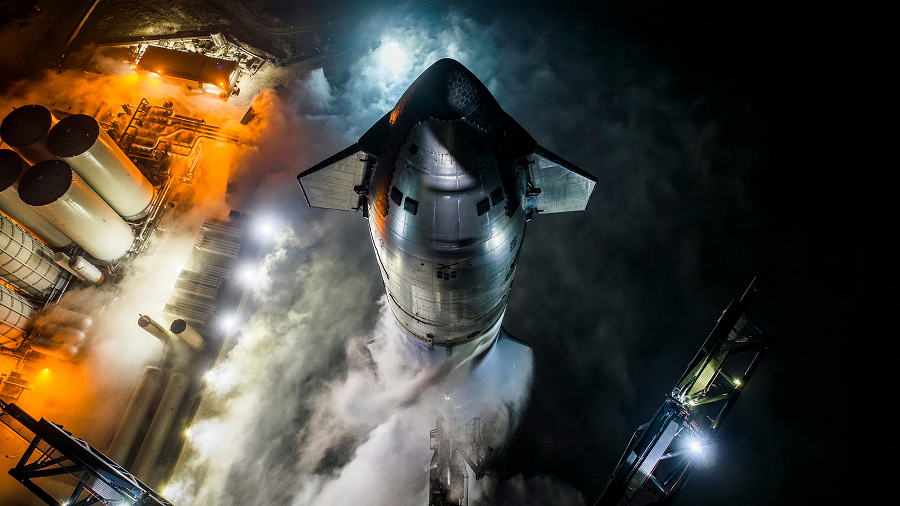
SpaceX Signals Market Shift with IPO Filing
SpaceX has officially initiated its path to the public markets, filing documents for an initial public offering (IPO) on the Nasdaq under the ticker symbol SPCX. This filing marks a pivotal moment for the capital-intensive space and artificial intelligence sectors, particularly as the broader technology market grapples with the immense costs of scaling generative AI infrastructure.
The move comes as investor enthusiasm for AI-adjacent assets reaches a fever pitch. Alongside SpaceX’s expected listing, reports indicate that OpenAI is preparing for its own confidential IPO filing—potentially as early as the end of this week. With analysts pegging OpenAI’s potential market valuation at approximately $1 trillion, the simultaneous public entries of these two giants could signal a liquidity event that resets valuation expectations for the entire frontier-tech ecosystem.
Financial Pressures and the Starlink Engine
Despite its technological dominance, SpaceX’s latest financial disclosures highlight the extreme volatility of its current growth phase. The company reported $4.69 billion in first-quarter revenue, representing a 15% year-over-year increase. While growth remains firmly in positive territory, it shows a significant deceleration from the 33% gain observed in 2025.
Equally telling is the company’s burn rate. SpaceX recorded a net loss of $4.28 billion for the first quarter, nearly matching its total net loss for the entire 2025 fiscal year. This fiscal trajectory underscores the massive capital expenditure required to fund the Starlink constellation and the development of the Starship launch vehicle.
Starlink currently functions as the company’s primary financial pillar, contributing $3.25 billion in revenue for the first quarter—a 27% increase. Critically, Starlink is the sole driver of the company’s adjusted EBITDA; without it, SpaceX’s other ventures, including internal AI compute projects and launch logistics, operate as significant net drains on liquidity.
The V3 Architecture and Compute Supremacy
SpaceX’s strategy for long-term viability rests on the V3 satellite iteration. By moving to a platform that provides a terabit per second of bandwidth—a ten-fold increase over existing units—SpaceX aims to reduce the unit cost of connectivity while enabling direct-to-device communication.
More importantly, the integration of on-orbit AI hardware represents a shift from a connectivity company to a distributed computing enterprise. By using Starship to deploy high-power satellites equipped with advanced AI chips and expanded solar arrays, SpaceX is essentially building a space-based data center. This move provides a strategic hedge against terrestrial data center constraints.
Strategic Partnerships and Competitive Dynamics
The filing also sheds light on the high-stakes collaborative competition defining the current market. SpaceX has secured a $1.25 billion monthly contract with Anthropic for access to its Colossus and forthcoming Colossus 2 supercomputers. This partnership illustrates a nuance in the industry: while companies like OpenAI and Anthropic are fierce rivals, they are all beholden to a handful of infrastructure providers—a group that now prominently includes the SpaceX-xAI axis.
From a structural perspective, the involvement of Goldman Sachs and Morgan Stanley as underwriters for the SpaceX IPO—and their reported role in the upcoming OpenAI listing—suggests a massive consolidation of financial influence. These institutions are positioning themselves as the gatekeepers for the AI era’s largest offerings, effectively managing the narrative for the most valuable private companies in modern history.
As the legal cloud lifts following the dismissal of Elon Musk’s lawsuit against OpenAI, the path for these companies to access broader public capital markets appears clear. For institutional investors, the question is no longer whether these companies can grow, but whether their extraordinary capital expenditure can eventually translate into consistent, sustainable profitability.