
The Infrastructure Bottleneck: Why Modal Labs’ $4.65B Valuation Signals a Market Shift
The rapid proliferation of AI-assisted coding tools has created a paradoxical challenge for modern enterprises: while the velocity of application development has skyrocketed, the underlying compute infrastructure has struggled to keep pace. As developers churn out AI-generated code at unprecedented rates, the demand for inference capacity has surged, exposing a critical vulnerability in the traditional cloud compute stack.
Modal Labs Inc. is positioning itself as the primary solution to this bottleneck. By securing $355 million in a massive funding round that vaulted the startup’s valuation to $4.65 billion—a more than fourfold increase since September—Modal has signaled to the market that compute orchestration is now as valuable as the AI models themselves.
Simplifying Serverless Inference
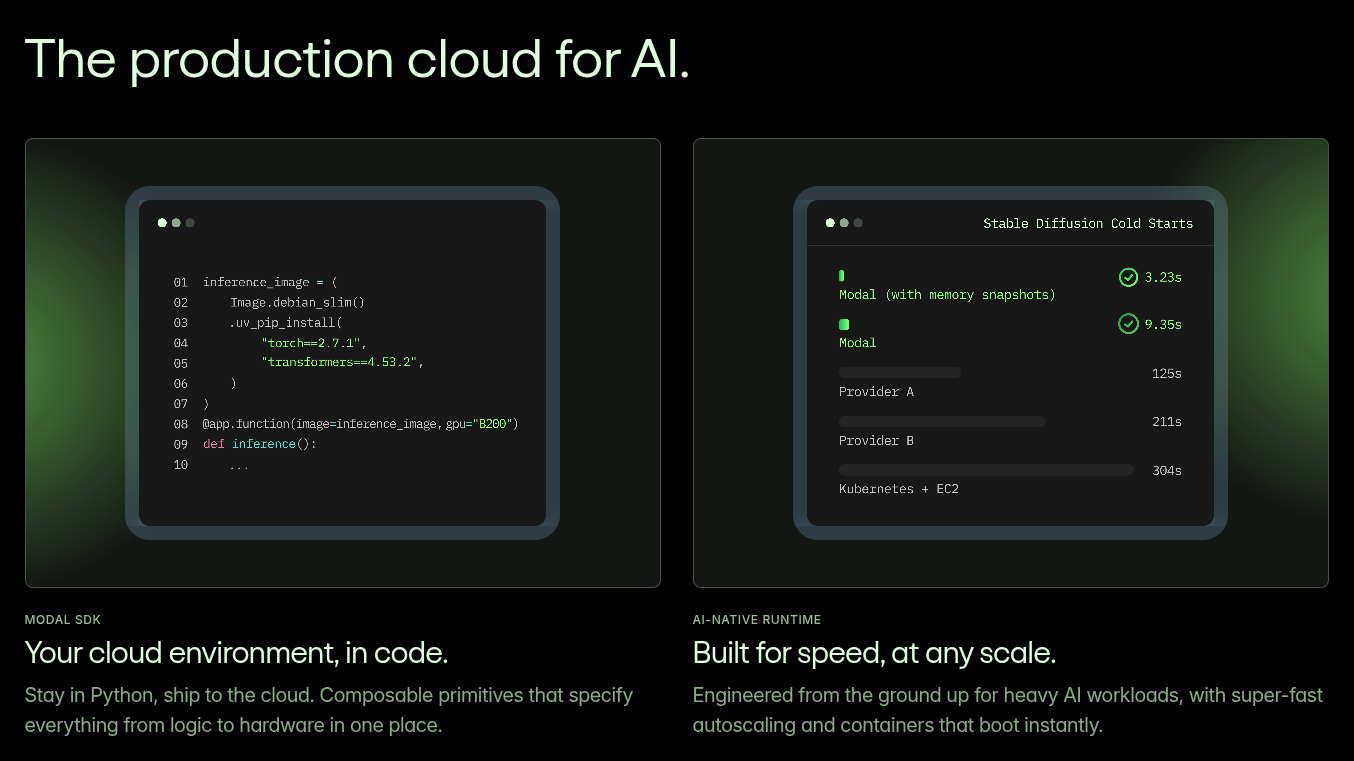
The core value proposition of Modal Labs lies in its abstraction of complexity. By providing a serverless infrastructure platform, Modal allows developers to bypass the arduous task of managing cloud instances, auto-scaling clusters, and hardware-specific configurations.
This model is particularly disruptive for specialized sectors like biotechnology, fintech, and meteorological modeling, where real-time inference is a competitive necessity. By acting as a thin, highly efficient layer between the developer and the physical GPU hardware, the company ensures that application performance remains a priority, while the plumbing of the cloud is handled programmatically in the background.
Solving for Artificial Scarcity
Perhaps the most significant takeaway from Modal’s rapid growth is its aggressive approach to supply chain diversification. The current AI gold rush has led to severe GPU scarcity, forcing companies to compete for limited availability from the Big Three cloud providers.
Modal has taken a different path: instead of relying on a single infrastructure provider, the company has expanded its network from five to 13 distinct compute partners. By aggregating capacity from lesser-known, specialized data center operators, Modal has created a more resilient supply chain that can buffer against the localized compute shortages that frequently disrupt enterprise AI projects. This strategy has proven fruitful; the company’s internal metrics suggest a massive scale-up, moving from $60 million to $300 million in annual recurring revenue over a period of just six months.
Implications for the Cloud Market
The investment trajectory of Modal suggests that the market for AI infrastructure is bifurcating. There is the high-level, foundational training layer dominated by tech giants, and then there is the agile, high-throughput inference layer where startups like Modal operate.
The fact that this latest funding was executed in two separate, upwardly adjusted tranches underscores a desperate investor appetite for scalable AI plumbing. As enterprises continue to integrate LLM-powered coding assistants into their CI/CD pipelines, the demand for execution environments that can provide instant, cost-effective inference will only deepen.
For the broader tech sector, Modal’s success is a signal that the bottleneck of the AI revolution is no longer just about access to high-end chips. It is about access to the intelligent orchestration of those chips. As the company continues to diversify its infrastructure backend and refine its developer sandbox environments, it is setting a standard for how modern software teams will consume compute as a utility rather than a capital-intensive managed service.