
The Maritime Intelligence Gap
The maritime industry currently operates in a state of primitive information asymmetry. Despite the ocean covering the vast majority of our planet, global shipping remains largely opaque. Governments, insurers, and logistics providers rely on legacy infrastructure that fails to provide a granular view of maritime activity. This lack of transparency leads to inefficiencies, security risks, and an inability to respond to real-time events.
Existing systems, specifically the Automatic Identification System (AIS), are fundamentally inadequate for the modern era. Originally designed as a rudimentary collision-avoidance tool, AIS functions by broadcasting periodic location pings. It lacks depth, context, and security. Because AIS data can be easily falsified or spoofed, the industry is left vulnerable to illicit trade and geopolitical maneuverings.
Quartermaster and the SmartMast Paradigm
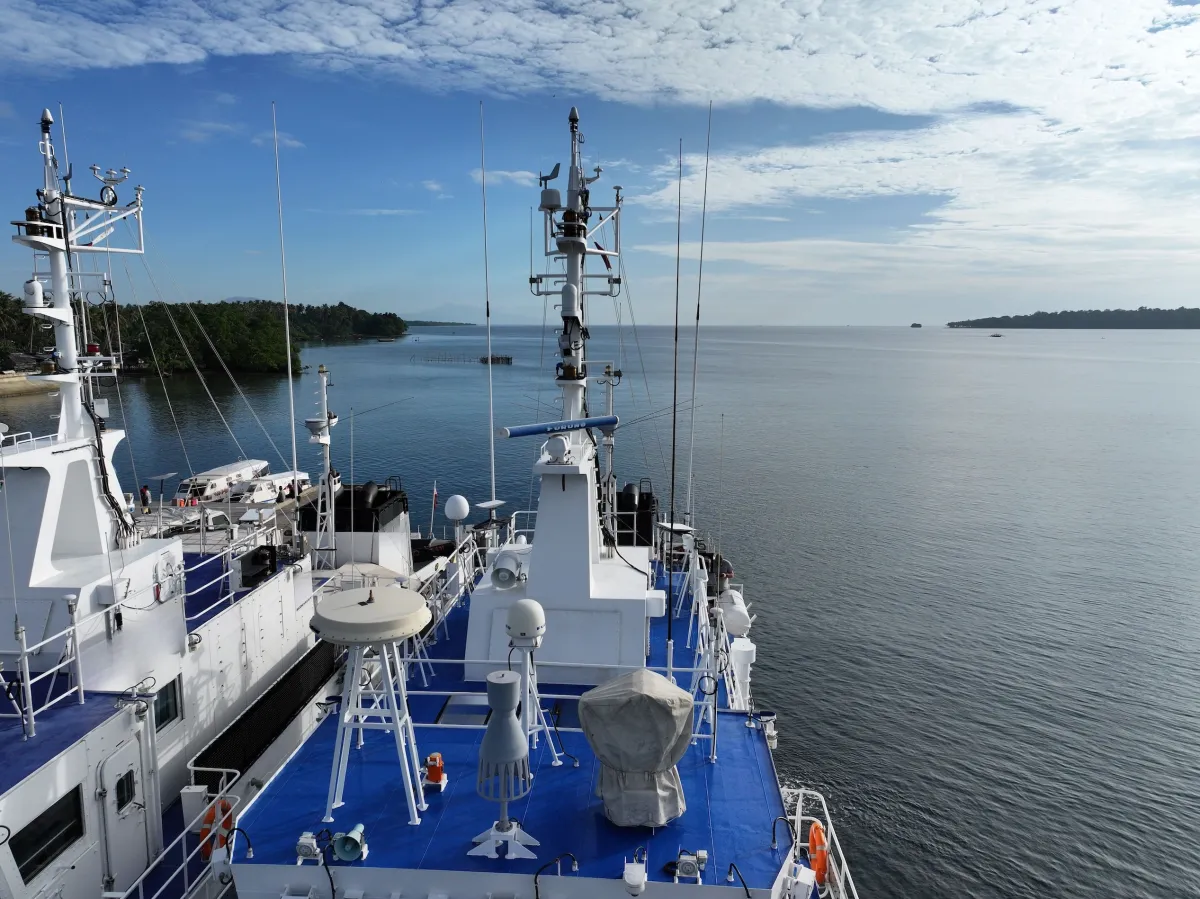
Arlington-based startup Quartermaster is attempting to close this intelligence gap with its SmartMast technology. Rather than relying on traditional, siloed sensor packages, Quartermaster has developed a weather-hardened, integrated array of cameras and radios designed for ship masts.
The innovation lies in the company’s continuous, distributed sensing network. By transforming every equipped ship into a sensor node, Quartermaster creates a decentralized, real-time data stream that transcends the limitations of simple location pings. This architecture essentially turns the global fleet into a hive mind, providing an unprecedented layer of situational awareness that individual operators could previously only dream of.
Market Scale and Infrastructure Economics
A critical challenge in marine technology has been the exorbitant cost of bespoke hardware. Previous entrants in the maritime tech space often failed because their hardware-heavy models could not scale across the millions of vessels traversing the oceans.
Quartermaster’s recent $43 million Series A funding, led by First Round Capital and Quiet Capital, signals investor confidence in a shift toward scalable infrastructure. By focusing on a pro-mariner model, the company aims to avoid the pitfalls of selling difficult, low-margin hardware upgrades to fleet operators. By providing value directly to those on the water—such as through maritime rescue assistance—Quartermaster builds a user incentive that strengthens its network effects.
The Future of Ocean Autonomy
The implications for this technology extend far beyond simple tracking. With more than 600 ships already operating as nodes and 10 million square miles covered, the company is effectively building a foundational layer for marine autonomy.
Industry analysts recognize that computer vision and machine learning applications in maritime environments are currently in their infancy. As Quartermaster continues to collect training data, it paves the way for autonomous vessel navigation, advanced predictive maintenance, and high-fidelity environmental monitoring.
Talent Acquisition and the Blue Ocean Opportunity
For software and AI engineers, the maritime sector offers an unusual proposition. While top-tier talent often finds itself competing for marginal improvements in saturated markets like social media or consumer advertising, the ocean represents a massive, untapped frontier.
Quartermaster expects to leverage a significant portion of its new capital to hire engineers who are looking to move away from the noise of traditional software development. The potential for a single developer to create meaningful, tangible progress in marine computer vision provides a structural advantage for the company. By essentially offering a clean slate for AI application, Quartermaster is positioning itself as a destination for mission-driven technical talent looking to tackle one of the last remaining logistics bottlenecks on Earth.