
A Strategic Pivot toward Quantum Sovereignty
The quantum computing sector has long suffered from a vertical integration bottleneck. Major tech giants like IBM and Google have operated in silos, architecting proprietary systems where hardware, software, and fabrication are inextricably linked. QuantWare’s latest funding round—a substantial $178 million influx—signals a paradigm shift toward a horizontal, modular ecosystem. By positioning itself as a pure-play manufacturer rather than a system builder, the Netherlands-based firm is effectively attempting to perform for the quantum era what TSMC achieved for the semiconductor industry.
The participation of heavyweights like Intel Capital, alongside IQT and ETF Partners, underscores the industry’s desperate need for a standardized manufacturing layer. As the race toward fault-tolerant quantum computing intensifies, the ability to outsource chip production to a dedicated foundry is no longer a luxury; it is a prerequisite for rapid innovation.
Engineering the Path to 10,000 Qubits
Central to this capital injection is the debut of the VIO-40K architecture. Scaling quantum processors is a notoriously difficult materials science and engineering challenge, primarily due to crosstalk and decoherence as qubit counts rise. By introducing an architecture capable of scaling to 10,000 qubits—a nearly two-order-of-magnitude leap over current leading-edge designs—QuantWare is providing a necessary sandbox for academic and commercial entities.
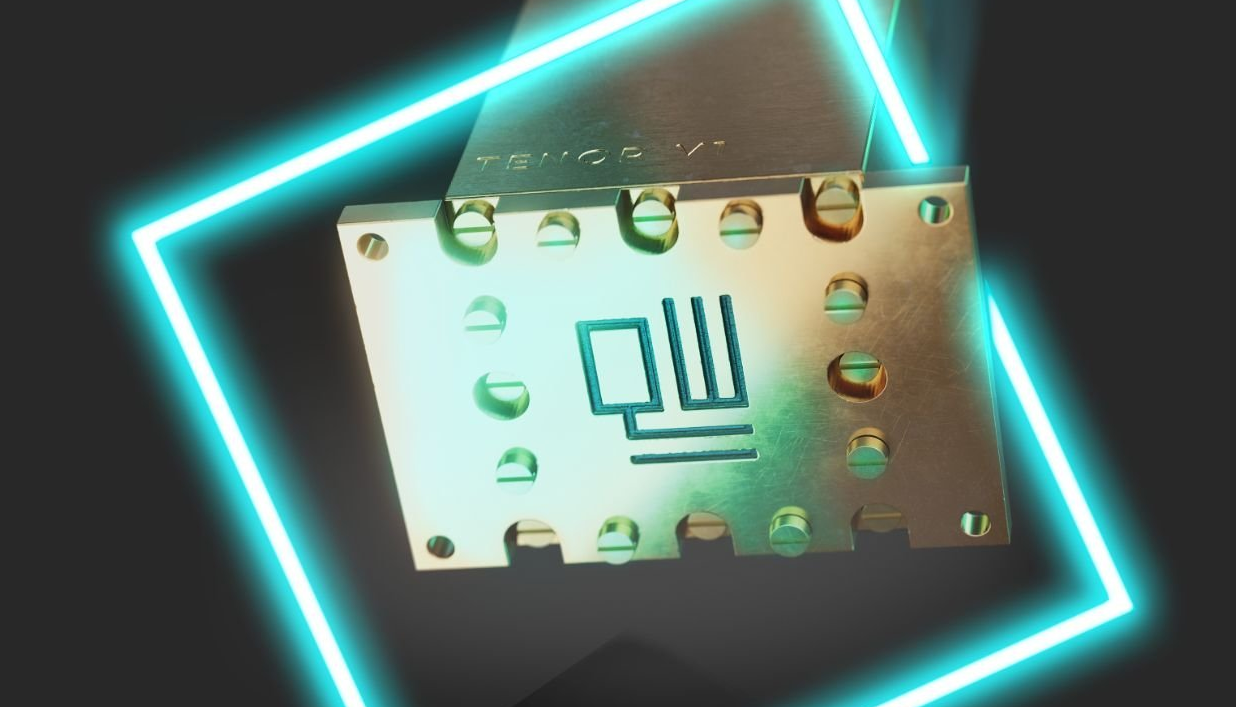
Unlike the experimental chips often found in university cleanrooms, QuantWare’s superconducting QPUs are designed for portability and commercial deployment. This off-the-shelf accessibility allows smaller startups and national labs to bypass the cleanroom hurdle, focusing instead on algorithm development and error correction protocols.
KiloFab: Industrializing the Quantum Supply Chain
The most significant implication of this news is the development of KiloFab. Scaling from small-batch research prototypes to industrial-grade fabrication is exactly where most high-tech hardware ventures fail. By formalizing this into a dedicated open architecture fab, QuantWare is de-risking the manufacturing process for the entire ecosystem.
The planned 20-fold increase in production capacity is poised to resolve a major pain point identified by investors: the packaging and manufacturing bottleneck. Many emerging quantum startups possess the design ingenuity to push the boundaries of superconducting logic but lack the specialized infrastructure to translate those designs into physical hardware. KiloFab serves as the bridge, accepting external designs and applying proprietary, high-throughput fabrication processes to deliver finished QPUs.
The Macro-Economic Impact
QuantWare’s model essentially democratizes access to state-of-the-art superconducting hardware. By already fulfilling orders for over 50 clients across 20 countries, they have established a de facto standard for QPU delivery. Intel Capital’s strategic interest here is telling; it suggests that even the legacy chip giants realize that the future of quantum is not merely in building the machines, but in mastering the supply chain infrastructure that sustains them.
Ultimately, QuantWare is moving the industry away from heroic engineering projects—where every quantum computer is a one-of-a-kind scientific feat—toward a repeatable, bill-of-materials mindset. If they can successfully scale KiloFab’s throughput while maintaining strict quality control on their VIO-based architecture, they will likely cement themselves as the underlying foundation upon which public and private quantum clouds are constructed.