
The Rise of Contextual Aggregation: Why Poppy Is Disrupting Digital Overload
Modern smartphone usage is characterized by a fragmented ecosystem. Between disparate messaging platforms, work calendars, and task management tools, users are forced to toggle between apps, leading to context switching fatigue. Poppy, a new entry into the productivity space, seeks to move beyond simple aggregation by positioning itself as an intelligent, proactive layer that sits atop these services.
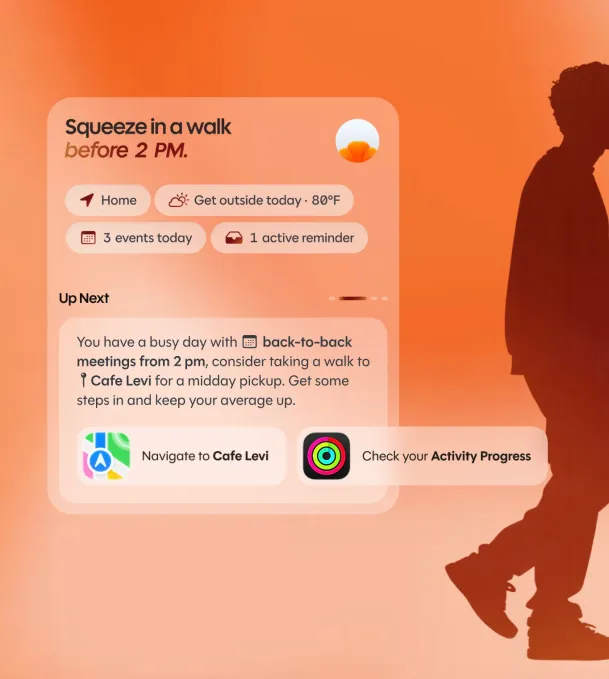
By integrating data from Gmail, Outlook, Apple Health, and various transit services, Poppy functions less as a dashboard and more as an automated concierge. The value proposition here is simple: instead of querying multiple platforms, the AI evaluates your current environment—including location and time constraints—to offer preemptive solutions.
Proactive Intelligence vs. Reactive Task Management
Most productivity software is reactive; it requires the user to input data or actively monitor lists. Poppy shifts this dynamic by leveraging large language models (LLMs) to scan for context. If your calendar indicates a gap and GPS data places you near a green space, the app suggests a restorative walk.
This model mirrors the vision championed by emerging AI-first companies like Humane. Founder Sai Kambampati, an alumnus of the AI hardware startup world, is applying these advanced interaction theories to a software-first approach. By surfacing dietary preferences found in past email threads when suggesting dining options, Poppy demonstrates a level of memory and association that traditional digital assistants have historically failed to maintain.
The Technical and Strategic Hurdle of Third-Party Access
The path forward for Poppy is not without significant technical obstacles. The application currently relies on a Mac-based bridge to ingest iMessage data, a workaround that highlights the walled garden challenges facing third-party developers. Apple’s strict ecosystem constraints create a perpetual risk for apps that depend on deep integration with iOS messaging services.
Furthermore, the company faces the delicate balancing act of balancing convenience with privacy. While the development team has implemented zero-retention policies for cloud-based inputs and data encryption, enterprise and privacy-conscious users will remain wary of centralized data processing.
The Goal of On-Device Autonomy
Kambampati’s long-term roadmap hinges on the evolution of edge computing. The current reliance on cloud-based LLMs is a bridge to where the industry is inevitably heading: local, on-device artificial intelligence.
As mobile chipsets increase their neural processing unit (NPU) capabilities, the need to ping external servers for simple scheduling or contextual nudges will diminish. Moving the processing load to the user’s hardware would bridge the privacy gap, making an assistant like Poppy a local-only entity.
Supported by $1.25 million in pre-seed funding from firms like Kindred Ventures and industry experts like Logan Kilpatrick, Poppy is placing a high-stakes bet. If they can refine the accuracy of these proactive prompts without infringing on user privacy, they may define a new category of ambient computing that reduces screen time rather than amplifying it.