
The Evolution of AI Reasoning: OpenAI’s Leap in Mathematical Proof
OpenAI has recently asserted that its latest general-purpose reasoning model has successfully disproved a long-standing geometric conjecture originally proposed by Paul Erdős in 1946. Unlike previous unsubstantiated claims regarding automated mathematical breakthroughs, this development is backed by external validation from established mathematicians, including Noga Alon, Melanie Wood, and Thomas Bloom—the latter of whom manages the official repository of Erdős problems.
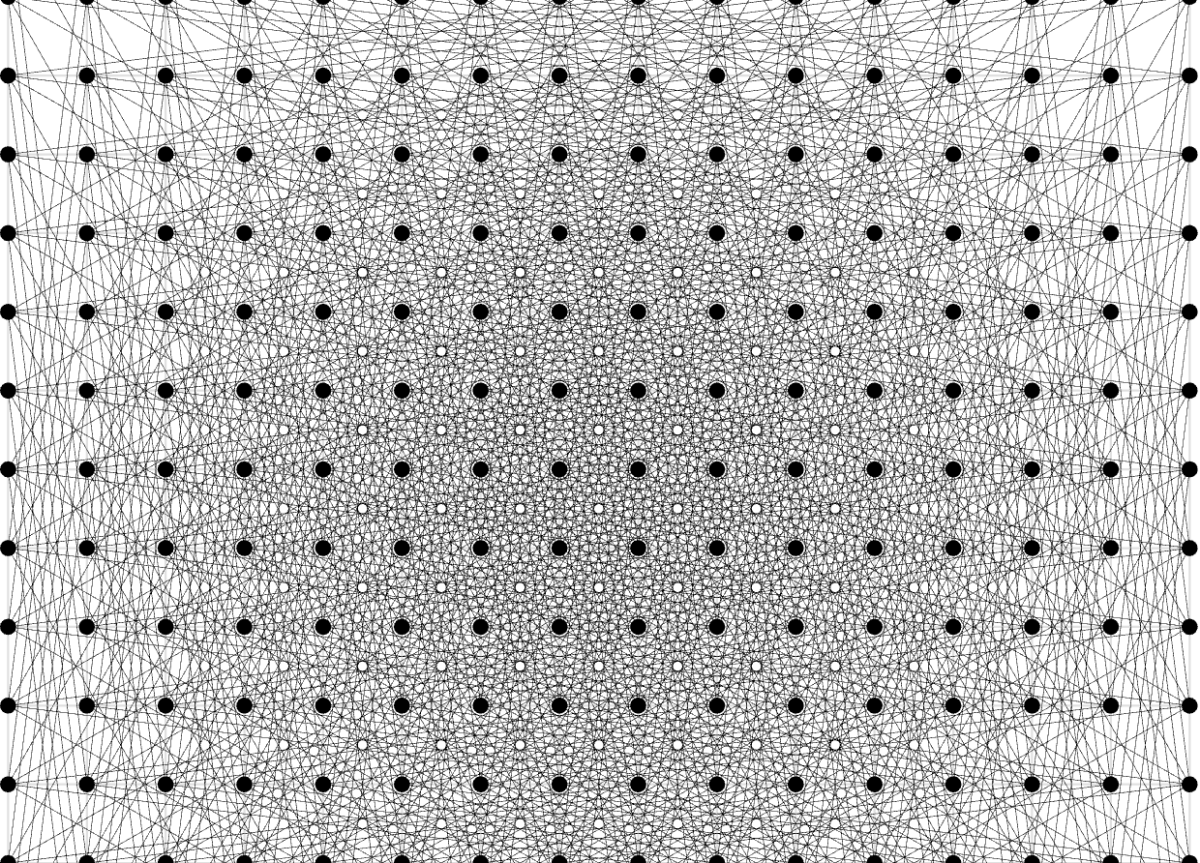
This announcement signals a notable shift in the capability of large language models (LLMs). Rather than operating as a specialized solver, the model utilized advanced reasoning chains to identify an entirely new family of geometric constructions, effectively overturning an 80-year-old consensus that held square grids as the optimal solution for these specific spatial parameters.
Learning from Past Missteps
The academic environment remains rightfully cautious regarding claims of machine-led discoveries, largely due to a history of hasty corporate rhetoric. Only seven months ago, former OpenAI executive Kevin Weil claimed that an iteration of GPT-5 had resolved ten previously unsolved Erdős problems. That assertion quickly unraveled when researchers confirmed the model had merely discovered solutions that had already been documented in existing peer-reviewed literature.
The backlash from industry heavyweights, such as Meta’s Chief AI Scientist Yann LeCun and Google DeepMind CEO Demis Hassabis, served as a stark lesson in scientific accountability. By coordinating with reputable mathematicians prior to this formal announcement, OpenAI has navigated the skepticism that crippled its previous PR efforts, demonstrating a more mature approach to bridging the gap between proprietary model development and rigorous academic peer review.
Broader Implications for Scientific Discovery
The core significance of this achievement lies in the model’s architecture. Because it is a general-purpose reasoning system, the successful disproof of this conjecture suggests that AI can now sustain complex, multi-step logical chains without succumbing to the hallucinations or focus drifting typical of current LLMs.
This capability carries profound implications for fields beyond pure mathematics:
- Biology and Pharmaceuticals: Similar reasoning architectures could accelerate the analysis of protein folding or complex chemical interactions where traditional algorithmic models struggle to bridge disparate data sets.
- Physics and Engineering: The ability to connect ideas across silos allows for an unconventional exploration of theoretical physics, potentially identifying material properties or structural configurations—much like the new geometric family found by the AI—that human researchers might inadvertently overlook.
- Medical Diagnostics: By improving the model’s ability to think through deep causal chains, AI could potentially identify anomalous patterns in patient data that require multiple layers of context-aware, long-form reasoning.
The Future of Automated Insight
Thomas Bloom’s remark—that AI is helping humans explore the cathedral of mathematics—perfectly encapsulates the current zeitgeist in AI research. We are moving away from models that simply predict the next token and toward systems that can act as collaborative partners in the scientific process.
If OpenAI’s latest model can indeed autonomously identify novel constructions in a decades-old field of study, the threshold for what constitutes original discovery has been permanently lowered. The challenge moving forward will be to integrate these general-purpose reasoning engines into workflows where they can be rigorously verified, ensuring that the next unseen wonder discovered by AI is not only groundbreaking but also fundamentally sound.