
The Strategic Shift Toward Sovereign Mobile Development
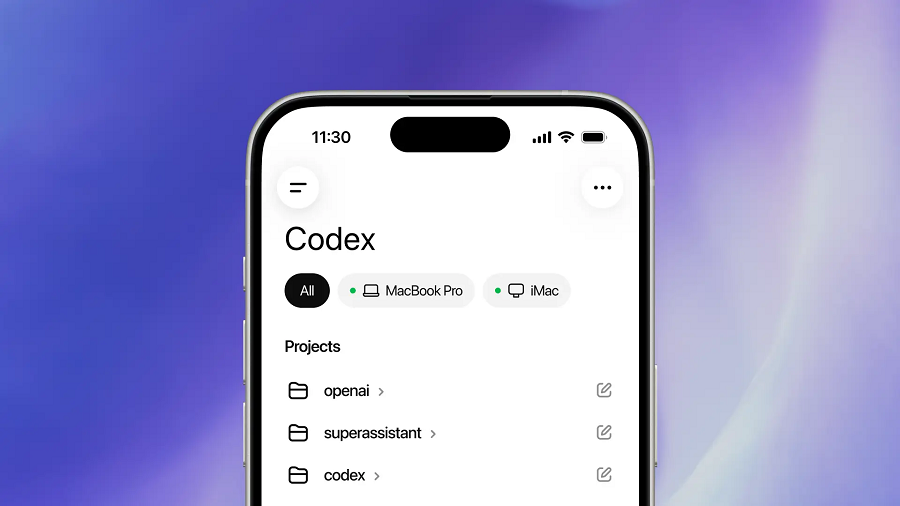
OpenAI’s decision to bring its Codex programming assistant to mobile platforms marks a calculated pivot in the lifecycle of AI-assisted engineering. By integrating Codex into the ChatGPT iOS and Android clients, OpenAI is moving beyond the desktop-bound coding buddy model and toward a paradigm of constant, asynchronous software development. This release follows a similar move by Anthropic, which introduced Claude Code to mobile months earlier, signaling that the ability to manage complex, multi-hour coding tasks from anywhere is no longer a luxury, but a competitive requirement.
The integration of GPT-5.5 as the underlying reasoning engine allows Codex to handle substantial code refactoring and project management tasks that exceed simple snippet generation. Crucially, this update addresses a major friction point in current LLM-driven workflows: the idle-waiting bottleneck. Under previous configurations, developers were tethered to their workstations to authorize high-stakes changes or resolve logic forks in legacy code. Mobile accessibility turns the AI assistant into an always-on project manager, eliminating hours of stalled productivity.
Optimizing Infrastructure Costs Through Real-Time Interception
Beyond providing convenience, the mobile transition serves as a tactical lever for project cost management. Large-scale coding tasks consume vast quantities of tokens, and under the previous desktop-only model, a model drifting toward an suboptimal implementation could rack up significant usage costs before a developer returned to their desk to intervene.
By providing mobile access to the execution stream, developers can now provide real-time course correction. If the LLM veers into an inefficient architectural path, users can terminate or adjust the session mid-flight. This granular level of control directly impacts the bottom line, preventing the runaway token problem that often inflates enterprise-level API and subscription billing.
Extensibility and the Enterprise Security Layer
OpenAI’s introduction of Hooks suggests a deeper recognition of the enterprise requirement for guardrails. By allowing teams to write custom scripts that intercept prompts and responses, OpenAI is handing the keys of governance to individual organizations.
Security and Compliance: Cybersecurity teams can use Hooks as a specialized filter to redact sensitive intellectual property or PII before it hits the model or the developer’s console.
Regulatory Audit Trails: Legal departments can mandate the logging of all interactions, transforming Codex from a standalone tool into a compliant node within the corporate tech stack.
Furthermore, the addition of Remote SSH capabilities acknowledges that professional development is increasingly migrating to cloud-based IDEs and remote ephemeral environments. By bridging the gap between the mobile interface and the remote development environment, OpenAI is effectively decoupling the coder from the machine. A developer’s proximity to their laptop is no longer the limiting factor for project velocity.
The Industry Trajectory Toward HIPAA-Compliant AI
The inclusion of HIPAA compliance support across standalone and embedded versions of Codex highlights OpenAI’s aggressive push into regulated sectors like healthcare and insurance. By making Codex safe for environments that handle protected health information, the company is stripping away one of the final barriers to mass adoption among mid-to-large enterprise engineering teams.
Alongside the support for programmatic access tokens, these updates present a matured ecosystem. The focus has clearly shifted from can the AI write code? to can the AI operate reliably, securely, and cost-effectively within a multi-cloud enterprise framework? As AI-native development environments continue to evolve, the ability to manage the lifecycle of a codebase via mobile — anchored by strict security protocols — will likely become the standard for the next generation of software engineering workflows.