
Nvidia’s Nemotron-3 Nano Omni: Redefining Multimodal Efficiency
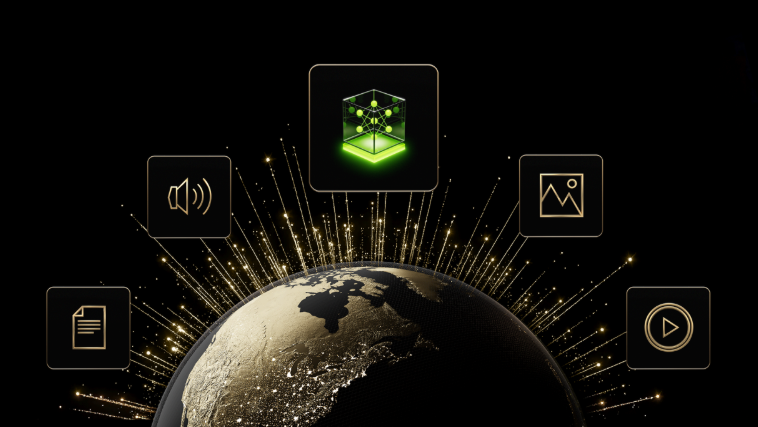
Nvidia has expanded its Nemotron-3 framework with the introduction of the Nano Omni model, a 30-billion parameter system engineered to serve as a high-performance engine for agentic artificial intelligence. By integrating text, vision, and speech processing into a single, unified architecture, Nvidia addresses one of the most persistent bottlenecks in AI development: the operational latency inherent in chain-linked specialized modules.
The model adopts a mixture-of-experts (MoE) configuration, which facilitates efficient compute utilization. Instead of activating the entire parameter bank for every request, the architecture dynamically routes tasks to the most relevant expert segments. This approach allows the Nano Omni to achieve a throughput rate reportedly nine times faster than contemporary open-source alternatives, fundamentally altering the economics of real-time AI agents.
From Perception to Action: Why Latency Matters
In the current landscape of autonomous agents, the utility of a model is defined by its reaction time. Previous generations of AI agents struggled with perception lag, particularly when processing high-resolution visual inputs like screen recordings or real-time conference feeds.
By eliminating the necessity to shift data between disparate vision and speech modules, Nemotron-3 Nano Omni enables sub-second processing. This is a critical development for developers building automation tools, such as AI-driven digital assistants, that must interpret UI elements and execute complex tasks in synchronization with human interaction. The ability to parse full HD video streams without massive infrastructure overhead clears a legacy hurdle, moving agents from experimental prototypes to functional enterprise workflows.
Strategic Deployment and Ecosystem Integration
Nvidia’s strategy appears to be one of architectural harmony rather than replacement. The Nano Omni model is designed to coexist with its larger counterparts—such as the Nemotron-3 Super—within a tiered deployment.
In this ecosystem, the Nano Omni handles low-latency perception and rapid interaction, effectively acting as the eyes and ears of the system, while more compute-heavy models handle the complex, high-level reasoning or long-horizon planning that requires deeper parameter inference.
This tiered approach offers significant benefits for scalability:
- Hardware Flexibility: The model’s compressed footprint allows deployment on high-end local consumer hardware, reducing total cost of ownership by offloading tasks from the cloud.
- Hybrid Architectures: Enterprises can mix proprietary cloud models with internal, open-weight Nvidia NIM microservices to optimize for both privacy and performance.
- Dev-Friendliness: By making the model accessible via Hugging Face and OpenRouter, Nvidia is fostering a developer ecosystem that prioritizes local execution over rigid API-dependent dependencies.
The Future of Agentic AI
The release of the Omni variant comes as the industry shifts away from simple chatbot interfaces toward autonomous, task-oriented agents. With over 50 million downloads across the existing Nemotron family, Nvidia is cementing its position not just as a hardware supplier, but as a primary software architect in the AI stack.
As these agents move into production environments, the distinction between smart and fast is narrowing. Nvidia’s emphasis on lightweight, high-throughput multimodal intelligence suggests that the next phase of enterprise AI will be defined by the model’s ability to act as a seamless, unobtrusive layer between raw data and actionable outcomes. For businesses, this means the barrier to automating complex, video-driven workflows has just been significantly lowered.