
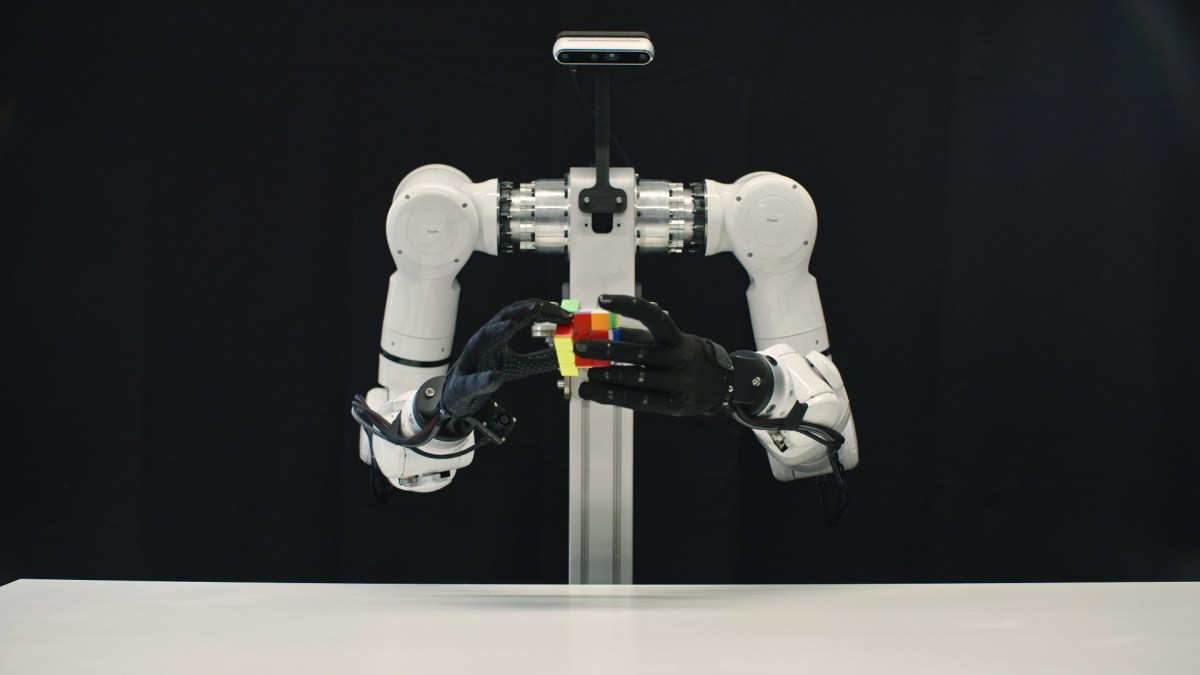
The Hardware-Centric Pivot in Artificial Robotics
The robotics industry has hit a structural wall. While advancements in Large Language Models (LLMs) and Vision-Language Models (VLMs) have surged, the embodiment gap—the chasm between digital reasoning and physical execution—remains cavernous. Genesis AI argues that the industry’s obsession with algorithmic refinement has overlooked a critical hardware mismatch: the rigid, primitive industrial grippers currently in use are fundamentally incapable of replicating the dexterity required for human-centric environments.
With $105 million in fresh seed funding, Genesis AI is signaling a Departure from the industry-standard two-finger paradigm. By prioritizing five-fingered, human-mimetic end-effectors paired with its proprietary GENE-26.5 model, the firm is betting that physical form factor is the primary inhibitor to general-purpose utility. This is a shift toward viewing the robot not merely as a processor of visual data, but as an extension of human motor intelligence.
Vertical Integration as a Strategic Moat
Most robotics firms rely on a fragmented supply chain, sourcing off-the-shelf actuators and sensors that were never designed for high-fidelity imitation learning. Genesis AI is disrupting this reliance through total vertical integration. By manufacturing proprietary sensor-integrated gloves, the company is treating human labor as a primary data source rather than an operational cost.
This architecture turns every human interaction into a high-fidelity data packet. By embedding data collection directly into the workflows of the professional workforce, Genesis AI is attempting to solve the industry’s most critical vulnerability: the data drought. In this model, hardware functions as a sophisticated, continuous data-capture apparatus, feeding the GENE-26.5 model with the nuance and high-stakes performance metrics that static video training sets cannot replicate.
The Data-Labor Paradox
Despite the efficiency gains provided by high-velocity simulation, Genesis AI faces a precarious cold start problem. Standard training sets—often derived from scraped internet content—lack the granular physical precision required for critical sectors like high-speed manufacturing or pharmaceutical assembly. The company’s growth model, therefore, relies on active human participation in its own obsolescence.
This creates a volatile socio-economic dynamic. As the company invites workers to participate in the development of systems aimed at automation, it risks intense friction with labor unions and policy advocates. The success of this deployment strategy is contingent upon navigating these regulatory hurdles. If labor groups view the data-labor loop as a form of intellectual exploitation rather than collaboration, the firm could face significant operational headwinds.
Global Talent Arbitrage and Competitive Positioning
The backing of high-profile investors like Eric Schmidt and Khosla Ventures suggests that the hardware-as-data thesis is gaining institutional credibility. By diversifying its operations across Paris, London, and California, Genesis AI is employing a sophisticated talent arbitrage strategy.
By leveraging European academic ecosystems, the firm side-steps the hyper-inflated labor markets and saturation of Silicon Valley. This global footprint allows Genesis to secure specialized expertise that domestic US competitors—such as Physical Intelligence or Skild AI—often overlook.
The ultimate test for Genesis AI will be in the transition from controlled pilot testing to unstructured, real-world deployment. If GENE-26.5 can deliver consistent agency in complex, long-sequence tasks, it will force a fundamental industry repricing. The company is effectively arguing that the path to Artificial General Intelligence (AGI) does not start with a more powerful server-side brain; it begins with the tactile capability to manipulate the physical world as effectively as a human hand.