
The Wealth Gap Paradigm: Analyzing Bezos’s Tax Policy Proposal
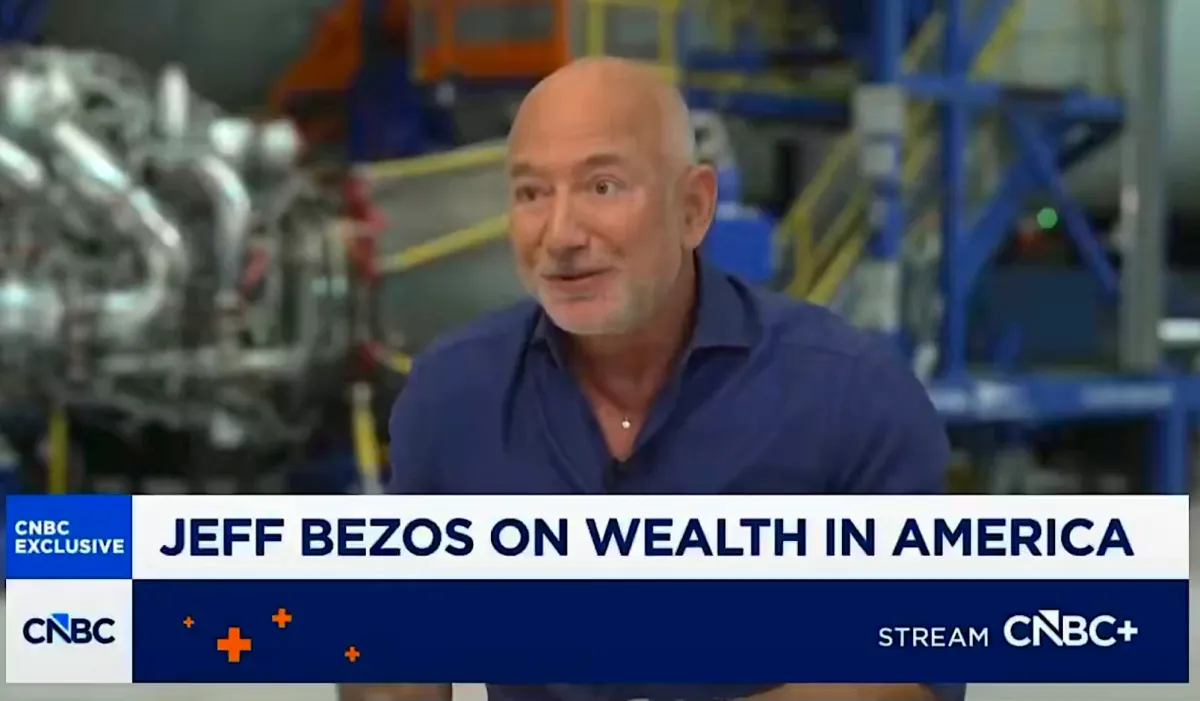
In a surprising pivot during a recent interview on CNBC, Amazon founder Jeff Bezos proposed an overhaul of the American tax structure, explicitly calling for the bottom 50% of earners to be exempt from federal income tax. Using the hypothetical example of a nurse in Queens earning $75,000 annually, Bezos contended that the financial burden placed on middle-income workers provides diminishing returns to the federal treasury while significantly eroding their personal quality of life.
From an industry analyst perspective, this comment is more than a populist soundbite; it is a calculated redirection of the tax debate. By framing the conversation around the negligible 3% contribution the lower half of earners makes to total revenue, Bezos is attempting to shift the discourse from tax rates to the efficacy of federal spending.
Identifying the Structural Discrepancy
Bezos’s argument highlights a visceral tension in the American economy: the difference between wage-based income and capital-based wealth. For the average worker, taxes are an immediate, non-negotiable deduction from gross earnings. For the ultra-wealthy, wealth accumulation often bypasses traditional income reporting through the utilization of unrealized capital gains and loan-leveraged lifestyles.
The ProPublica investigation into Bezos’s personal tax history remains the elephant in the room. By reporting only a fraction of his true net worth growth as taxable income, Bezos has operated within the legal framework to maintain a tax rate that, in percentage terms, is vastly lower than that of the very nurses and service workers he now champions. This structural reality creates a dichotomy: while Bezos views his tax strategies as optimized wealth management, the public perceives them as a fundamental market distortion that rewards the concentration of assets over the labor of the middle class.
The Revenue vs. Spending Conflict
Bezos’s insistence that the United States suffers from a spending problem rather than a revenue deficiency is a classic libertarian defense of capital accumulation. He argues that even if billionaires were taxed at significantly higher rates, the resulting revenue would be absorbed by federal bureaucratic waste rather than reaching the individuals who need it most.
This argument exposes a major friction point in modern fiscal policy. If the tax code is designed to fund public infrastructure—ranging from transit and healthcare to education—then billionaire advocacy for tax relief for the poor effectively pits the lower class against the state apparatus. By suggesting that the government cannot be trusted to distribute tax revenue efficiently, Bezos effectively delegitimizes the entire premise of the progressive income tax while maintaining his own fiscal position.
The Broader Economic Implications
The implications of Bezos’s stance are profound. If his vision were implemented, it would require a radical restructuring of the federal budget. The lost revenue from the bottom 50% would either need to be offset by deep spending cuts in social services—which the beneficiaries of such services rely on—or by significantly increasing the burden on the remaining tax brackets.
Furthermore, his comparison between the practicality of tax reform and the hypothetical, dream-like nature of space exploration is telling. While Bezos invests billions into companies like Blue Origin, he frames the act of taxing the wealthy as an ineffective fantasy that fails to solve the localized economic pain of the working class.
Ultimately, this intervention serves to reframe the billionaire’s role in society: not as a source of tax revenue to be tapped, but as an oracle of economic efficiency. For the nurse in Queens, however, the economic reality remains distinct; the $1,000 monthly tax burden is not a rounding error in a federal budget, but the difference between financial stability and a cycle of debt. Whether this represents a genuine shift in Bezos’s philosophy or a strategic deflection from the scrutiny of billionaire tax loopholes, the debate underscores the deep-seated instability of the current fiscal trajectory.