
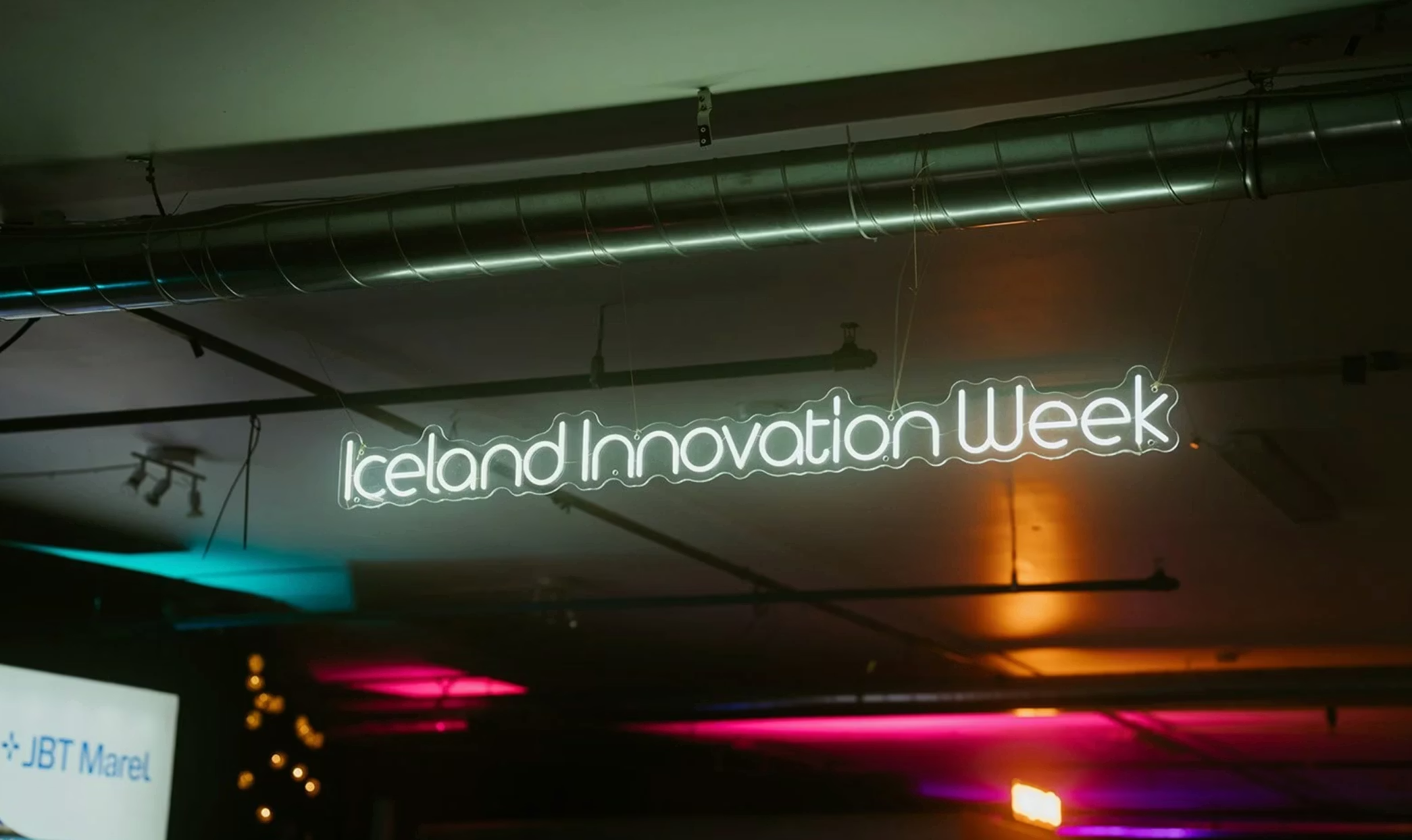
The Per Capita Paradox of Iceland’s Tech Ecosystem
At Iceland Innovation Week (IIW), the phrase “per capita” serves as both a defensive shield and a badge of honor. For a nation with a population under 400,000, framing success through the lens of density rather than absolute volume is essential. However, this demographic constraint forces a unique evolution in corporate strategy. While European tech hubs like London, Berlin, or Paris chase sheer headcount and liquidity, Icelandic founders are essentially forced to build for the world from day one because the domestic market provides zero runway for long-term survival.
This necessity creates a breed of entrepreneurship that is profoundly different from the standard venture-backed template. In Iceland, innovation seems inextricably linked to industrial efficiency and the country’s distinctive natural resources.
Testing Grit Through Unconventional Methods
The conference’s “Fermented Shark Tank” is more than a viral social media moment; it represents a cynical, practical filtering process. By forcing founders to pitch while consuming hákarl and Brennivín, the organizers are testing for extreme composure under pressure.
From an industry standpoint, there is a clear logic here: the volatility of international expansion—particularly entering the cutthroat US retail market—requires a level of resilience that far exceeds traditional stress-testing. Founders who can navigate a pitch while battling the physiological reaction to Black Death are clearly signaling their intent to handle the high stakes of transatlantic scaling.
The Scaling Conundrum: From Niche to Walmart
The conversation with Lóa Fatou Einarsdóttir of Good Good underscores the brutal reality of scaling for small-nation startups. Gaining shelf space at major US retailers like Walmart is a monumental logistical and operational hurdle for a foreign firm.
For many European companies, the struggle isn’t product-market fit—it is the capacity to maintain compliance, supply chain consistency, and margin efficiency at a massive scale. Iceland’s success stories, such as GeoSilica and Algalif, succeed by pivoting toward high-value, resource-dependent goods that leverage the island’s geothermal energy and pristine climate, turning ecological advantages into competitive global moats.
Regulatory Constraints and the Sovereignty Question
Geopolitics inevitably overshadowed the technical discussions regarding Generative AI. While policymakers like Logi Már Einarsson and Katrín Jakobsdóttir weigh in on the next wave, the underlying discourse reflects a wider European anxiety.
The continent remains caught in a binary struggle: trying to foster a distinct, regulation-heavy AI autonomy while simultaneously struggling to mobilize the massive capital deployments seen in Silicon Valley. If “per capita” represents Iceland’s humble bragging rights, “strategic autonomy” represents Europe’s broader collective anxiety—the desire to remain relevant in a tech landscape dominated by two external superpowers.
Final Analysis: The Meaning of Meaningful Innovation
Innovation is often conflated with massiveness—the billion-dollar exit or the unicorn valuation. However, the Icelandic model suggests that value creation can be significantly more streamlined and culturally centered.
By integrating sustainability directly into the product lifecycle—whether it’s heating greenhouses with data center waste via Hringvarm or rethinking aquaculture at Thor Salmon—the Icelandic startup scene provides a blueprint for resource-conscious innovation. The event’s finale, a surreal blend of performance art and food-tech discourse, was a perfect microcosm of this ideology. It wasn’t about the scale of the audience, but rather the intensity and depth of the exploration. Ultimately, the “per capita” qualifier ceased to feel like a limitation and began to look like a sustainable, highly efficient strategy for a connected world.