
The Industrialization of Training Data: Why Robotics Needs Egocentric Vision
The bottleneck for modern physical AI—the race to develop robots capable of autonomous real-world labor—is no longer just compute power or inference speed. The primary obstacle is the scarcity of high-fidelity, multimodal, and egocentric (first-person) training data. Large Language Models (LLMs) thrived on the vast textual expanse of the internet, but robots require more than just photos; they require a deep understanding of tactile force, spatial relationship, and kinematics.
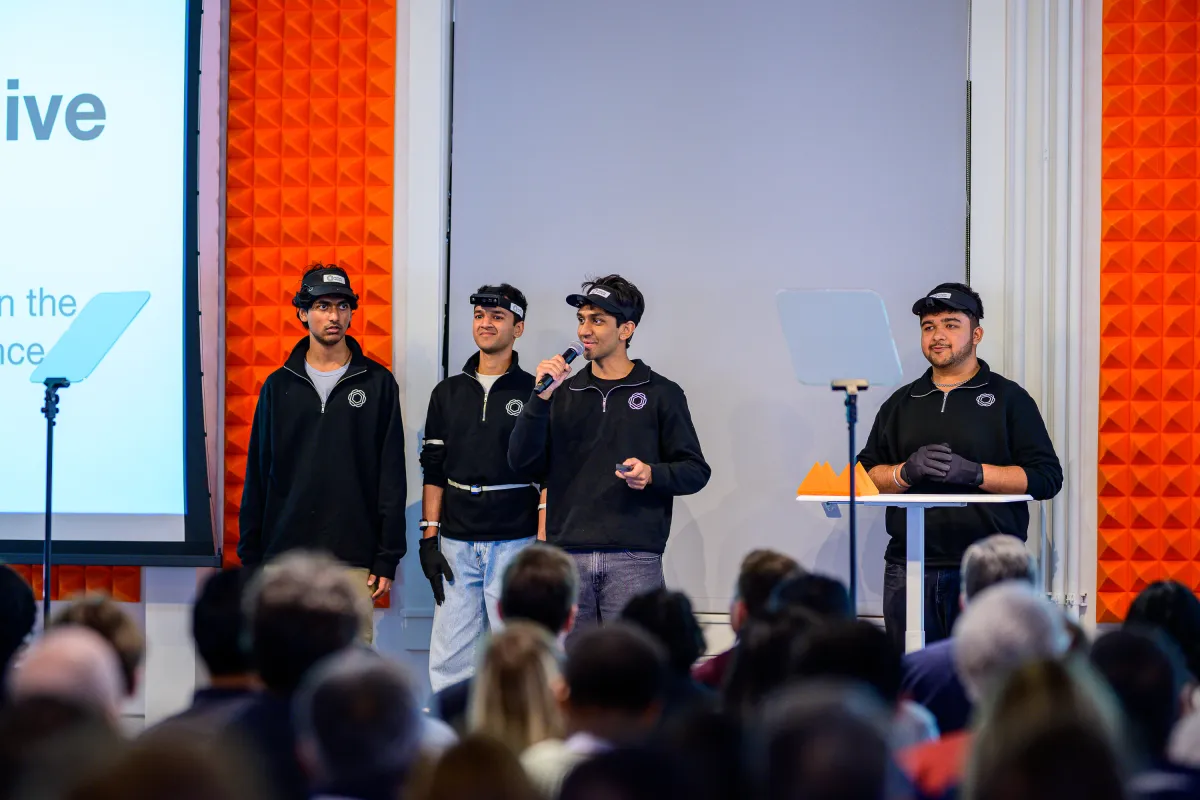
Human Archive, a startup founded by UC Berkeley and Stanford researchers, is attempting to commoditize this data by leveraging the labor force within India’s gig economy. By equipping service workers with specialized hardware—ranging from camera-mounted caps to full-body motion capture suits and tactile sensor gloves—the company captures the nuances of human interaction with physical objects. This strategic move suggests a paradigm shift: AI labs are moving away from synthetic simulations in favor of massive-scale, real-world teleoperation training data.
Hardware Integration as a Competitive Moat
Human Archive’s differentiation strategy lies in data synchronization. While many competitors rely on simple video footage, the startup is integrating RGB-D imagery (color paired with depth) with motion capture data and tactile force feedback. By building a proprietary hardware stack comprising over 50 devices, they are solving a complex synchronization problem that off-the-shelf equipment cannot handle.
The implication here is that Big Data for AI is becoming High-Resolution Data. To train a robot to perform a task as nuanced as household repairs or food preparation, a model must understand not just the appearance of an object, but the physical pressure required to manipulate it. By capturing these multidimensional data points simultaneously, Human Archive is positioning itself to be a critical supplier for frontier robotics firms—an infrastructure-layer play rather than a model-building one.
The Ethics and Geopolitics of Data Harvesting
The growth of this business model has not been without significant friction. Public spats between Human Archive’s leadership and executives at major Indian home-service platforms like Urban Company and Pronto underscore a growing tension between AI startups and the service economy. Major firms are increasingly cautious about the reputational risk and privacy liabilities associated with recording customers’ private homes.
Furthermore, the compensation structure—paying gig workers roughly $1 per hour for data collection—has drawn scrutiny, especially when compared to local market rates. While Human Archive justifies this as a bridge to the AI economy, the regulatory outlook remains precarious. The Indian Ministry of Electronics and Information Technology is already scrutinizing the consent mechanisms used by such firms. If the legal framework around the Digital Personal Data Protection (DPDP) Act tightens, the cost of acquiring this data could skyrocket, potentially threatening the startup’s current business model.
Scaling Beyond the Indian Market
Human Archive’s ambition extends well beyond its current operations in India. With $8.2 million in fresh capital from investors including Wing Venture Capital, NVP Capital, and notable industry figures from Nvidia and OpenAI, the firm is aggressively pursuing expansion into Southeast Asia and the United States.
The startup’s plan to launch pilot programs in the U.S., where customers could theoretically accept data-recorded service in exchange for reduced costs, indicates a desire to normalize persistent surveillance as a financial transaction. Whether the American consumer market will accept this trade-off remains the company’s biggest hurdle as it searches for scale.
Ultimately, the race to build universal physical agents is becoming a race for the most diverse and high-quality human movement library. Human Archive is essentially attempting to curate this library by turning the global gig economy into an massive, distributed laboratory. Whether they can maintain their momentum while navigating international privacy regulations and labor ethics will determine if they emerge as the backbone of the physical AI era.