
Escalating Enforcement: Honolulu’s Strategic Crackdown on Underground Gaming
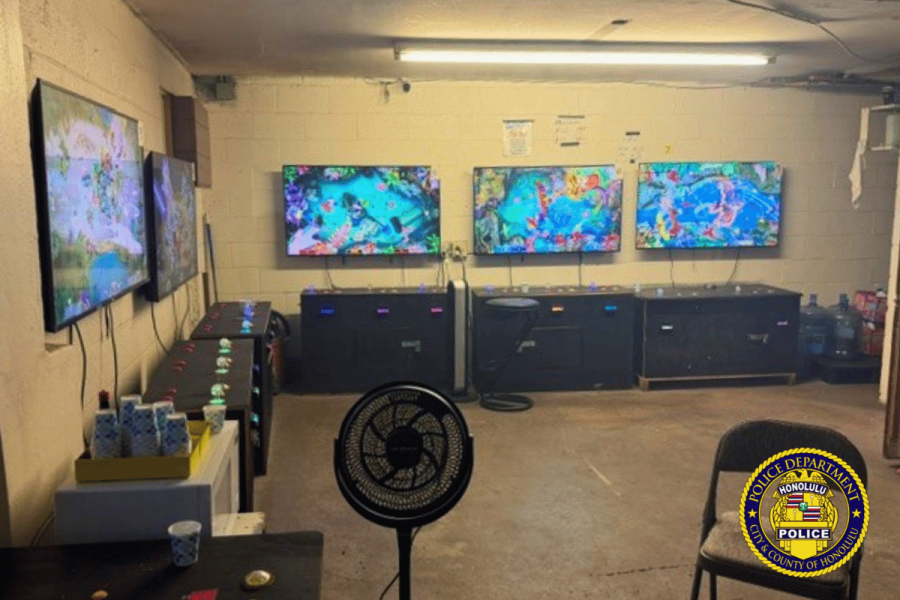
The Honolulu Police Department’s recent raid on an illicit gambling facility in Kalihi highlights a growing friction between law enforcement and the proliferation of clandestine gaming dens. On the evening of May 7, the Narcotics/Vice Division Gambling Detail, bolstered by the Specialized Services Division and the District 1 Crime Reduction Unit, executed a search warrant at a Keaulikē Street location, resulting in two arrests and the seizure of 12 gambling machines, narcotics, and currency.
While the operation was conducted without incident, the recovery of illegal drugs alongside gaming equipment underscores a recurring pattern: these sites rarely function in isolation. Instead, they often act as localized nexus points for broader criminal enterprises, including drug distribution and property crime.
The Convergence of Policy and Public Safety
The Kalihi incident is not an isolated event but a continuation of an intensified tactical approach toward Oahu’s underground gaming sector. Following similar enforcement actions earlier this year, including a high-profile raid in Wahiawa, the Honolulu Police Department is signaling a persistent effort to dismantle these operations before they can further destabilize neighborhood safety.
From an industry and policy perspective, this trend coincides with a push at the state legislative level to stiffen existing penalties. Current discussions in the legislature center on expanding law enforcement’s mandate to disrupt these game rooms, which are frequently masked behind innocuous storefronts or private residences. Lawmakers are responding to systemic community complaints, suggesting that these facilities are increasingly viewed as drivers of urban blight and public disorder.
Structural Implications for Local Law Enforcement
The integration of specialized units such as the Specialized Services Division into these warrants indicates that the police department views these operations as high-risk environments. By treating these raids as multifaceted investigations—rather than mere gambling infractions—authorities are attempting to address the collateral criminal activity that consistently migrates to these locations.
The lack of public disclosure regarding the specific identities of the suspects or the volume of narcotics seized suggests that the investigation remains in a sensitive, exploratory phase. This typically implies that detectives are seeking to map the organizational hierarchy and potential linkages to other criminal syndicates across the island.
Long-term Challenges in Curbing Illicit Gaming
The persistence of these operations poses a significant challenge for the Honolulu Police Department. Underground gaming sites are notoriously mobile and difficult to track, often utilizing residential infrastructure to remain inconspicuous. While increased legislative pressure may provide stronger tools for prosecution, the primary hurdle remains the rapid adaptability of these illicit networks.
Moving forward, the efficacy of these busts will likely be measured by the department’s ability to move beyond mere equipment confiscation and successfully prosecute the higher-level operators behind these enterprises. For residents and local stakeholders, the outcome of the Kalihi investigation will serve as a bellwether for whether current enforcement strategies are sufficient to curb the rise of neighborhood-based criminal hubs or if more comprehensive regulatory interventions are required.