
The Strategic Shift: From Training to Inference Efficiency
The insatiable demand for AI-ready infrastructure has moved beyond the gold rush phase of model development and into the high-stakes era of deployment. As generative AI embeds itself into enterprise software, the industry is hit by two compounding bottlenecks: procurement of specialized silicon and the physical constraints of legacy data centers.
General Compute’s recent $15 million seed funding, at a $60 million valuation, signals a maturation in the neocloud sector. By prioritizing inference—the phase where models generate output—over the resource-heavy training phase, General Compute is tapping into the shift toward optimizing cost-per-token. This approach acknowledges that the primary competitive advantage in the AI market is no longer just model capability, but the speed and affordability of model execution.
Silicon Diversification: Beyond the GPU Monopoly
The industry has long viewed Nvidia’s GPUs as the default standard for all AI tasks. However, market evidence from Groq’s recent valuation shifts and Cerebras’ IPO highlights a critical divergence: GPUs are optimized for matrix multiplication during training, but they are increasingly inefficient for the sequential demands of natural language inference.
General Compute’s decision to integrate SambaNova’s SN50 architecture is a tactical embrace of purpose-built hardware. By leveraging chipsets designed specifically for inference, the company aims to deliver 600 to 700 tokens per second—nearly triple the throughput of standard GPU setups. The ability of this architecture to maintain high memory capacity for context-sensitive AI interactions is what provides this performance edge, challenging the current dominance of generalized graphics hardware.
Revitalizing Stranded Infrastructure
The second major bottleneck for AI scaling is physical facility capacity. The requirement for massive liquid cooling and high-density power grids has confined AI growth to proprietary super-cloud data centers.
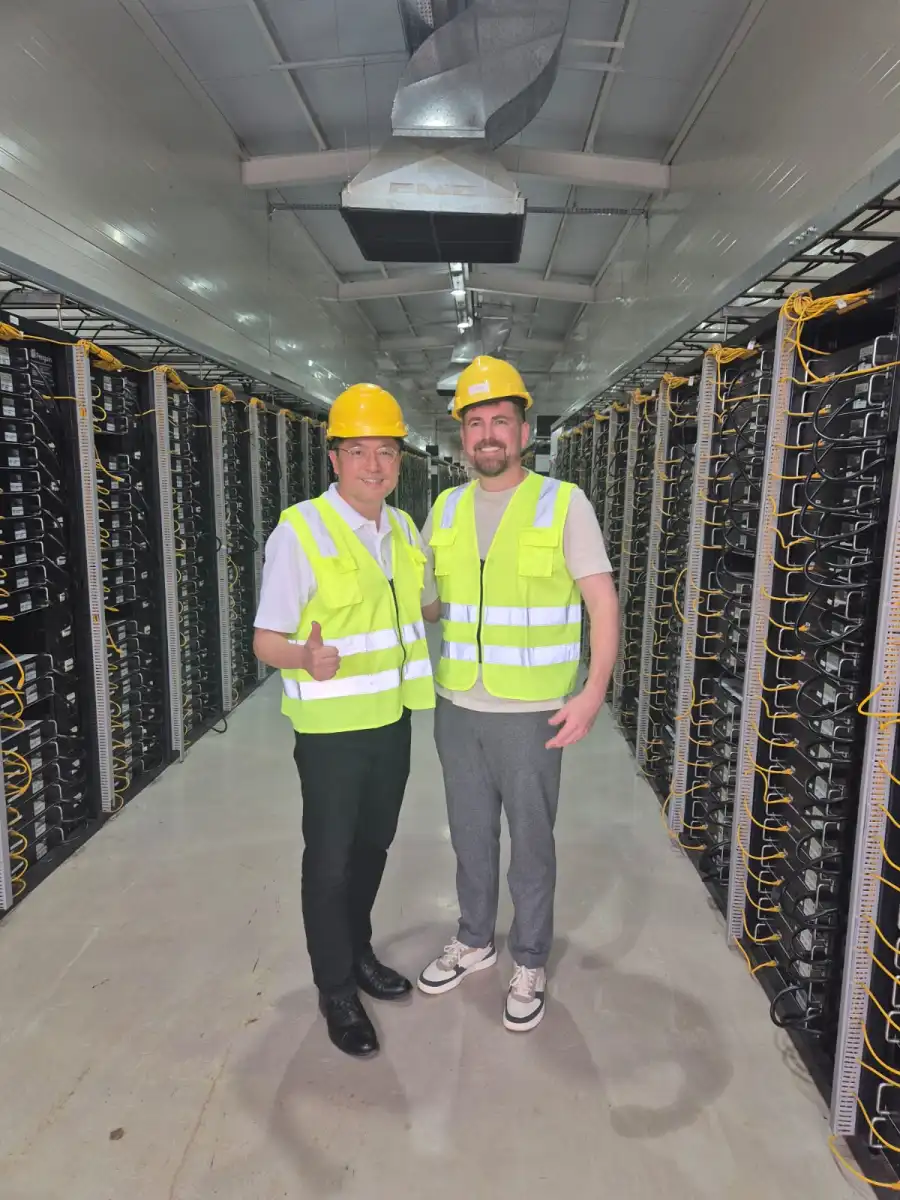
General Compute’s logistical strategy circumvents this by utilizing air-cooled, low-wattage chips that can be dropped into existing colocation facilities. A particularly insightful component of this model is the partnership with former crypto-mining operations. As mining profitability declines, these facilities represent a massive, underutilized asset class—already wired for high power consumption—that can be repurposed for inference workloads without the need for multi-year greenfield construction.
Investment Implications and Ecosystem Evolution
Investors like Evercrest Capital Partners are betting that the General Compute-SambaNova relationship will mirror the symbiotic growth once seen between CoreWeave and Nvidia. This indicates a broader industry trend where hardware manufacturers and cloud service providers are becoming deeply codependent; SambaNova gains a critical path to market, while General Compute secures exclusive hardware advantages.
The broader implications for the tech landscape are significant. As organizations like OpenRouter succeed by abstracting model choice, the inference layer is becoming commoditized. Future value will gravitate toward providers that can minimize latency and operational expenditure. For incumbents, this underscores a reality: surviving the next cycle of AI adoption requires a departure from the GPU-at-all-costs mentality in favor of highly efficient, specialized, and flexible computational architectures.