
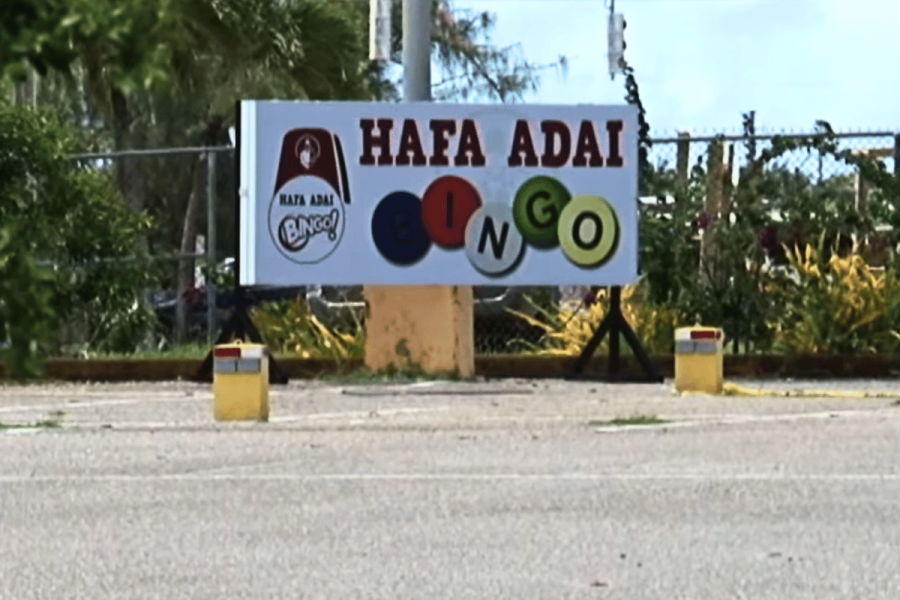
The Collapse of the Hafa Adai Bingo Charity Fraud Scheme
A federal court in Guam has handed down significant prison sentences to three individuals at the center of a sophisticated gambling-ring masquerading as a charitable institution. The sentencing of Jose Arthur “Art” Chan Jr., Christine C. Chan, and Michael L. Marasigan marks the end of a multi-year investigation into the Hafa Adai Bingo parlor in Tamuning, an operation that systematically exploited public goodwill to facilitate a multi-million-dollar money laundering scheme.
Between 2015 and 2021, the defendants generated approximately $34 million in gross revenue under the guise of supporting the Shriners Hospital for Children in Hawaii. By leveraging the esteemed reputation of the Shriners organization, the operators effectively convinced the Guam community that their gaming expenditures were facilitating essential medical travel for children in need.
Financial Discrepancies and Systemic Exploitation
The disparity between the parlor’s purported mission and its financial reality is staggering. Evidence presented in court revealed that out of $10.7 million in net proceeds, a mere fraction—just over $140,000—was actually directed toward the stated charitable cause between 2015 and 2020. By 2021, the altruistic pretense had been abandoned entirely, with zero charitable contributions recorded.
The investigation uncovered that the vast majority of these funds were diverted into the personal coffers of the defendants. This case represents a high-profile example of affinity fraud, where perpetrators exploit the trust inherent within a specific community or social circle to hide illicit activities. The use of a charitable front not only served as a tax-efficient mechanism for money laundering but also provided a layer of psychological protection against scrutiny.
Legal Repercussions and the Fugitive Factor
The judicial response reflects the severity of the betrayal. Christine Chan received a 70-month sentence, while Art Chan was sentenced to 60 months. Perhaps most notably, Michael L. Marasigan, who fled to South Korea while awaiting his fate, was sentenced in absentia to roughly 22 years (262 months) in prison. Marasigan’s decision to become a fugitive has complicated restitution efforts, though the court has mandated millions in forfeitures in an attempt to claw back the stolen assets.
While four other associates who entered into cooperation agreements with prosecutors received lighter sentences—ranging from probation to supervised release—the primary architects face substantial incarceration.
Industry Implications for Charitable Gaming Oversight
The Hafa Adai Bingo case serves as a cautionary tale for both regulators and the public regarding the oversight of small-scale charitable gaming operations. In many jurisdictions, these organizations operate under limited regulatory scrutiny, relying heavily on self-reporting and community trust.
This multi-million-dollar scam highlights a critical vulnerability in the nonprofit sector: when high-revenue activities like bingo are cloaked in humanitarian mission statements, the lack of third-party auditing becomes a catalyst for criminal abuse. Moving forward, authorities are likely to push for more rigorous transparency protocols for charitable gaming licenses to prevent similar exploitation of public empathy. For the residents of Guam, the closure of this case is an essential step in restoring the integrity of local fundraising activities.