
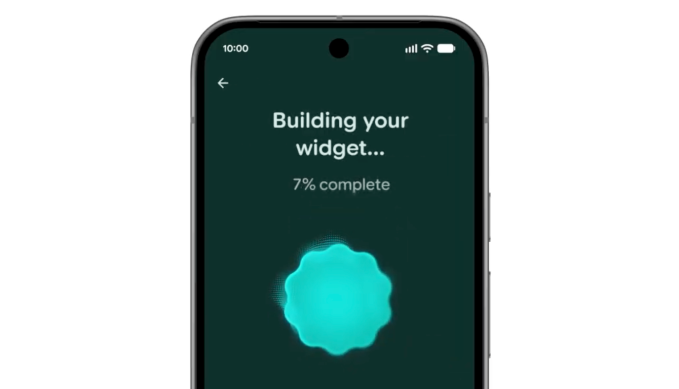
The Evolution of the Android Home Screen: From Static Grid to Generative Interface
Google’s introduction of the Create My Widget feature marks a fundamental shift in how users interact with their mobile operating systems. By integrating generative AI directly into the Android framework, Google is moving away from the rigid, developer-led widget ecosystem toward an era of user-defined, liquid interfaces.
This functionality, which leverages natural language processing to construct custom dashboards, allows users to dictate specific data parameters. Whether it is filtering weather telemetry or consolidating travel logistics like flight statuses and hotel reservations into a single glanceable unit, the system essentially acts as an on-demand interface designer.
Strategic Implications for the Android Ecosystem
For years, the home screen has been a battleground for app engagement, but it has historically been limited by what developers chose to expose. By empowering the user to act as the architect of their own data visualization, Google is effectively decoupling the interface from the app’s default layout.
This development serves as a strategic counter-move against the increasingly walled-off experiences in competing ecosystems. By grounding this functionality in Gemini, Google is positioning Android as a contextual hub that exists between disparate silos like Gmail, Calendar, and live web data. This solves a long-standing friction point: the need to toggle between apps to synthesize information for a specific task.
Gemini Integration as an Operating System Layer
The launch of Create My Widget is intrinsically linked to the broader rollout of Gemini Intelligence. This represents a transition where AI is no longer a peripheral chatbot but an integrated utility layer within Android.
By combining advanced autofill, AI-enhanced voice dictation, and generative widget creation, Google is attempting to lower the cognitive load for power users while increasing the utility of the device for the average consumer. The broader industry implication is clear: the value proposition of a flagship smartphone is shifting from raw processing power to the agility of its on-device assistive intelligence.
The Future of Personalized Computing
As Google prepares to ship this feature to flagship Galaxy and Pixel devices this summer, the core challenge will be data latency and reliability. Because these widgets pull from personal data sets—such as private emails and calendar events—the success of the feature hinges on seamless integration and privacy-preserving execution.
If Google can successfully maintain the balance between deep personal insights and operational speed, Create My Widget could establish a new standard for mobile interaction. It signals a move toward a just-in-time interface—where the tools you need manifest at the exact moment they are relevant, rather than requiring you to maintain a cluttered home screen of static, underutilized shortcuts.