
The Pivot to Agentic Workflows: Google’s Evolved Workspace Strategy
Google’s latest update to the Workspace suite, unveiled at I/O, signals a definitive pivot from passive AI assistance to proactive, agentic workflows. By integrating Gemini 3.5 Flash and newly minted specialized models into the daily toolset, Google is attempting to solve a fundamental friction point in modern knowledge work: the context-switching tax.
The updates, spanning Gmail, Docs, Keep, and the introduction of Google Pics, fundamentally redefine these applications. They are no longer mere digital canvases or retrieval systems; they are becoming collaborative partners capable of synthesizing information across private data silos.
Conversational Interfaces and Intelligent Synthesis
The core of this update is the deployment of Live features—Gmail Live, Docs Live, and Keep’s conversational note-taking. This shift toward natural language interaction suggests that Google is betting on voice and dialogue as the primary interface for productivity.
Gmail Live is particularly significant. By allowing users to query their inboxes for granular, time-sensitive information, Google is effectively treating the inbox as an on-demand database. Moving away from manual search and filter operations towards intent-based queries marks a massive efficiency gain for distributed teams.
Docs Live follows a similar logic but applies it to generation and strategy. Rather than functioning as a basic chatbot, it acts as a thought partner that draws context from the user’s Drive, Chat, and Gmail logs. This capability is likely to redefine the drafting process, enabling creators to pull specific data or historical precedents into a document without leaving their current tab.
Google Pics and the Quest for Meaningful Generative Editing
The introduction of Google Pics, powered by the Nano Banana model, addresses a chronic limitation of current generative AI: precision control. Most AI image generators excel at ideation but struggle with tactical modifications.
With object segmentation and integrated text-translation, Google is positioning Pics as an enterprise-grade utility rather than just a creative toy. The tight integration with Slides and Drive suggests that Google intends for this tool to become a standard component of professional presentations and digital marketing assets, directly competing with specialized design software by offering ease of use over complex, layer-based legacy tools.
The Rise of Gemini Spark: From Assistance to Agency
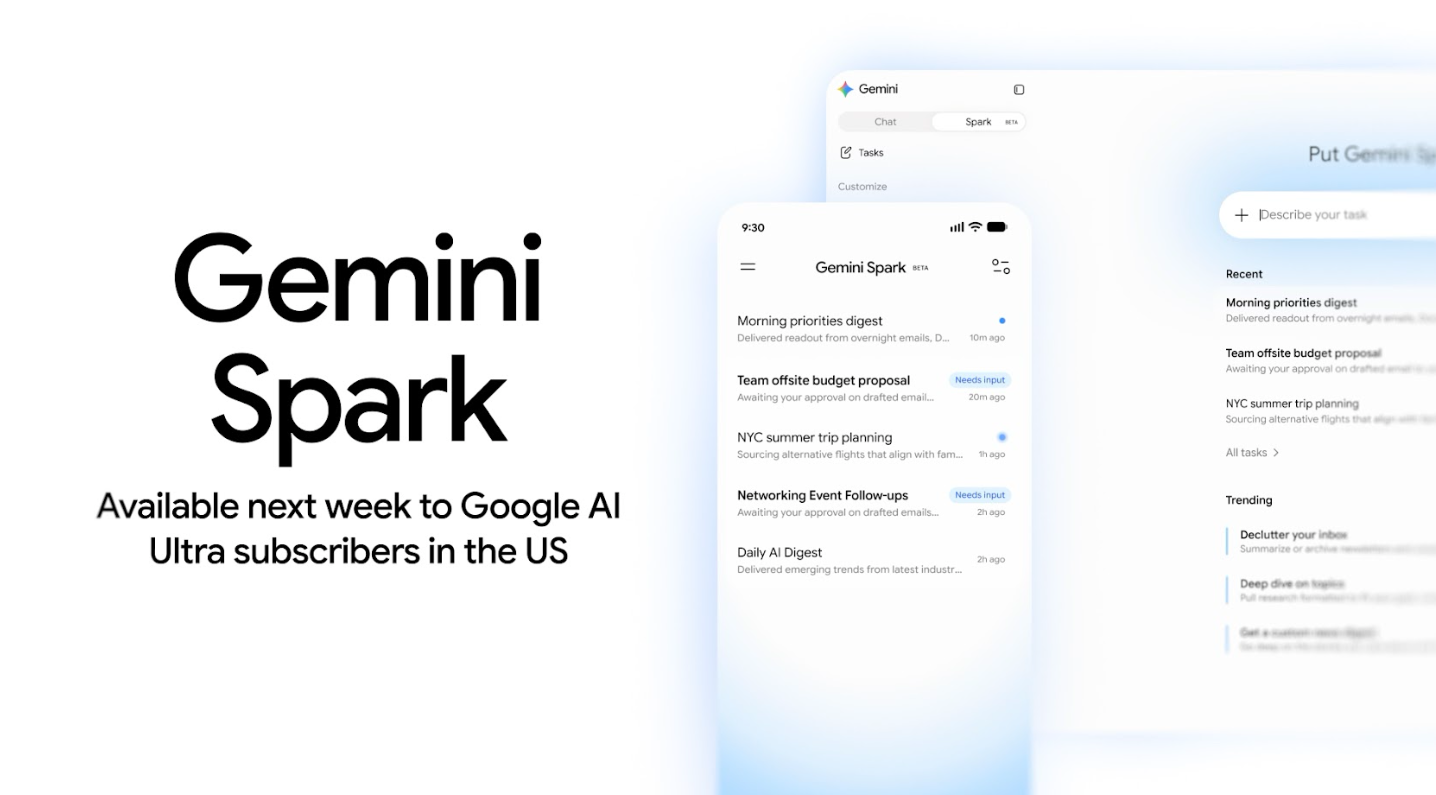
Perhaps the most consequential announcement is Gemini Spark—a personal agent authorized to act on behalf of the user. This shift represents the Holy Grail of enterprise AI: an agent that initiates, manages, and executes tasks.
By requiring explicit user approval for autonomous actions, Google is navigating the delicate balance between high-level utility and user trust. This human-in-the-loop model for calendar management and email execution is a necessary guardrail for enterprise adoption. It signals that Google is confident enough in the reliability of its models to begin offloading administrative decision-making to the agent itself.
Strategic Implications: The AI-First Office
The segmented rollout—prioritizing Google AI Pro and Ultra subscribers before moving to Workspace Enterprise tiers—reflects a calculated approach to scaling compute-heavy generative tasks.
For the broader industry, these moves highlight a clear trend: the application as we know it is vanishing. Instead, we are entering an era of intelligent layers that sit atop our communication and storage platforms. Google’s strategy is clear—by embedding Gemini deep into the architectural fabric of their suite, they are driving long-term retention via ecosystem lock-in, making it increasingly difficult for users to migrate away from an environment that seemingly anticipates their needs before they express them.