
HMD Global Bets on Hyper-Localization to Revive Its Indian Market Presence
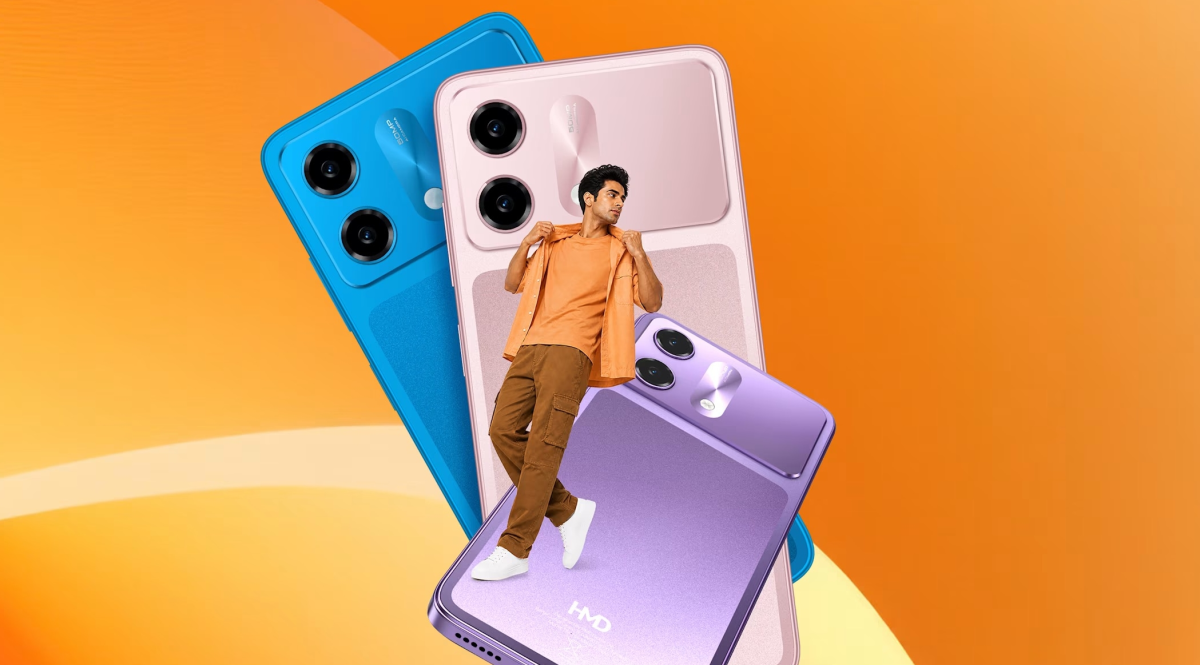
HMD Global is attempting to carve out a distinct identity in India’s competitive smartphone market by positioning the Vibe 2 5G as a vehicle for sovereign AI. By pre-installing Sarvam’s Indus chatbot on this budget-friendly device, the Finnish manufacturer is pivoting away from hardware-only competition toward software-led differentiation.
The partnership, initially teased at the India AI summit in New Delhi, marks a strategic synchronization between HMD’s entry-level reach and Sarvam’s indigenous large language model (LLM). Unlike models developed by Western tech giants, the Indus AI is underpinned by a 105-billion-parameter architecture specifically architected for the Indian demographic.
The Technical Edge and Linguistic Hurdles
The primary competitive advantage of the Indus chatbot is its focus on deep regionalism. The tool supports 22 Indic languages, emphasizing code-switching—a native linguistic trait where users fluidly mix Hindi, English, and other regional tongues within a single sentence. This capability is crucial, as it lowers the barrier to entry for non-English speakers who often find global AI tools like ChatGPT or Gemini functionally restrictive due to linguistic bias.
However, the user experience currently faces friction. The application remains tethered to cloud connectivity, lacking an offline mode that would be transformative for Tier-3 and Tier-4 Indian markets where signal reliability varies. Furthermore, the absence of a dedicated hardware shortcut limits the utility of the assistant; as it stands, it functions more like a siloed application than a system-integrated feature.
The Feature Phone Strategy: A Calculated Risk
While the Vibe 2 5G (retailing at ₹10,999) aims to capture the budget segment, HMD’s long-term play likely resides in the feature phone market. With a 4% market share in the Indian feature phone segment, HMD intends to roll out Sarvam integrations to these ultra-low-cost devices.
For analysts, this is the most compelling aspect of the deal. If HMD can successfully deliver a voice-based, language-agnostic AI assistant to users who lack smartphones, they effectively democratize AI access across the digital divide. This strategy mirrors a bottom-up approach to AI adoption, targeting the massive, untapped user base that global conglomerates overlook in favor of urban, English-speaking demographics.
The Market Outlook
The initial adoption rates tell a sobering story. With approximately 293,000 downloads in three months, Indus faces an uphill battle against the 43.9 million downloads captured by ChatGPT in the same region. Yet, measuring success by app store downloads misses the point. HMD’s strategy is not about competing for casual users; it is about distribution through hardware bundling.
As Sarvam reportedly eyes a valuation of $1.5 billion, their partnership with HMD serves as a vital proof-of-concept for enterprise-grade, regional AI. The ability to integrate voice-based solutions into the lowest tier of hardware is a high-value asset in emerging markets. If HMD can overcome the current technical constraints and successfully integrate this AI into the bedrock of its feature phone lineup, this alliance could establish a new playbook for deploying artificial intelligence in non-Western economies.