
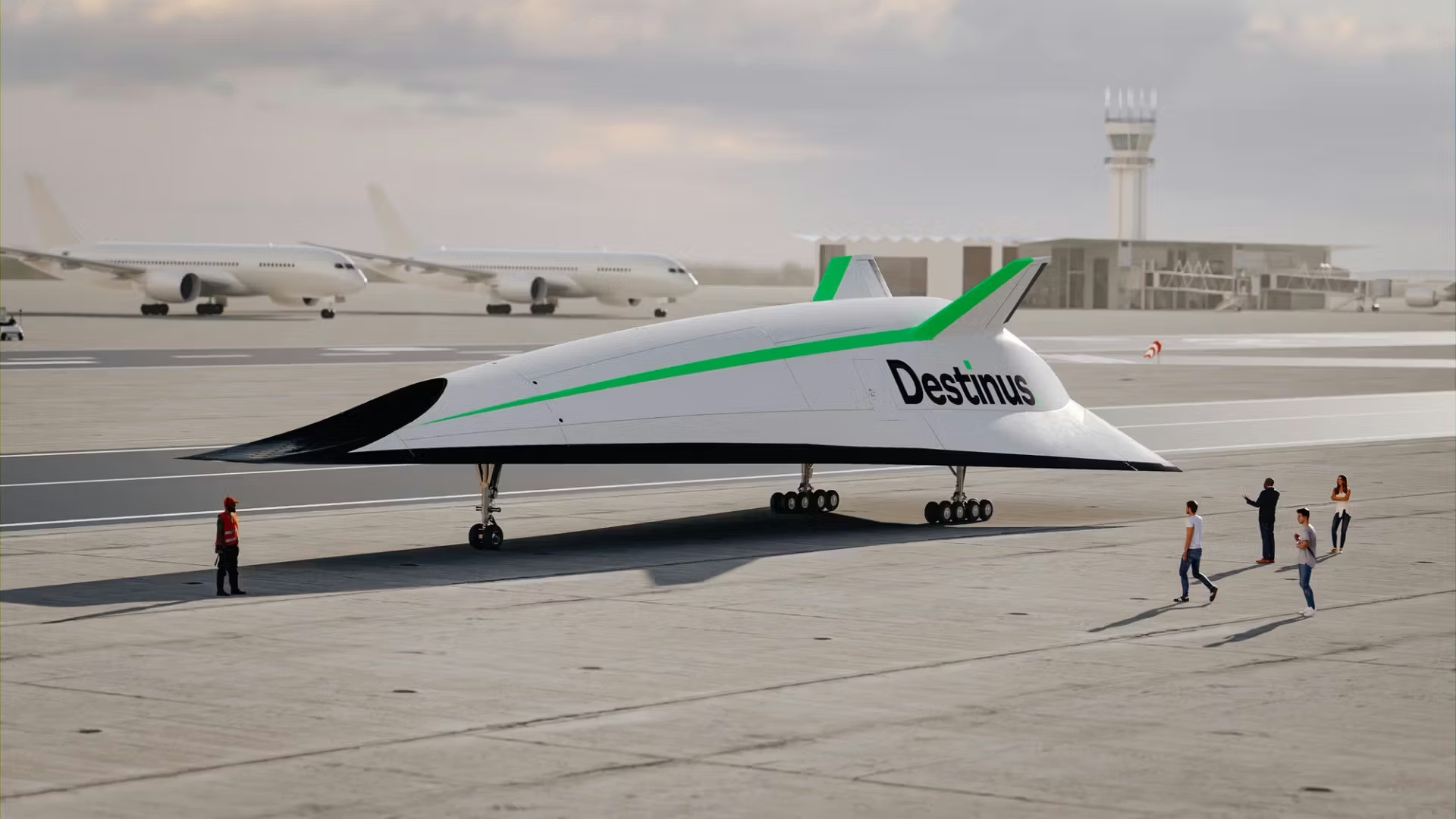
Destinus Targets Ambitious €200M Raise Amid Defense Tech Bull Run
Destinus, the Netherlands-based defense technology firm, is reportedly initiating a funding round aimed at securing €200 million. This move is framed as a strategic precursor to a prospective initial public offering (IPO), signaling a pivot toward broader market scrutiny and public capitalization. Current reporting suggests the company is hunting for a valuation exceeding €5 billion, a figure justified by an aggressive internal forecast of €500 million in annual revenue.
Founded in 2021 by CEO Mikhail Kokorich, Destinus has transitioned from a specialized startup into a significant player in the aerospace and defense sector. The company’s focus on high-speed drones and cruise-missile systems places it at the intersection of dual-use technology and traditional military hardware, a segment that has gained renewed relevance due to current European security concerns.
Strategic Consolidation Through Acquisition
A critical component of the company’s valuation growth has been its calculated M&A strategy. The acquisition of Swiss-based Daedalean last year—a deal valued at $225 million—serves as the primary catalyst for the company’s current technical positioning. By absorbing Daedalean’s expertise in autonomous flight control and AI-driven navigation, Destinus has bridged the gap between basic aerospace engineering and sophisticated, sensor-fused weapon systems.
This integration is essential. In modern defense, hardware is increasingly commoditized; the true value lies in the software stack that dictates autonomy, target recognition, and precision. By securing Daedalean’s intellectual property, Destinus has likely bolstered its defense against larger incumbents and positioned itself as a critical supplier for NATO-aligned nations seeking modern, low-cost autonomous solutions.
Industry Implications and the European Defense Renaissance
The pursuit of a €5 billion valuation speaks volumes about how venture capital is recalibrating its risk-reward calculus. For years, European VCs avoided the defense label due to ESG constraints and political sensitivities. However, the ongoing volatility in Eastern Europe has triggered an industry-wide pivot. Destinus is not an outlier; it is currently keeping pace with domestic peers like Germany’s Helsing and Quantum Systems, both of which are seeing massive capital inflows.
The implications for the broader industry are twofold. First, the influx of private equity is forcing legacy defense contractors in Europe—traditionally slower to innovate—to either modernize their own R&D pipelines or seek acquisitions to remain competitive against agile disruptors. Second, the push for an IPO at this scale suggests that the firm is preparing to compete for the large-scale, multi-year sovereign procurement contracts that were once the sole dominion of established aerospace behemoths.
As Destinus initiates these funding discussions, the industry will be watching closely to see if their projected €500 million revenue target translates from forecast to reality. Should they achieve this milestone, it would solidify a new tier of European startups that are capable of scaling rapidly to meet the demands of a permanently altered geopolitical landscape.