
The Shift from Generative Ideation to Production-Ready Design
The visual design landscape is currently undergoing a structural transformation. While AI-native tools like Visual Electric, Flora, and Krea have gained traction by emphasizing rapid visual iteration, they often operate in a vacuum—decoupled from the reality of functional code. This disconnect between design prototypes and final production assets remains the primary bottleneck in software development.
Dessn, a stealth-to-emerging startup, is betting that the future of design lies not in creating more static images, but in bridging the gap between high-level creative concepts and active codebases. Having secured $6 million in funding led by Connect Ventures, with additional support from Betaworks and N49P, the company is positioning itself as a live layer for design iteration.
Removing the Local Environment Barrier
The core technical challenge for any team trying to iterate on existing software is the heavy lifting required to set up local environments. Developers often spend hours ensuring dependencies and configurations align before they can see a single pixel of change.
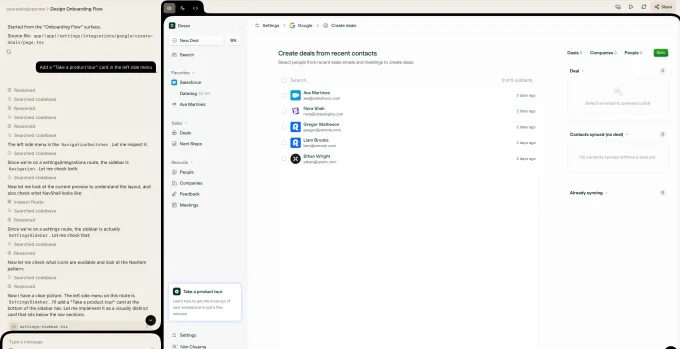
Dessn addresses this by abstracting the complexities of production environments. By running the codebase in the cloud, the tool allows designers to push changes directly into a functional preview state. This removes the proxy nature of traditional design tools, where designers must wait for developers to interpret their specifications and implement them in the actual stack. Companies like Mercury, Wispr, and Color are currently utilizing this approach to streamline the transition from design intent to engineering deployment.
Avoiding the Switching Cost Trap
Unlike platforms aiming to replace the entire design stack, Dessn’s founders, Gabriella Hachem and Nim Cheema, have intentionally designed the platform to operate alongside legacy tools like Figma rather than forcing an immediate migration. This low-friction entry point is critical for enterprise adoption.
Instead of demanding a total cultural shift, Dessn provides a sandboxed environment where teams can test specific features or refinements without disrupting their primary design workflow. This modular approach contrasts sharply with the all-or-nothing mandates of many AI-first productivity tools, making it particularly attractive to established teams that already have significant investment in current software.
Redefining the UI Paradigm
A defining characteristic of Dessn’s philosophy is its rejection of the static toolbar. By embracing token maximalism, the startup prioritizes dynamic, context-aware interfaces that appear only when needed, rather than overwhelming the user with a bloated set of permanent tools.
This suggests a broader industry shift: moving away from complex, menu-heavy applications toward leaner interfaces driven entirely by intent and context. Hachem’s perspective indicates that in a future driven by large language models, the most efficient UI may well be the one that stays invisible until the user initiates a specific task.
The Future of Integration and Workflow Automation
Dessn’s roadmap reveals an ambitious intent to position design as a continuous conversation. By planning integrations with tools like Slack and potentially meeting transcription services such as Granola, the company aims to move design from a separate silo of activity into a collaborative, reactive process.
Interestingly, the company has explicitly ruled out direct Figma integration. This is a strategic decision that underscores their production-first ethos; they argue that integrating with external design tools only serves to pull engineers and designers back into a state of static ideation, ultimately delaying the moment a feature becomes operational.
As the lines between front-end engineering and UI design continue to blur, Dessn’s focus on the cloud-based codebase represents a vital step toward a world where the prototype is the product.