
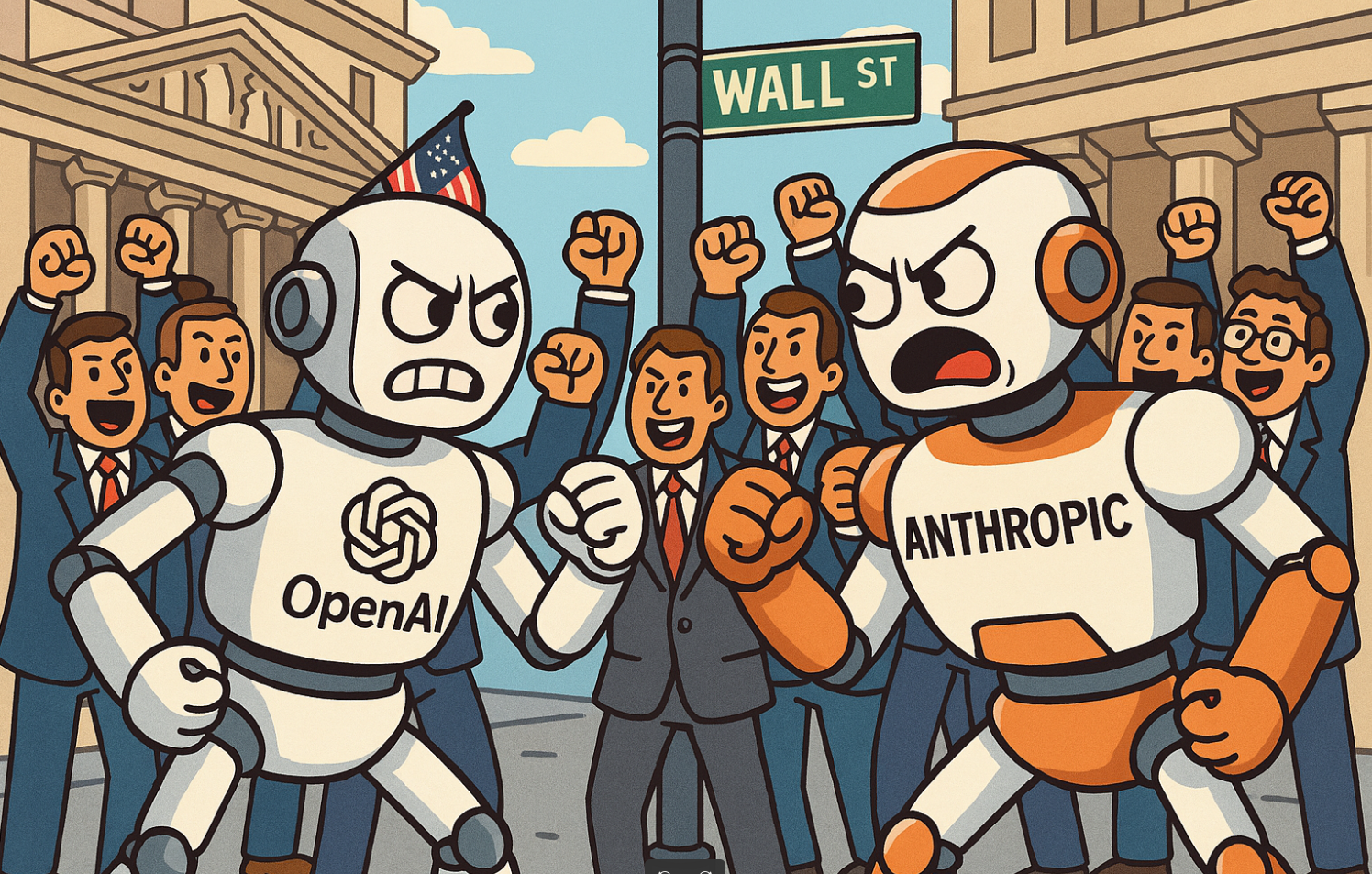
The Shift to Vertically Integrated AI: Why Anthropic and OpenAI are Bypassing Traditional Consulting
The generative AI race has moved beyond the model wars and into a critical phase of operational integration. In a significant strategic pivot, Anthropic and OpenAI are effectively creating their own dedicated deployment arms in collaboration with massive private equity (PE) players. This move acknowledges a sobering reality: the world’s most powerful foundation models are failing to deliver ROI when dropped into complex enterprise environments without expert last-mile engineering.
The formation of these joint ventures signals a departure from the AI-as-a-service model. By embedding engineers directly into the workflows of mid-sized firms, these AI giants are acknowledging that internal enterprise processes are too idiosyncratic and rigid to be fixed by off-the-shelf software alone.
Solving the Expertise Gap with Private Equity Muscle
The industry currently faces a severe bottleneck: a lack of practitioners who can translate raw AI capabilities into tangible business outcomes. Marc Nachmann, global head of asset and wealth management at Goldman Sachs, has pointedly noted that possessing a superior model is insufficient for operational transformation. Enterprises require personnel capable of re-engineering legacy workflows to accommodate AI agents.
Anthropic is moving aggressively, securing a $1.5 billion war chest from partners like Blackstone, Hellman & Friedman, and Goldman Sachs. The model here is highly specific: it is not a traditional consulting engagement. Instead, Anthropic’s engineers will act as extensions of the customer’s internal teams. By targeting the vast portfolio companies owned by their private equity backers, Anthropic creates an immediate, captive market, accelerating its revenue momentum—which has reportedly climbed from an annual run rate of $9 billion in late 2025 to over $30 billion today.
OpenAI’s Deployment Company: Scaling via Institutional Access
OpenAI is pursuing a similarly ambitious path with the Deployment Company, backed by a coalition of firms including Bain Capital, Brookfield, and SoftBank. Under the guidance of COO Brad Lightcap—who has been pivoted specifically to lead OpenAI’s enterprise expansion—the venture aims to capitalize on the massive footprint of its partners, who collectively oversee thousands of mid-sized businesses.
While Anthropic is iterating on developer-centric tools like Claude Code and Cowork, OpenAI is leaning into its sheer scale. With a planned $10 billion infusion into the Deployment Company, OpenAI is positioning itself to commoditize the integration process across industries as diverse as manufacturing, clinical healthcare, and high-frequency finance.
Industry Implications: The End of the AI Generalist Era
This structural change creates several major downstream effects for the broader technology ecosystem:
Consulting Disruption: System integrators and boutique AI consultancies now face direct competition from the primary model creators. If Anthropic or OpenAI provides the elite engineering talent that deeply understands the underlying model architecture, third-party consultants may struggle to compete on efficacy.
Data Moats: By embedding their engineers within these mid-market portfolio companies, Anthropic and OpenAI will gain unprecedented visibility into enterprise data and proprietary workflows. This feedback loop is invaluable for fine-tuning models to handle specific, high-stakes enterprise tasks that generic models often fail to master.
* The Valuation War: Anthropic’s rumored path toward an IPO and its potential $900 billion valuation suggest this enterprise-first approach is rapidly becoming the gold standard for investor confidence. The market is no longer rewarding companies simply for smarter LLMs; it is rewarding those that can prove they have successfully integrated into the core fabric of private industry.
As this strategy unfolds, the line between technology provider and operational partner will continue to blur. For mid-sized enterprises, the partnership between private equity and AI labs offers a clear path toward digital transformation, but it also creates a new form of vendor lock-in where the model and the implementation strategy are inextricably linked. The next eighteen months will determine whether these giants, aided by the deep pockets of Wall Street, can truly scale the difficult work of operational AI or if they will succumb to the same friction that has historically plagued complex enterprise IT projects.