
Bridging the Embodiment Gap: Ai2’s Strategic Bet on Open-Source Robotics
The Seattle-based Allen Institute for AI (Ai2) has significantly raised the stakes in the race toward general-purpose robotics. With the unveiling of MolmoAct 2, the organization is pivoting from standard machine learning architectures toward a specialized framework designed specifically for 3D reasoning and physical-world manipulation. This release marks a departure from the black box approach favored by proprietary AI labs, signaling a push for transparency in high-stakes robotic operations.
Unlike its predecessor, the original MolmoAct, which relied on roughly 22 hours of curated data, the architecture for MolmoAct 2 has been rebuilt from the ground up. By utilizing Molmo 2-ER—a variant optimized for embodied reasoning—Ai2 has successfully decoupled action generation from standard vision processing. This system effectively integrates an internal action expert that interprets spatial relationships in real-time, allowing for a 37x performance improvement in task execution compared to previous iterations.
The Architecture of Physical Intelligence
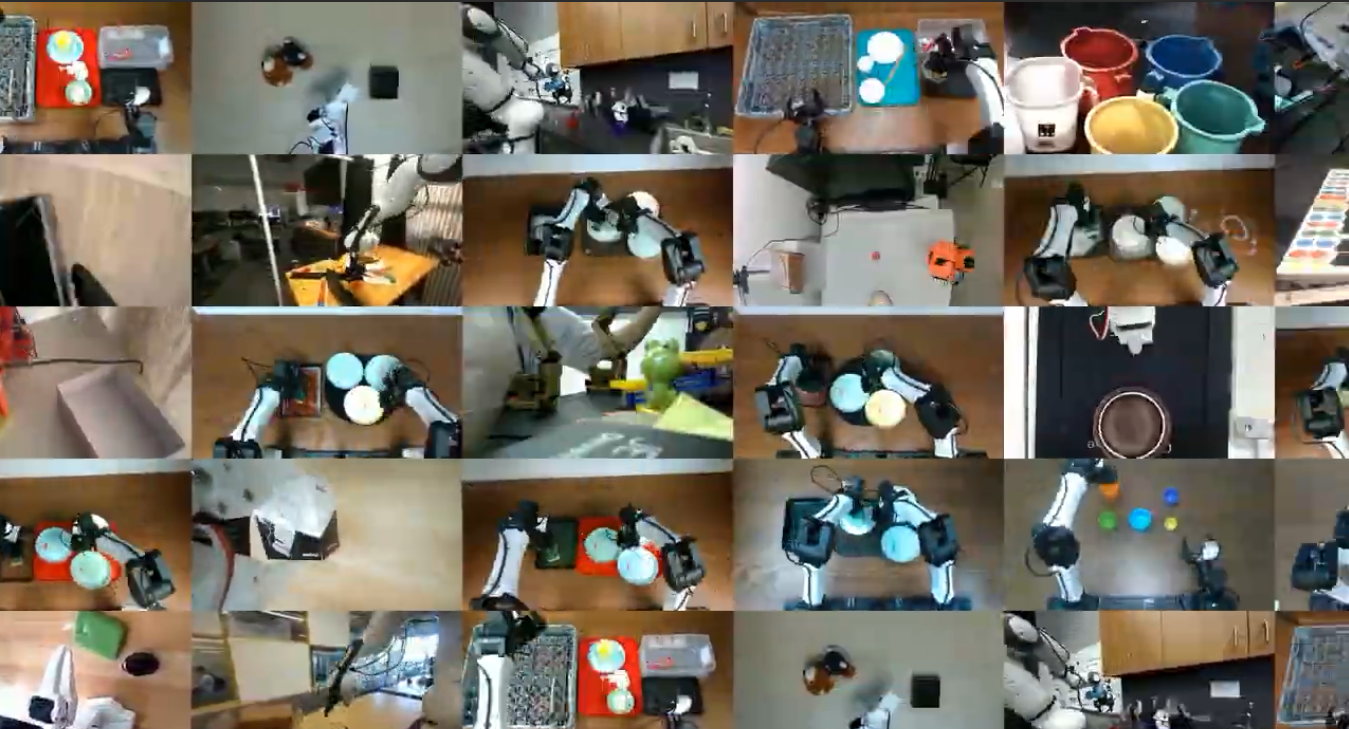
The true technical achievement here is not merely the model, but the accompanying dataset: MolmoAct 2-Bimanual YAM. This release provides over 720 hours of training data specifically focused on bimanual coordination—the ability for a robot to manipulate objects using two arms simultaneously.
By increasing its library of unique labels from 71,000 to 146,000, Ai2 has directly addressed the industry’s pervasive brittleness problem. Standard robotic models often fail when encountering minor environmental shifts or non-canonical object placement. By re-annotating their source material and focusing on diverse, high-fidelity instructions, Ai2 is attempting to force a transition from robots that simply execute scripted motions to those that can generalize across different hardware configurations and camera layouts.
Precision Demands: Real-World Benchmarking at Stanford
The industry has long struggled with the sim-to-real gap, where models perform beautifully in digital simulations but fail in the chaotic variables of a physical laboratory. To validate MolmoAct 2, Ai2 engaged in a strategic partnership with the Cong Lab at the Stanford School of Medicine.
The application here is specific: wetlab automation, including CRISPR-related tasks that require high-precision pipetting and fluid handling. This is a critical stress test. In a laboratory environment, a single miscalculated movement can invalidate an entire research cycle. The fact that MolmoAct 2 demonstrated an ability to navigate dynamic benchtop environments—correcting for shifted objects and handle distractions—suggests that open-source models are finally closing the reliability gap required for specialized industrial use.
Implications for the Robotics Ecosystem
The release of MolmoAct 2 is a strategic strike against the closed-source hegemony currently dominating the robotics industry. By providing the research community with the underlying model, an unprecedented dataset, and a roadmap for training code, Ai2 is effectively lowering the barrier to entry for smaller labs and startups.
However, the institute remains transparent about current limitations. The occlusion problem, where a robot’s own gripper obscures the camera’s view, remains a primary hurdle, as does the need for finer motor-control latency. Yet, by inviting the broader research community to inspect the architecture, Ai2 is likely to accelerate the iterative fixes for these hardware-software mismatches. In an industry where progress is often siloed, this open-source push represents a fundamental shift: moving robotics away from proprietary isolated ecosystems and toward a shared, collaborative foundation.