
The Paradigm Shift from SaaS Reliance to AI-Native Operations
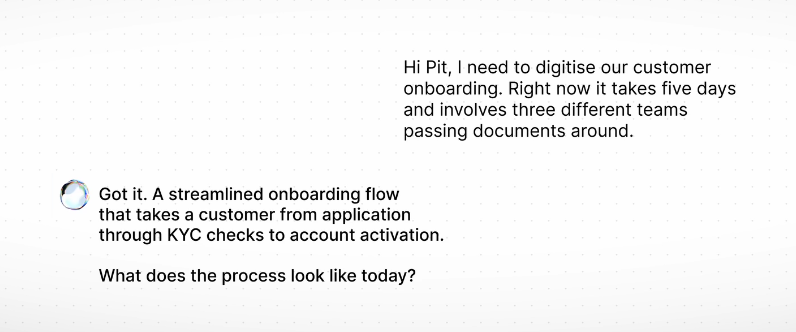
The enterprise software landscape has long been defined by software silos—a fragmented collection of rigid SaaS applications, disconnected spreadsheets, and endless email chains. This configuration forces companies to adapt their internal workflows to match the limitations of the tools they license. However, a new wave of generative AI is flipping this dynamic. Pit, a Swedish startup, has secured $16 million in a Series A round led by Andreessen Horowitz to solve this fundamental inefficiency by introducing an AI product team-as-a-service model.
The funding round, which included participation from Lakestar and high-level insiders from OpenAI, Anthropic, Google, and Deel, signals a broader industry recognition: the era of purchasing off-the-shelf software to manage bespoke business processes may be sunsetting.
Moving Beyond Copilots to Autonomous Production Systems
While the market is currently saturated with AI copilots that offer minor productivity gains within existing applications, Pit is positioning itself as a platform for constructing enterprise-grade software from scratch. Traditional low-code and no-code tools have historically struggled to bridge the gap between a hobbyist prototype and a production-ready application. These tools often result in technical debt or fragile systems that lack the security, observability, and scalability required by global enterprises.
Pit distinguishes its model through two specific vectors:
- Pit Studio: An intelligent development environment that ingests an organization’s specific operational logic. By treating the company’s existing workflows as a dataset, the system generates software that maps directly to how employees actually interact with business processes.
- Pit Cloud: A managed infrastructure layer that addresses common enterprise concerns regarding compliance, data residency, and auditability. By offering native tenant isolation, the platform ensures that automatically generated systems don’t compromise security protocols.
The Economic Implications of Generative Application Building
The implications for the industry are significant. If Pit’s platform can achieve the throughput it claims—such as automating invoice processing and streamlining complex marketing lifecycles—it challenges the incumbent SaaS model. By reducing the reliance on swivel-chair integrations where employees manually port data between disjointed applications, Pit aims to recapture the thousands of annual man-hours lost to manual administrative friction.
For Andreessen Horowitz, this investment is a strategic bet on AI-native infrastructure. General Partner Alex Rampall emphasized that the value proposition lies in durability; by moving away from rented software, organizations can exercise granular control over their digital environment.
Challenges to Scaling the AI-Native Model
Despite the excitement, Pit faces the monumental task of proving that its AI-generated software is maintainable over the long term. When an organization offloads its core business logic to an AI-driven platform, it creates a new form of vendor lock-in. Success over the next 24 months will depend on whether the generated code remains extensible as enterprises grow and their internal processes inevitably evolve—a feat that has proven difficult for automated coding agents to date.
Nevertheless, as the industry pivots toward bespoke, AI-orchestrated environments, companies like Pit are leading the transition, effectively turning the workforce into a team of platform architects who dictate how their systems function, rather than simply adapting to pre-packaged software constraints.