
The Collision of Transparency and Synthetic Media
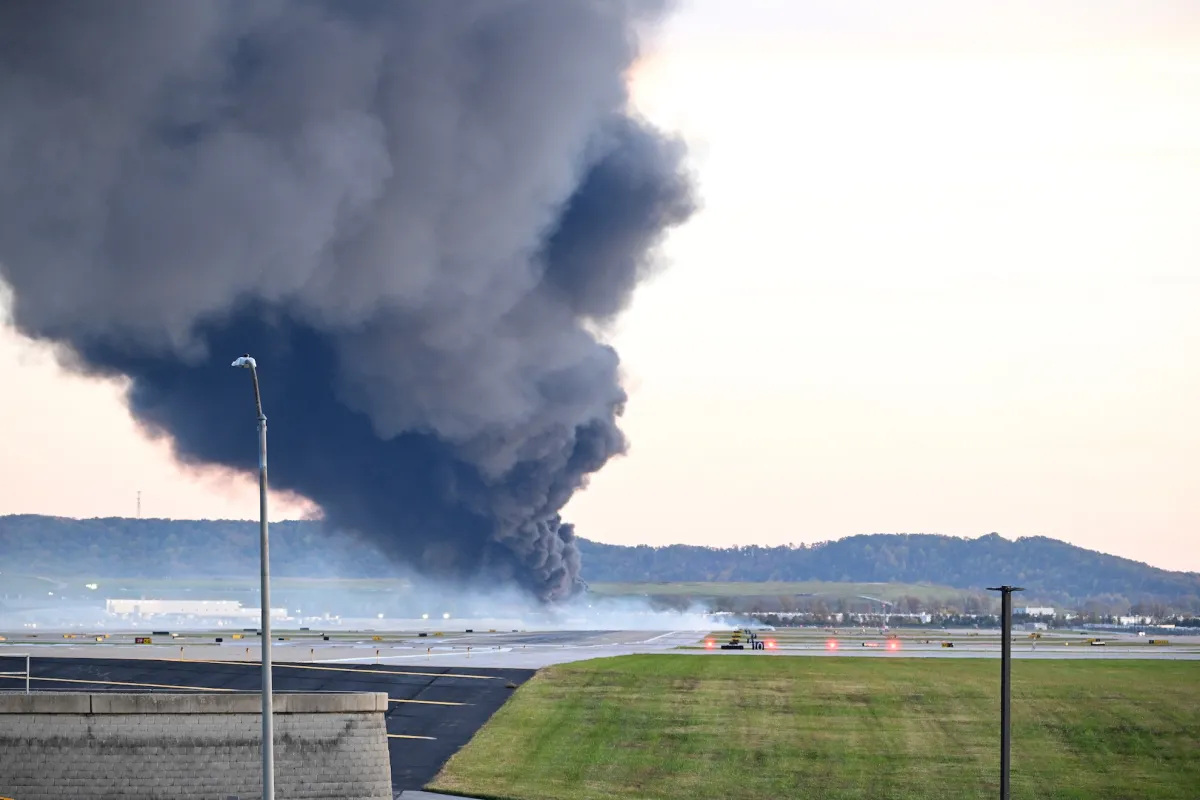
The National Transportation Safety Board (NTSB) has taken the unprecedented step of shuttering its digital accident docket system following a significant security breach involving the weaponization of forensic data. By utilizing AI voice-cloning technology, unauthorized actors successfully reconstructed the final cockpit audio of the UPS Flight 2976 crash—a tragedy that claimed the lives of two pilots—by reverse-engineering a public-facing investigative file.
This incident highlights a critical vulnerability in the government’s commitment to open-data policies. While federal law explicitly forbids the public release of cockpit voice recorder (CVR) audio to protect the privacy of the deceased and their families, the NTSB’s docket system inadvertently provided the raw components necessary to bypass these prohibitions.
The Technical Loophole: Spectrograms as Data Leaks
The exploit centered on a technical oversight regarding spectrograms. These visual representations of sound signals are standard investigative tools, allowing experts to analyze frequency patterns and audio signatures. While a spectrogram is a visual image, it contains enough raw mathematical data to reconstruct the original audio signal.
Cyber-sleuths and AI enthusiasts recognized that by combining these high-fidelity spectrogram files with the officially released transcripts, they possessed the perfect training data for generative AI models. Tools like Codex and other voice-synthesis platforms were then deployed to simulate the deceased pilots’ voices, effectively creating a deepfake of the final moments of the flight. This maneuver demonstrates how modern generative AI can turn benign, technical documentation into sensitive, private intelligence.
The Implication for Institutional Disclosure
The NTSB’s decision to pull the entire docket system offline is a reactionary signal that federal agencies are currently ill-equipped to handle the risks posed by open-source intelligence and generative AI. Historically, the NTSB has maintained a transparent docket to allow for public scrutiny of aviation safety data. However, the ability to synthesize human speech from visual data renders traditional classification methods obsolete.
Moving forward, the NTSB faces a complex balancing act. They must determine how to redact, obfuscate, or physically remove files that could serve as AI seeds without compromising the integrity of public safety reports. This event has set a dangerous precedent: if technical imagery can be decrypted into audio, then engineering blueprints, radar plots, or telemetry data could potentially be extrapolated into other sensitive media formats.
Regulatory Challenges in an AI-Driven Landscape
The temporary closure of 42 active investigations indicates that the agency is performing a massive audit to identify which other files might be susceptible to similar reconstruction techniques. The threat landscape has effectively evolved; it is no longer just about preventing the leak of MP3 or WAV files, but about preventing the leakage of any high-resolution data that can be interpreted or mapped by AI models.
This incident serves as a wake-up call for the broader regulatory community. As AI accessibility continues to surge, federal transparency standards—designed in the pre-AI era—must undergo a radical redesign. The NTSB’s struggle underscores the reality that in an AI-heavy world, data obfuscation must occur at the point of ingestion, ensuring that no file, regardless of its visual format, can be processed by machine learning algorithms into unauthorized, synthetic representations of sensitive human content.