
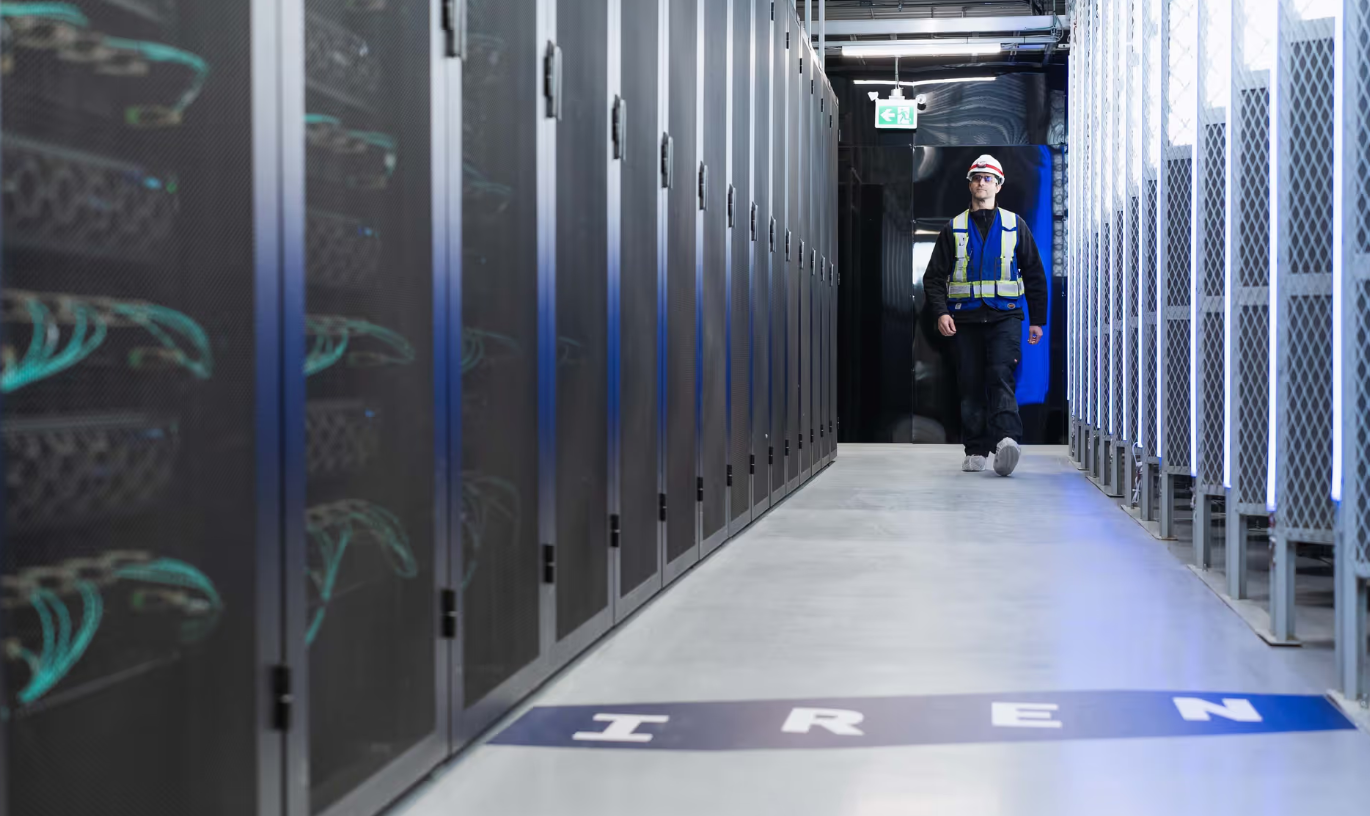
The Pivot Toward AI Infrastructure
IREN, formerly known as the bitcoin mining entity Iris Energy, has successfully executed one of the most drastic corporate pivots in recent tech history. By securing a $2.1 billion financing commitment from Nvidia, the firm has signaled its full transition from the volatile cryptocurrency mining sector to the high-demand arena of AI infrastructure.
This investment is more than a mere capital injection; it represents a strategic alignment. Nvidia is aggressively moving to secure AI factories—fully integrated environments where compute, networking, and power converge. By partnering with IREN, Nvidia secures a reliable partner capable of managing the specialized physical infrastructure required to deploy its DSX-branded systems at scale.
Strategic Implications for the Neocloud Market
The rise of neocloud providers like IREN (and competitors like CoreWeave) highlights a fundamental shift in how hyperscale AI is delivered. Traditional cloud giants often struggle with the limitations of existing, legacy data center designs. Neocloud companies, by contrast, are building purpose-built facilities that prioritize massive power density and bare-metal GPU access.
IREN’s recent acquisition of Mirantis for $625 million provides them with the software orchestration layer needed to manage these complex environments. This demonstrates that for AI providers to succeed, hardware supremacy is not enough; they must offer a seamless software stack that allows enterprise customers to manage custom compute clusters as easily as they would a traditional virtualized environment.
Nvidia’s Vertical Integration Strategy
Nvidia’s decision to commit $2.1 billion via stock purchase agreements and sign a $3.4 billion, five-year services contract with IREN is part of a broader ecosystem-building mission. This move serves two primary purposes:
First, it creates a captive distribution channel. By funding the infrastructure, Nvidia accelerates the deployment of its hardware, ensuring that its GPUs are constantly utilized for internal research and customer compute tasks.
Second, it allows Nvidia to influence the development of regional digital power grids. By partnering with firms that bridge the gap between energy site development and cloud operations, Nvidia is positioning itself as a central architect of the global, AI-ready electrical grid.
Market Sentiment and Future Scaling
Investors have responded to IREN’s pivot with significant enthusiasm, as evidenced by the sharp rally in the company’s share price. The market clearly favors businesses that marry proprietary power-dense data centers with high-growth AI compute services.
Winning a $9.7 billion, 200-megawatt contract with Microsoft previously established IREN’s credibility, but the Nvidia deal cements its standing as a tier-one provider. As the industry faces perpetual shortages in hardware availability and data center capacity, companies like IREN that can prove they have the power-site footprint to host massive clusters will continue to hold significant leverage.
The industry should view this not as an isolated financing round, but as a blueprint for future infrastructure deals. Nvidia’s reliance on third-party experts to deliver turnkey AI factories underscores that the bottleneck for AI advancement is no longer just the chip—it is the physical, operational, and software-integrated environment surrounding it.