
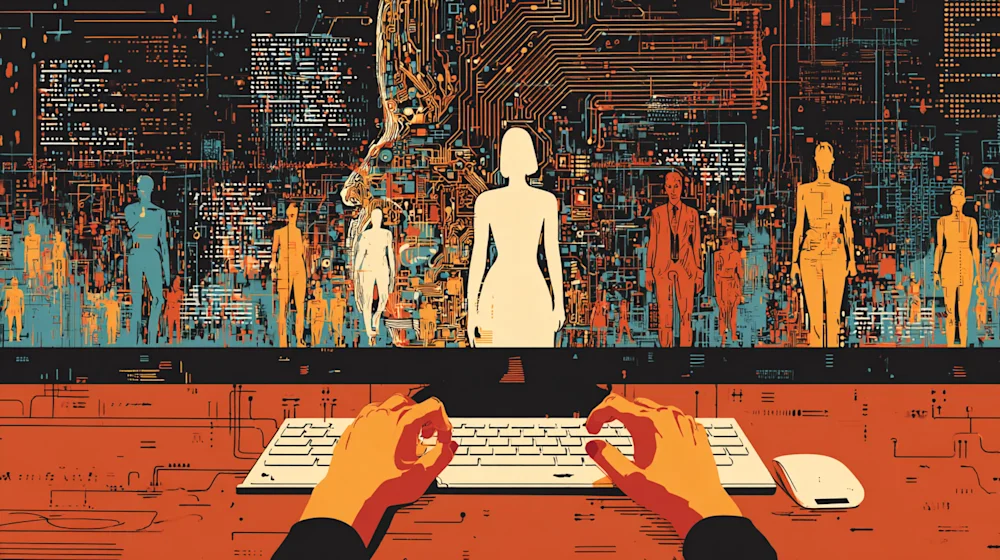
The Disruption of Human Insight: Synthetic Audiences and the Consulting Crisis
The traditional model of market research—a slow, expensive process of polling, analysis, and PowerPoint delivery—is facing an existential threat. For decades, firms like McKinsey, Gartner, and Nielsen have held a monopoly on human insight, charging premium prices for services that traditionally require months of manual labor. Today, that hierarchy is being challenged by the advent of synthetic audiences: AI-driven simulations of human behavior that can replicate research outcomes in mere minutes for a fraction of the cost.
Beyond the Hype: What Are Synthetic Audiences?
At its core, synthetic audience technology utilizes Large Language Models (LLMs) to construct high-fidelity digital proxies of consumers. By providing an AI model with specific psychographic, demographic, and behavioral parameters, proponents can test products, marketing messages, and concepts against these digital twins.
Startups like Electric Twin, Artificial Societies, and Aaru are at the forefront of this shift, while established incumbents like Dentsu are scrambling to integrate similar capabilities. The value proposition is binary and brutal: where traditional research might cost tens of thousands of dollars and take an entire fiscal quarter to materialize, synthetic testing offers near-instant feedback for the cost of a few API calls.
The Dichotomy of Industry Integration
While some characterize this shift as a war between nimble AI startups and entrenched consultancies, the reality is far more nuanced. The professional consulting landscape is rarely defined by total replacement; it is defined by acquisition and synthesis. Firms like WPP are not necessarily being dethroned; they are acting as the crucial distribution layer for these new technologies.
The tension between startups and global agencies is not a clash of civilizations, but a marriage of convenience. Startups offer the technological speed and high margins necessary to iterate, while global incumbents provide the Fortune 500 client relationships needed for widespread adoption. Rather than seeing this as a zero-sum game, we are witnessing a symbiotic integration where the consultant of the future is merely a curator of automated insight.
Addressing the Skepticism: Data Security vs. Operational Reality
Despite the clear benefits of speed, enterprise adoption remains sluggish. The primary hurdle is a recurring objection from C-suite executives: Will AI steal my data?
This anxiety, while valid, is often misdirected. Organizations that are currently tethered to Microsoft, Google, or Amazon cloud environments have already offloaded their critical infrastructure to the very providers powering these AI engines. Most enterprise-grade AI agreements include strict Zero Data Retention (ZDR) clauses, meaning client data is not fed back into the foundational models. Resistance to AI often stems from a lingering, irrational fear of data exposure, completely ignoring the fact that sensitive corporate data already exists within the opaque ecosystem of cloud providers.
The Accuracy Gap: Is It Good Enough?
The most pressing challenge for synthetic research is the accuracy threshold. Stanford researchers, in a seminal 2024 paper, demonstrated that AI could replicate general social surveys with up to 85% accuracy. When rich, nuanced biographical context is provided, the predictive accuracy spikes even further.
However, we must distinguish between scientific precision and business utility. While a synthetic audience might not be a perfect reflection of humanity, it is remarkably effective at being better than random. In private testing, modeling behaviors with a 72% accuracy rate—using only basic inputs like age, neighborhood, and gender—proves that these systems can capture trends that would otherwise require expensive field studies.
The Power of Exponential Acceleration
The most significant implication is one of scale. We are moving from a world where market research is an occasional, milestone-based activity to one where it is a continuous, real-time pulse of consumer sentiment. When you reduce the latency of a project from months to minutes, you aren’t just optimizing for efficiency; you are unlocking entirely new business behaviors.
Industries that previously viewed deep consumer research as an unnecessary luxury due to cost and time constraints will suddenly have access to the same intellectual rigor as Fortune 500 giants. While we are not yet headed for the dystopian, predictive world of Minority Report, we are undeniably entering an era where human propensity is no longer a hidden variable, but a modeled input. The next two years will be formative; for those in the consulting industry, the choice is clear: adapt to the synthetic paradigm or become the ghost of a legacy business model.