
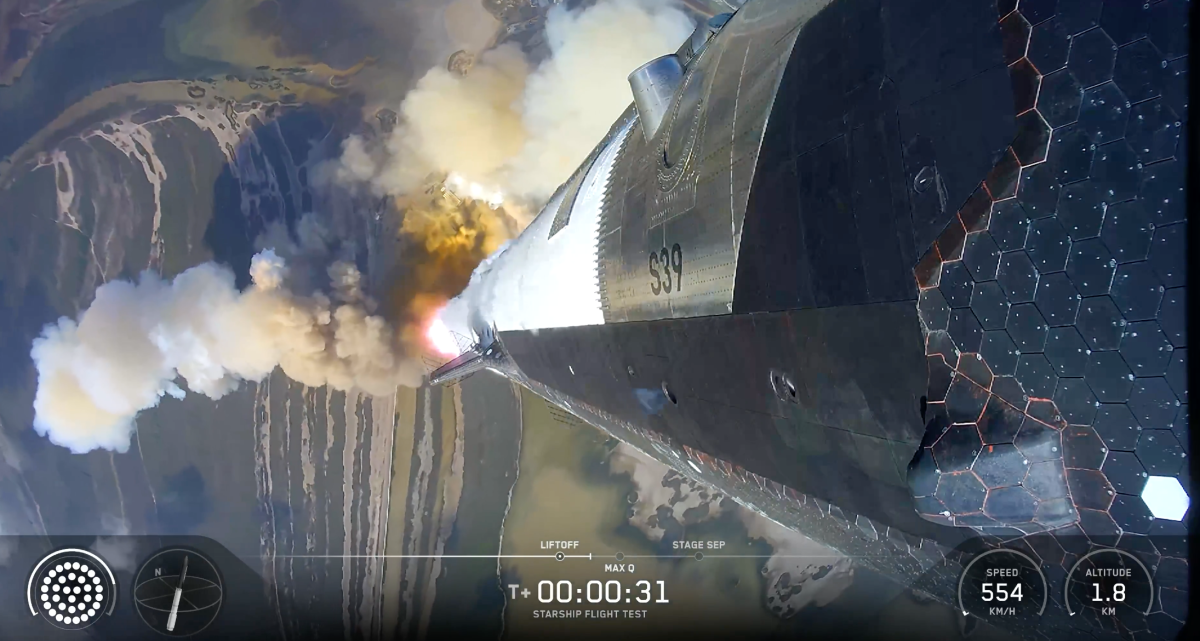
The Strategic Significance of the Starship V3 Shakedown
SpaceX’s inaugural flight of the Starship V3 architecture represents a critical stress test for the most ambitious launch vehicle in history. While the mission experienced secondary failures—specifically the Super Heavy booster’s botched landing burn—the successful orbital insertion and payload deployment signal a maturation of the platform’s core flight systems.
For the aerospace industry, the implications of this test go beyond simple rocketry. The V3 iteration incorporates third-generation Raptor engines, which prioritize mechanical simplicity and increased thrust-to-weight ratios. This hardware shift is essential for lowering the cost-per-kilogram of payload delivered to orbit—the primary metric upon which the long-term viability of the Starlink constellation rests.
Analyzing the Failure Points
The loss of the Super Heavy booster following a failed engine re-ignition is a setback for SpaceX’s rapid-reusability goals. The ultimate vision for Starbase involves catching these boosters using tower arms, a maneuver that requires surgical precision during the final landing burn. If the boosters cannot reliably reignite their engines, the cadence of flight operations drops significantly, impacting the company’s ability to maintain a high-frequency launch schedule.
Furthermore, the loss of one Raptor engine during the ascent phase suggests that thermal management and vibration damping in the upgraded V3 configuration still require refinement. While the vehicle reached its intended trajectory, losing 16% of the primary propulsion system during ascent remains a statistical concern that will likely impact future flight certification for crewed missions.
The IPO Inflection Point and Financial Implications
This test launch carries unprecedented weight as SpaceX approaches its mid-June Nasdaq listing. With a projected valuation of $75 billion, the company is transitioning from a private, agile innovator to a public entity subject to quarterly scrutiny. This shift creates a volatile environment for shareholders; unlike the private funding rounds of the past, future Starship test failures will have immediate, quantifiable impacts on the firm’s share price.
Capital raised through this IPO is earmarked for expansive agendas, ranging from deep-space infrastructure to the capital-intensive demands of xAI. By tethering the development of the company’s most hardware-heavy product—Starship—to the public markets, Elon Musk is effectively leveraging the stock market to finance the next phase of Martian exploration and AI integration.
Strategic Utility: Beyond Mars
While the narrative of making humanity multi-planetary dominates public discourse, the practical utility of Starship is firmly rooted in the near-term profitability of Starlink. As SpaceX’s only consistently revenue-generating segment, Starlink requires the heavy-lift capacity of Starship to deploy the next generation of advanced satellites.
The successful deployment of satellite simulators on this flight confirms that the cargo-delivery mechanisms are functional. For NASA, this provides a vital proof-of-concept for upcoming Artemis missions, where Starship will serve as the Lunar Human Landing System. The transition from testing to operational delivery is no longer a distant theoretical goal—it is a financial necessity for the company’s fiscal post-IPO stability.
Ultimately, this test serves as a bridge. It proves that the refined, simpler design of the V3 architecture can survive the rigors of launch while simultaneously highlighting the remaining engineering hurdles that must be cleared before SpaceX can normalize space transportation to the frequency of modern aviation.