
Strategic Shift: U.S. Federal Funding Signals Industrialization of Quantum Computing
The U.S. Commerce Department has signaled a decisive pivot in its national technology strategy by committing $2.013 billion in grant funding toward the industrialization of quantum computing. By channeling these resources into major semiconductor incumbents and emerging startups alike, the federal government is effectively attempting to bridge the valley of death that typically plagues deep-tech research moving from laboratory prototypes to high-volume manufacturing.
This capital infusion is not merely an R&D grant; it is an equity-backed investment. The government’s decision to secure stakes in these companies—notably a 1% interest in GlobalFoundries—suggests a paradigm shift in how the state manages sovereignty over critical emerging technologies. By taking equity, the government is aligning itself with the long-term success of the domestic supply chain, mirroring recent moves to secure interests in entities like Intel.
IBM and the Foundation of Anderon
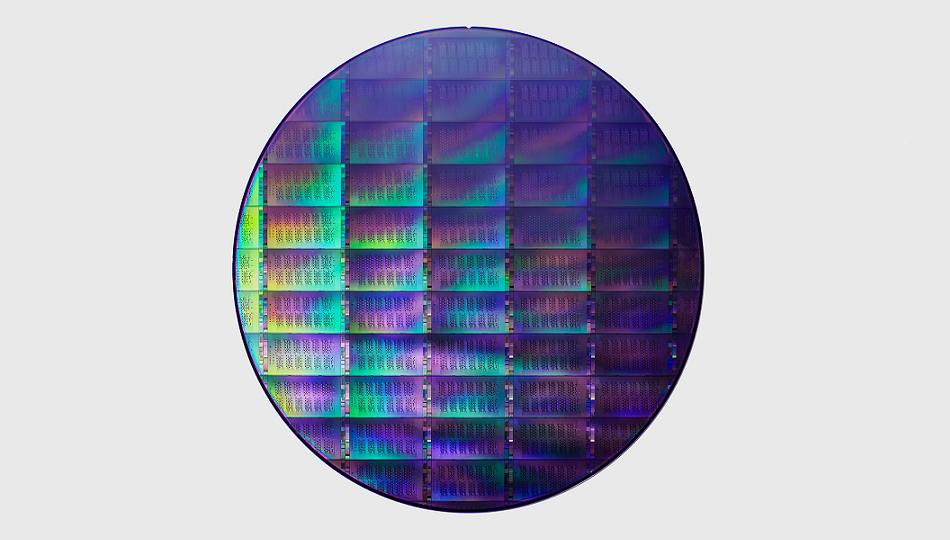
IBM emerges as the largest beneficiary, securing $1 billion in federal incentives, which the company intends to match with its own capital. This creates a $2 billion war chest dedicated to the launch of Anderon, a specialized foundry operation focused on 300-millimeter quantum wafer production.
The significance of Anderon lies in its manufacturing capability. Quantum computing has historically been constrained by the artisanal, manual fabrication of chips. By scaling these processes to 300mm manufacturing—the current standard for conventional silicon processors—IBM is forcing quantum hardware into the realm of traditional CMOS economics. Initially focusing on superconducting circuits that rely on Cooper pairs at near-zero temperatures, the venture aims to establish the repeatability required for error-corrected systems.
Diversifying the Architectural Landscape
The Commerce Department’s allocation strategy reflects a portfolio approach to technological uncertainty. Because the industry has not yet converged on a single winning qubit architecture, the government is betting across a spectrum of competing paradigms:
- Neutral Atoms: Atom Computing and Infleqtion are each set to leverage $100 million to advance neutral atom architectures, which utilize laser-trapped particles to store information. This approach is highly regarded for its potential to scale qubit counts rapidly.
- Photonic Systems: PsiQuantum’s grant focuses on light-based qubits. Photonic architectures are particularly compelling due to their ability to operate under less extreme cooling constraints compared to superconducting systems and their inherent suitability for modular networking.
- Trapped Ion Designs: Quantinuum, supported by the broader industrial push, continues to refine trapped-ion processors, which benefit from long coherence times, representing a mature path toward high-fidelity gate operations.
The Role of GlobalFoundries in the Ecosystem
GlobalFoundries’ receipt of $375 million marks a strategic transition for the firm from legacy node fabrication to a central hub for quantum infrastructure. Unlike a pure-play quantum developer, GlobalFoundries provides the picks and shovels of the industry: cryogenic CMOS controllers and specialized photonic components.
The rationale here is clear: for any quantum architecture to succeed, it requires sophisticated classical electronic interfaces to read and manipulate quantum states. As Chief Technology Officer Gregg Bartlett noted, the transition from lab to scale demands the rigorous environment of an advanced semiconductor manufacturing facility. By integrating these disparate architectures into a unified foundry model, GlobalFoundries is positioning itself as the indispensable substrate provider for the entire quantum sector.
Implications for Sovereignty and Market Stability
The immediate market response—a double-digit surge in share prices for both IBM and GlobalFoundries—underscores investor recognition of this government-backed transition. This funding represents a critical consolidation of U.S. technological infrastructure.
For industry watchers, the move signifies that quantum computing is exiting its experimental phase and entering an era of industrial manufacturing. With the government acting as both a primary investor and a stakeholder, the landscape is now shaped by a mandate for manufacturing scalability. The entities that survive this phase will be those capable of translating exotic physics into standard, wafer-scale production lines, effectively treating quantum processors with the same industrial discipline applied to traditional silicon chips.