
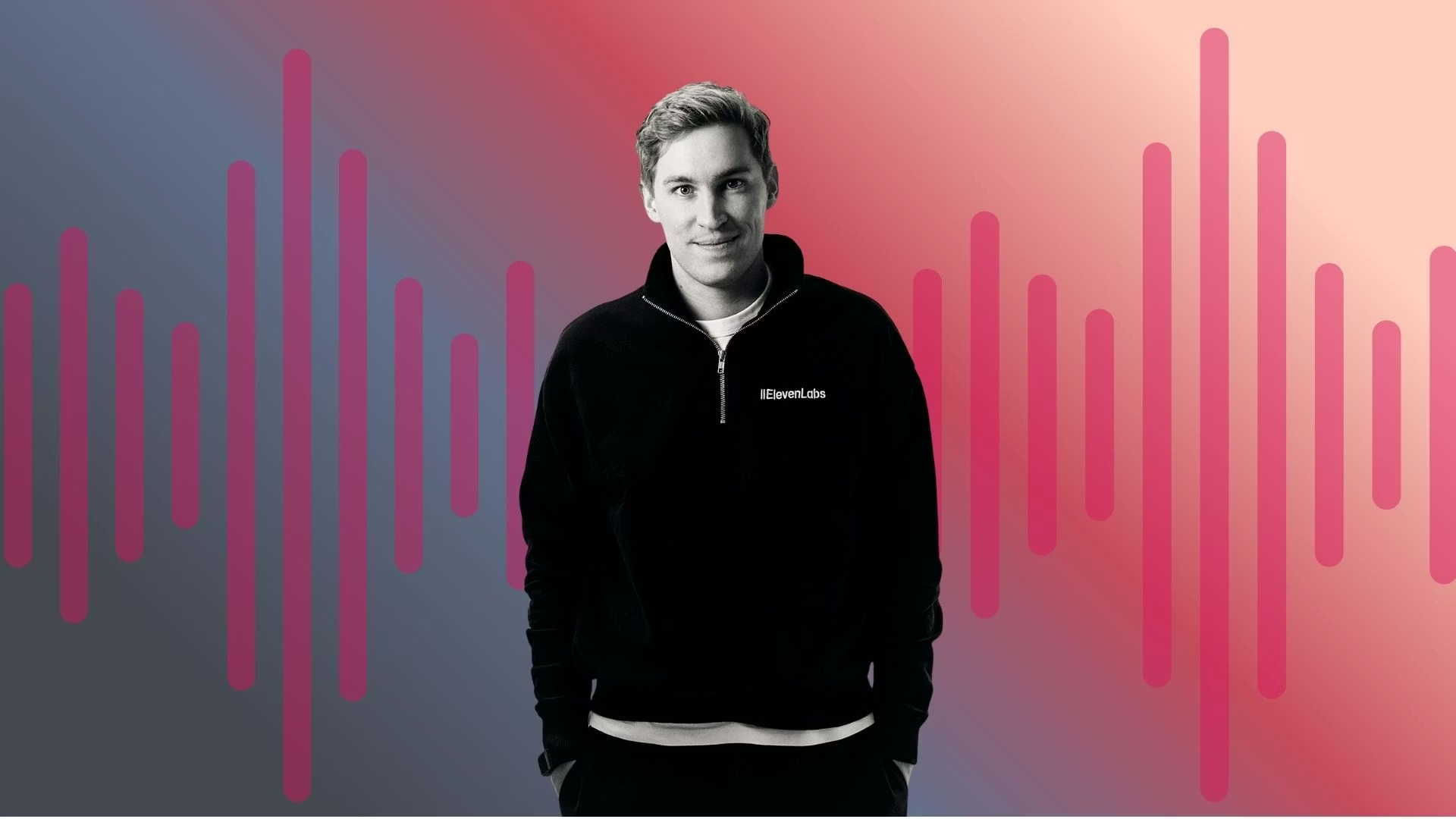
The Legal Storm Clouds Gather Over ElevenLabs
The generative AI sector is currently navigating a period of intense legal and ethical scrutiny, and ElevenLabs—a decacorn valuation firm—has found itself at the epicenter of a landmark class-action lawsuit. A group of seven professional journalists and voice actors has filed a complaint in Illinois court, alleging that the company unlawfully harvested their audio likenesses to train its sophisticated voice-cloning models without providing compensation or obtaining proper authorization.
This litigation marks a pivotal moment for the synthetic media industry. As AI firms continue to scale their operations, the tension between massive dataset acquisition and the intellectual property rights of human creators is reaching a breaking point. For companies like ElevenLabs, which has secured substantial institutional backing and global reach, this lawsuit threatens to undermine the operational blueprint that has sustained its rapid ascent.
Deconstructing the Plaintiffs’ Allegations
The core of the legal argument revolves around the unauthorized ingestion of human vocal identities. The plaintiffs assert that their unique vocal prints were utilized to power ElevenLabs’ text-to-speech engine, effectively creating digital puppets that echo the nuances and inflections of the original performers. The lawsuit claims that this practice constitutes the misappropriation of a professional’s livelihood, as the technology directly competes with the very people whose data it scraped to function.
Furthermore, the legal filing highlights the discrepancy between ElevenLabs’ public corporate narrative and its underlying training methodology. While the company has projected an image of innovation, the plaintiffs argue that this progress is built on a foundation of intellectual property infringement. The suit points toward specific tools within the ElevenLabs ecosystem, such as its Professional Voice Cloning features, as evidence that the company is actively commercializing stolen labor.
Regulatory Implications and Industry Precedent
The legal team representing the plaintiffs has invoked the Illinois Right of Publicity Act (IRPA), a robust framework that grants individuals significant control over the commercial use of their likeness. This move is strategic; by leveraging state-level protections, the plaintiffs are attempting to bypass the ambiguity often associated with federal copyright law regarding AI training data.
If the court validates the plaintiffs’ stance, the implications for the AI industry would be seismic. Such a ruling would essentially establish that the unauthorized training of generative models constitutes a direct violation of publicity rights, rendering current data-scraping business models legally untenable. It could force a wholesale pivot toward licensed datasets, likely driving up costs and slowing the aggressive deployment cycle that has characterized the generative AI boom.
The Economic Disconnect
The lawsuit also frames the dispute through the lens of economic exploitation. The plaintiffs contend that ElevenLabs’ monetization strategy effectively renders the human voice a commodity that can be replicated and sold for pennies on the dollar, undercutting legitimate professional rates. By offering AI-generated voice services, the company generates revenue streams that were traditionally the domain of voice-over artists and news broadcasters.
Currently, the technology allows for the creation of high-fidelity synthetic speech that is nearly indistinguishable from natural recordings. The plaintiffs argue that unless firms like ElevenLabs are held accountable for the source code of their datasets, the professional market for human voices will face systematic, permanent obsolescence. With the case expected to draw in high-profile legal defense and stir further debate regarding AI ethics, the ultimate outcome will likely serve as the definitive benchmark for how AI companies handle human likenesses in the years to come.