
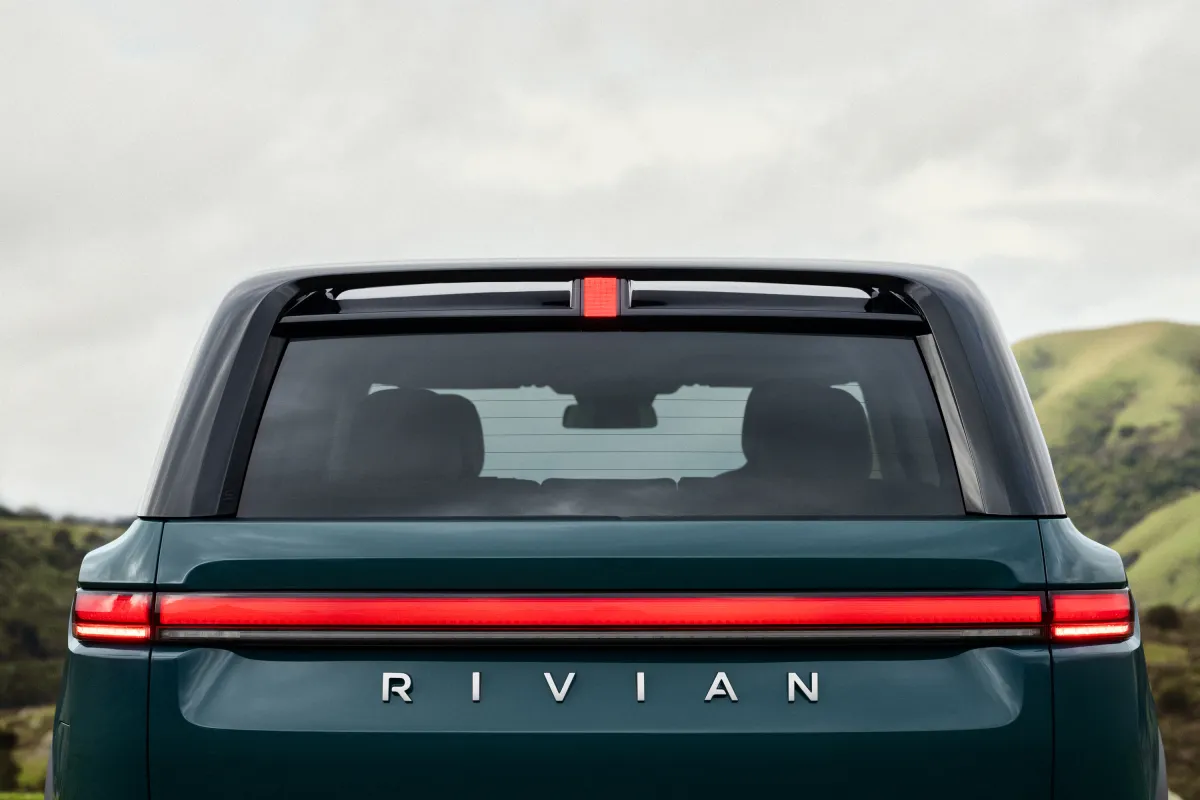
The Institutional Realignment of Rivian’s Ownership Structure
Recent regulatory disclosures filed with the U.S. Securities and Exchange Commission reveal a definitive shift in Rivian Automotive’s capital structure. Volkswagen Group has officially surpassed Amazon to emerge as the EV startup’s primary shareholder, commanding a 15.9% stake. This ascent—nearly doubling its 8.6% position in less than 24 months—is the culmination of a broader $5.8 billion joint venture finalized in late 2024.
For Volkswagen, this is not a speculative portfolio play. It is a strategic acquisition of technical competence. The German automotive conglomerate has struggled significantly with software development and centralized electronic architectures, hurdles that have delayed key product launches. By securing a dominant equity position in Rivian, Volkswagen is essentially outsourcing a portion of its digital transformation to bypass the bureaucratic and technical bottlenecks hindering its own internal R&D divisions.
Incentive-Based Capital: A New Benchmark for Partnerships
Volkswagen’s strategy moves beyond standard equity ownership by utilizing a milestone-heavy funding model. The $5.8 billion commitment is structured in tranches, with disbursement contingent upon specific technical deliverables. A prime example was the $1 billion injection triggered immediately following the successful winter validation of the ID.EVERY1 vehicle—a model intended to debut the joint software architecture.
This framework forces a symbiotic but demanding relationship. Volkswagen is not merely a passive financier; it is a high-functioning client iterating on Rivian’s code. For Rivian, this creates an intense pressure to reach production-grade software stability, but it serves as a powerful de-risking mechanism for Volkswagen. By tying capital to project delivery, the German manufacturer ensures that their investment directly correlates to measurable engineering progress rather than just subsidizing general operational burn.
Eclipsing the Amazon Era
Amazon, which once stood as the foundational pillar of Rivian’s early commercial success, has seen its influence recede as its equity position diluted to 12.28%. At one juncture, Amazon maintained a 20% stake, cementing Rivian’s identity as the primary vendor for the retail giant’s last-mile logistics revolution.
However, the narrative of Rivian as a specialized delivery-van provider is being superseded by its new role as a software platform vendor. While Amazon remains a critical customer for electric delivery vans, its importance to Rivian’s forward-looking strategic roadmap has diminished. The transition toward Volkswagen signals a pivot from focusing solely on commercial utility to solving the high-stakes industry problem of comprehensive software-defined vehicle (SDV) architecture.
The Tension Between R&D and Financial Viability
Despite the liquidity injection provided by the Volkswagen deal, Rivian continues to navigate a precarious path regarding capital efficiency. In 2025, the company documented $1.7 billion in R&D spending, largely sequestered toward autonomous driving systems—capabilities that remain outside the purview of the Volkswagen joint venture.
This bifurcation of interests creates significant friction in Rivian’s P&L. By maintaining massive expenditures on proprietary autonomous tech while simultaneously refining architecture for Volkswagen, Rivian has pushed its path to positive EBITDA beyond the 2027 horizon. Management is effectively performing a high-wire act, betting that the R2 mid-sized SUV platform will capture the mass market, while simultaneously hoping that their software stack becomes an industry standard that generates recurring revenue outside of their own assembly lines.
Ultimately, Volkswagen has provided the necessary runway for Rivian to survive the next phase of capital-intensive scaling. Yet, the long-term viability of the firm remains tethered to its ability to convert innovation into volume. Until the R2 platform achieves scale and the software-licensing business model matures, investors will remain wary of whether Rivian’s ambitious and costly technological roadmap can eventually outpace its persistent cash-burn lifecycle.