
The Institutionalization of AI Deployment
Anthropic’s recent announcement of a new joint venture marks a structural shift in how foundational AI models are integrated into the global economy. By securing backing from heavyweight financial institutions including Blackstone, Hellman & Friedman, and Goldman Sachs, Anthropic is moving beyond the era of nebulous API-based subscriptions. Instead, it is pivoting toward a specialized, high-touch consultancy model that bridges the gap between raw model capability and pragmatic enterprise application.
With a $1.5 billion valuation and significant capital commitments from its three founding partners, this venture signals that the next phase of the AI arms race will be won through distribution rather than just parameter counts. This strategy acknowledges that large-scale enterprise adoption has stalled not due to a lack of interest, but due to a lack of customized implementation.
The Forward-Deployed Paradigm: A Palantir Playbook
The most significant strategic implication of this move is the adoption of the forward-deployed engineer (FDE) model. Popularized by Palantir, this strategy moves away from the plug-and-play model of software-as-a-service (SaaS) and toward deep, iterative engineering partnerships.
Anthropic’s strategy is clear: engineers will embed directly within the workflows of the firms’ portfolio companies, such as clinical or IT environments. By working alongside the end users, they aim to build bespoke tools that are deeply native to industry-specific processes. This level of technical intimacy is designed to solve the last mile problem of AI—the difficulty of translating generic Large Language Models into workflows that satisfy strict regulatory, data privacy, and operational requirements.
A Bifurcated Ecosystem: Anthropic vs. OpenAI
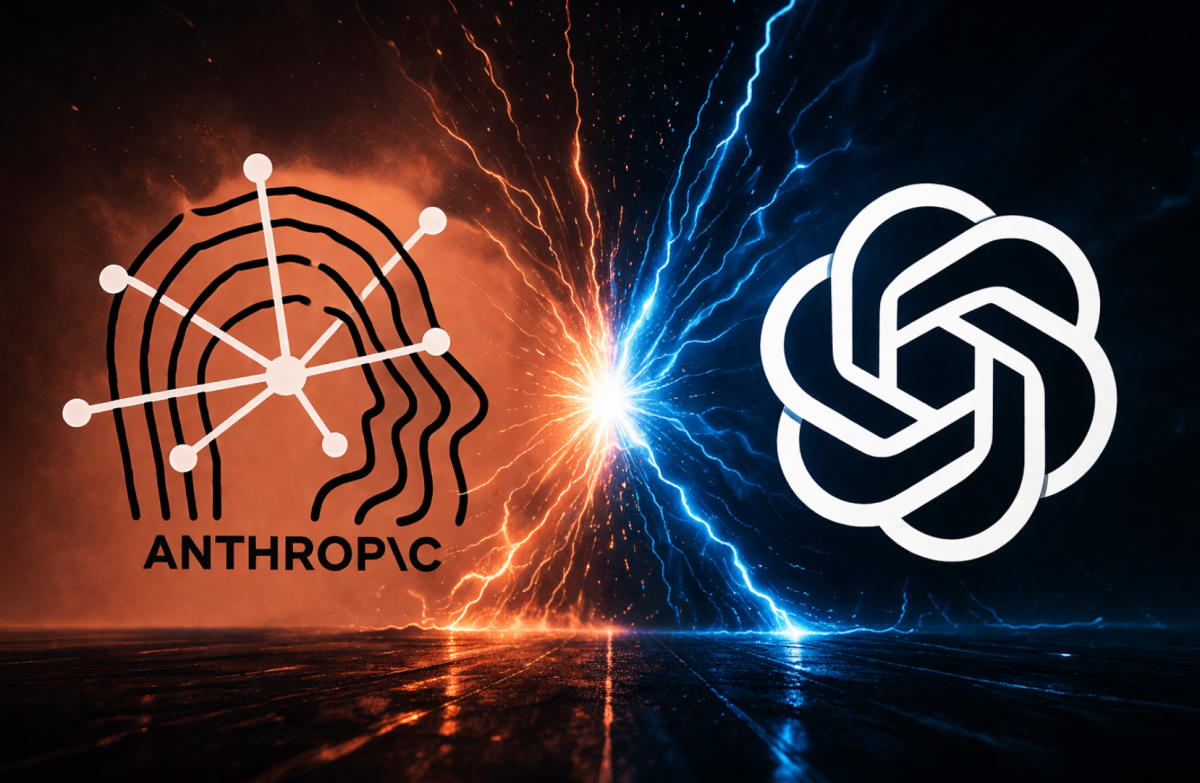
The timing of this announcement, occurring almost in tandem with reports of OpenAI’s The Development Company, highlights a fundamental divergence in enterprise strategy. OpenAI’s venture, reportedly targeting a $10 billion valuation with a much broader syndicate of 19 investors, appears to be positioning itself for massive, infrastructure-level saturation.
While Anthropic is cultivating a dense network of private equity powerhouses to create a controlled environment for high-value model deployment, OpenAI’s broader investor base suggests a strategy aimed at widespread, perhaps more aggressive, utility integration. The fact that there is no overlap between the two investor groups suggests that the industry is forming distinct camps. These camps are effectively partitioning the economy, ensuring that the primary AI beneficiaries of their respective portfolios remain locked into a single ecosystem.
Capitalizing on the Capital Allocators
For the private equity and hedge fund firms involved—including Apollo Global Management, General Atlantic, and Sequoia Capital—this move is more than just a bet on a technology company. It is a defensive and offensive measure for their own portfolios.
By investing directly into these ventures, these firms gain preferential access to the cutting-edge tech that will dictate future productivity gains. The arrangement is symbiotic: the venture capital firms provide the necessary liquidity to fund the expensive human-capital-heavy FDE model, while the financial partners ensure a pipeline of high-revenue, enterprise-grade contracts.
Ultimately, this movement signals that the AI Gold Rush has entered its industrial phase. The focus has shifted away from the research laboratory and toward the boardrooms of the world’s largest companies, where the real battle will be fought over who can most effectively replace legacy workflows with custom-engineered, proprietary artificial intelligence.