
The Paradigm Shift: Stripe’s Infrastructure for the Autonomous Economy
Financial infrastructure giant Stripe has officially entered the race to define the AI Agent financial stack with the launch of its updated Link wallet. While digital wallets are a commoditized product in the consumer fintech space, Stripe’s positioning is fundamentally different: it is building the foundational payment layer for an era where machines, not just humans, initiate economic activity.
By enabling autonomous agents to execute transactions on behalf of users, Stripe is addressing the last mile problem of the AI revolution—the ability for software to interact with real-world commerce securely.
Resolving the Trust Gap in Machine-Led Commerce
The surge in interest surrounding autonomous agents has hit a significant friction point: security. While developers are increasingly deploying always-on AI to manage logistics, bookings, and recurring purchases, the prospect of granting raw payment credentials—or even persistent account access—to non-human entities is a non-starter for most consumers.
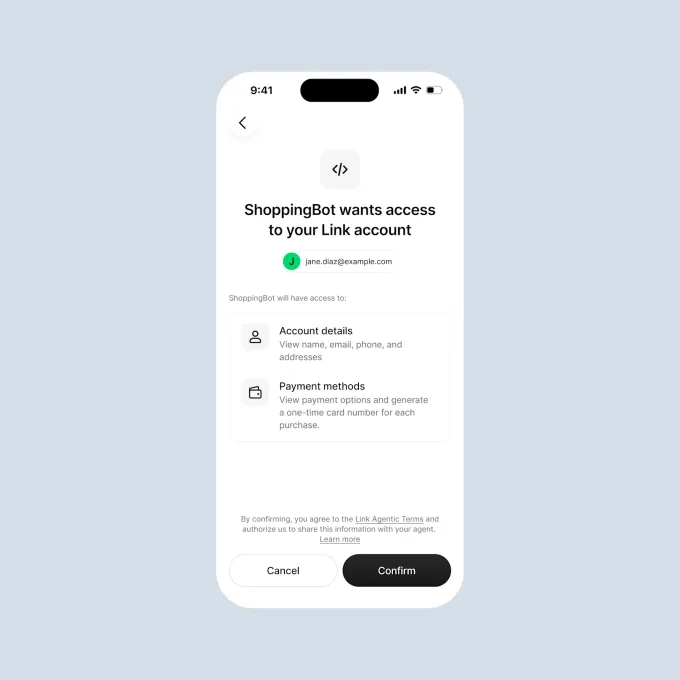
Stripe’s solution shifts the paradigm from credential sharing to authorized delegation. Through an OAuth implementation, users grant agents access to their Link wallet rather than access to their credit card numbers. This architecture allows the agent to communicate what it intends to purchase, providing the user with context before a transaction occurs. This human-in-the-loop requirement is crucial for enterprise and consumer adoption alike, serving as a governance layer that prevents runaway spending or unauthorized machine activity.
Technical Architecture: Virtual Issuing and Tokenization
Under the hood, Stripe is leveraging its Issuing for agents infrastructure to move beyond the constraints of traditional credit cards. Instead of static payment details, the system utilizes virtual cards and Shared Payment Tokens (SPT).
This approach offers several strategic advantages:
- Dynamic Controls: Rather than a blanket authorization, users can enforce real-time spending limits. The system is designed to evolve, moving toward a future where specific agent behaviors can be pre-approved or restricted based on pre-defined budgets.
- Transaction Visibility: Businesses and individuals gain granular insights into exactly how their agents are consuming resources.
- Developer Scalability: By offering Link as a plug-and-play wallet for developers, Stripe is effectively creating a standardized SDK for AI-driven commerce. This prevents every developer from having to reinvent the security protocols necessary to handle payments, potentially making Link the de facto standard for third-party AI assistants.
Future-Proofing for Web3 and Stablecoins
Stripe’s commitment to expanding this infrastructure to include crypto-native assets—specifically agentic tokens and stablecoins—signals a broader strategy to become the bridge between legacy banking systems and the programmable money of the future.
As autonomous agents begin to operate 24/7 across global markets, the limitations of traditional rails (such as settlement times and geographic restrictions) will become more apparent. Incorporating stablecoins directly into the Link framework suggests that Stripe is anticipating a future where AI agents primarily interact with programmable, borderless currency.
Industry Implications: The commoditization of fintech
For the financial sector, Stripe’s move represents the commoditization of the digital wallet. By transforming Link into a utility for AI agents, Stripe is positioning itself as a platform-level player rather than just a payment processor.
If successful, this move forces other payment providers to rethink their APIs. It turns payment processing into autonomous authorization management, shifting the competitive landscape from who charges the lowest transaction fee to who provides the most robust security framework for machine-driven commerce. For consumers, the outcome is clear: the friction of online checkout is being delegated to silicon, with Stripe acting as the gatekeeper of trust.