
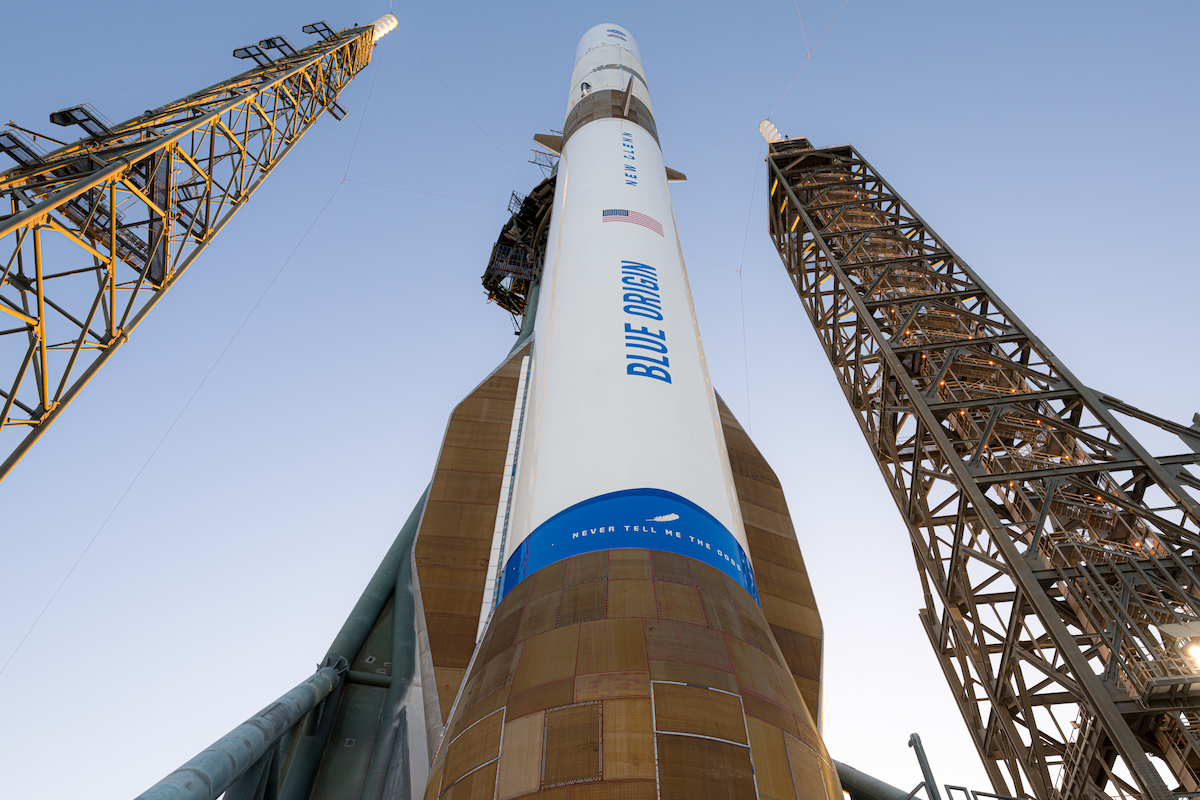
Regulatory Clearance Resets the Clock for New Glenn
Blue Origin has secured FAA authorization to resume flight operations for its heavy-lift launch vehicle, New Glenn, following a brief but disruptive investigation into a failed mission earlier this spring. The regulatory green light terminates a temporary grounding period triggered by an anomaly during an April deployment attempt, which resulted in the total loss of an AST SpaceMobile commercial satellite.
While the FAA has officially oversighted the closure of the mishap investigation, the technical specifics remain largely opaque. Blue Origin characterized the failure as an off-nominal thermal condition affecting the rocket’s upper stage. This thermal instability reportedly degraded the thrust output of one of the three BE-3U engines, preventing the vehicle from achieving the necessary orbital insertion parameters. The resulting reentry and disintegration of the customer’s payload underscore the high-stakes reality of the current nascent era for commercial reusable rockets.
Operational Resilience vs. Technical Transparency
Beyond the failure itself, the broader industry implications center on the tension between rapid iteration and established flight safety protocols. Blue Origin has confirmed that corrective measures have been implemented to address the thermal vulnerability, though the company opted not to disclose specific engineering modifications. By keeping these details internal, Blue Origin maintains its competitive secrecy but leaves stakeholders and potential customers searching for deeper insights into the vehicle’s long-term reliability.
The April mission serves as a dual-edged narrative for the company. On one hand, the mission successfully demonstrated the viability of the New Glenn booster stage, marking a significant milestone in reusability as the hardware achieved a second successful landing on an autonomous drone ship. This capability is the cornerstone of Blue Origin’s business model, which aims to drive down the cost-per-kilogram of orbital transport by normalizing booster recovery and rapid refurbishment.
Implications for 2026 Launch Manifests
The company’s overarching objective—a cadence of 12 launches by the conclusion of 2026—now faces a condensed timeline. While a one-month grounding period may seem negligible in the context of aerospace development, it disrupts the flow of flight software testing and integrated system checks required for a heavy-lift launch vehicle.
The successful re-authorization allows the Jeff Bezos-backed enterprise to refocus on its aggressive launch manifest. However, the path to sustained, high-frequency operations requires more than just FAA clearance; it demands a demonstrated track record of mission success. For the commercial space sector, Blue Origin’s ability to move past this “off-nominal” incident without recurring issues will be the definitive test of whether New Glenn can effectively challenge the dominance of SpaceX’s Falcon 9/Heavy architecture. As the launch cadence ramps up, the industry will be watching closely to see if Blue Origin can balance its goal of rapid iteration with the rigorous reliability standards required for commercial and government satellite contracts.