
The Strategic Pivot: SonarSource Acquires Gitar to Solve the AI Vibe Coding Crisis
Software development is undergoing a paradigm shift. As organizations rush to adopt vibe coding—the practice of using autonomous AI agents to churn out production-ready code—the focus has shifted from writing syntax to managing AI-generated output. However, the sheer velocity of tools like Cursor, Claude Code, and GitHub Copilot has created a significant trust gap. SonarSource Sàrl, a leader in code quality, is addressing this head-on with its acquisition of Gitar Inc., marking a major move toward integrating agentic reasoning into traditional static analysis.
A New Paradigm: From Static Analysis to Agentic Verification
SonarSource has long been the gold standard for code governance through its SonarQube platform, which is utilized by three-quarters of the Fortune 500. Previously, the company thrived by performing “zero-trust” code verification, essentially acting as an automated auditor for human developers.
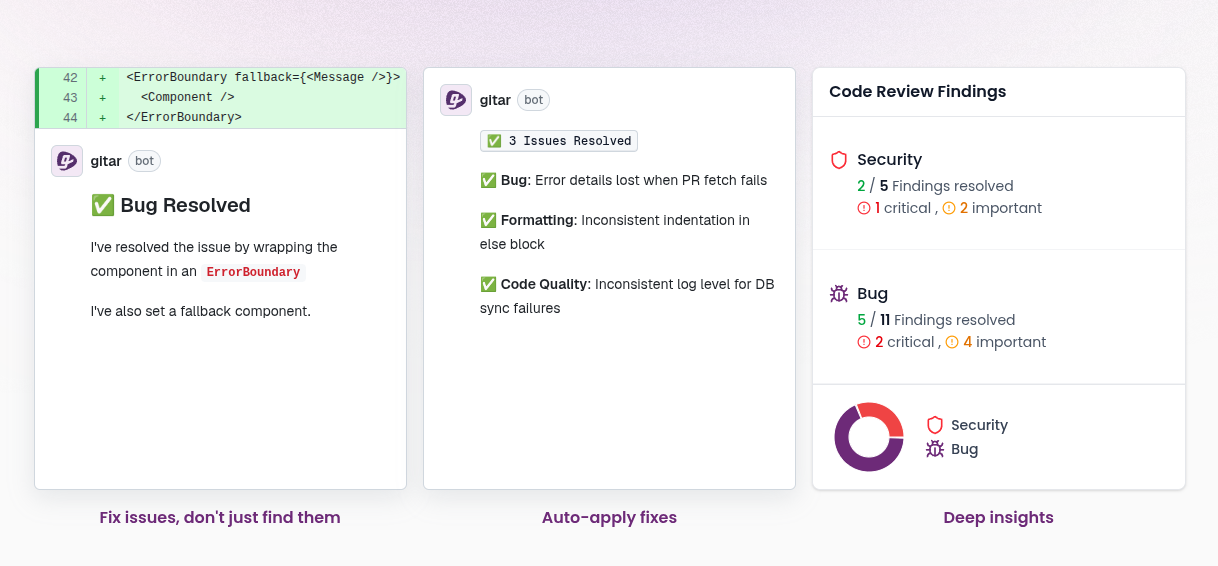
The acquisition of Gitar, founded by former Uber engineers Ali-Reza Adl-Tabatabai and Gautam Korlam, signals an evolution in that strategy. Unlike traditional scanning tools that merely deliver a list of warnings, Gitar is built for the era of generative AI. It treats code review as a proactive resolution process, automatically rectifying bugs and continuous integration (CI) failures within pull requests before they hit the build environment.
Addressing the Vibe Coding Bottleneck
The industry has hit a wall: DevOps teams now have the capacity to generate code faster than they can verify it. While human programmers have transitioned into AI managers, they are struggling to keep pace with the hallucinations and logical blind spots inherent in modern large language models (LLMs).
Sonar Chief Executive Tariq Shaukat identifies this as the central tension in modern software development. He argues that the metric for success is no longer the raw speed of feature production, but the maintainability and security of the code produced by agents. By embedding Gitar’s specialized reasoning capabilities into the Sonar ecosystem, the company intends to create a unified safety net that validates code produced by any external AI assistant.
The Competitive Advantage of Automated Remediation
The true value of this merger lies in the move from passive signaling to active correction. Gitar’s focus on the hard problem of validation—rather than just building yet another coding bot—sets it apart in a crowded market.
Once fully integrated, Sonar’s platform will offer:
- Deep Contextual Analysis: Beyond syntax, the engine will process data, logic, and dependency flows with the structural nuance required for modern microservices.
- Auditable Quality Gates: Enterprises will be able to enforce rigorous, repeatable quality standards that act as guardrails for AI-driven development.
- Autonomous Healing: Integrating AI agents that can automatically patch vulnerabilities as they are detected, effectively closing the loop on the software development lifecycle.
Industry Implications
For the broader software industry, this acquisition highlights a transition toward, and away from, the initial wild west phase of AI coding. Companies are realizing that the cost of fixing vulnerabilities post-deployment far outweighs the speed gained by unsupervised AI usage.
By positioning itself as the layer of intelligence between AI agents and production environments, SonarSource is effectively validating that the future of DevOps is not human-free, but it is human-supervised and programmatically gated. As organizations look to reduce the overhead of noisy, fragmented alerts, they are increasingly likely to consolidate their tooling toward partners that offer high-assurance, agent-aware governance. The result will be a more mature, predictable, and secure AI-augmented development cycle.